Name the specific connective tissue type found in the following body locations: e. Forming the intervertebral discs f. Covering the ends of bones at joint surfaces g. Main component of subcutaneous tissue
Verified step by step guidance
1
Step 1: Understand the question by identifying the connective tissue types associated with specific body locations. Connective tissues are categorized based on their structure and function.
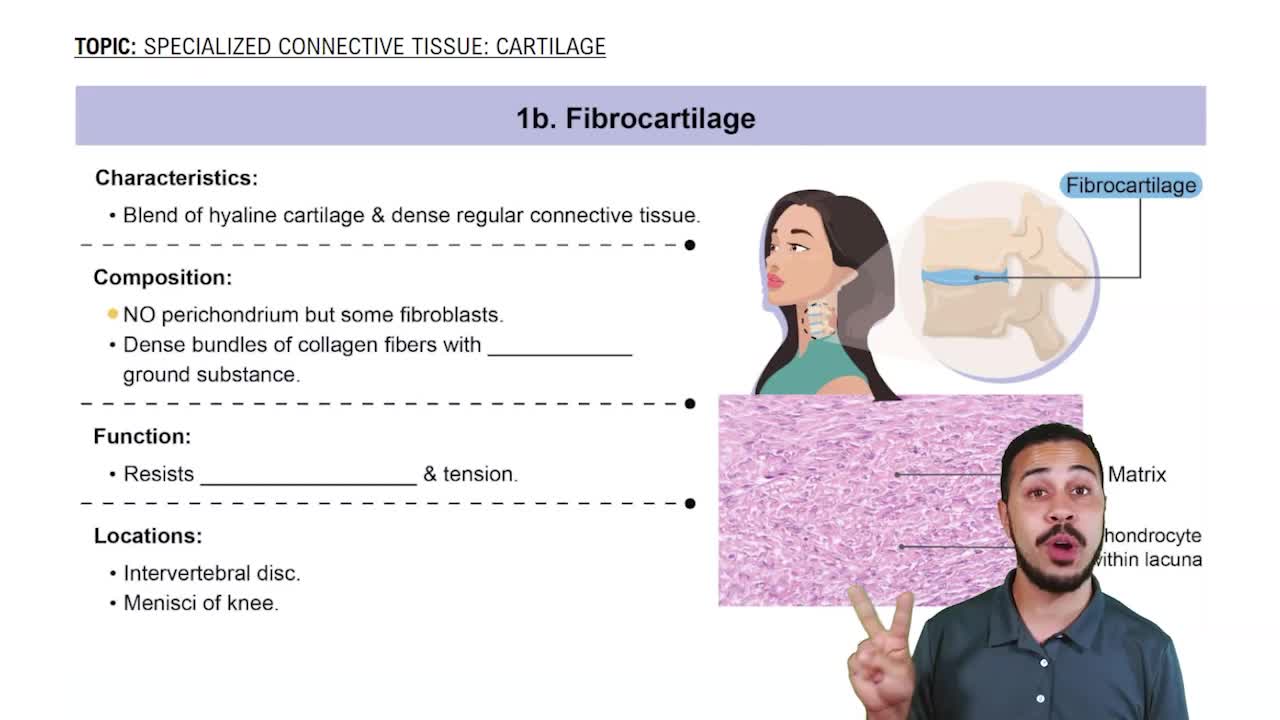
Step 2: For part (e), recall that intervertebral discs are structures that provide cushioning and support between vertebrae. The connective tissue type here is specialized for shock absorption and resistance to compression.
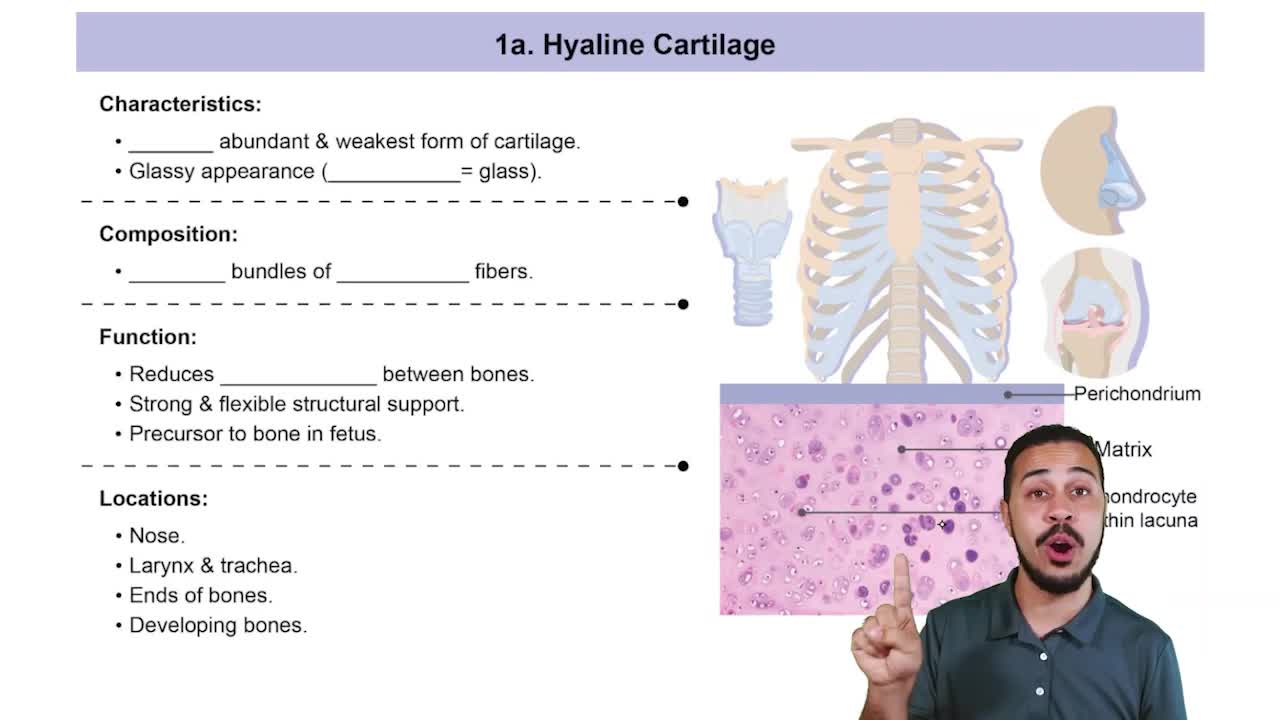
Step 3: For part (f), consider the ends of bones at joint surfaces. These areas require a smooth, low-friction surface to facilitate movement and reduce wear and tear. The connective tissue type here is designed for this purpose.
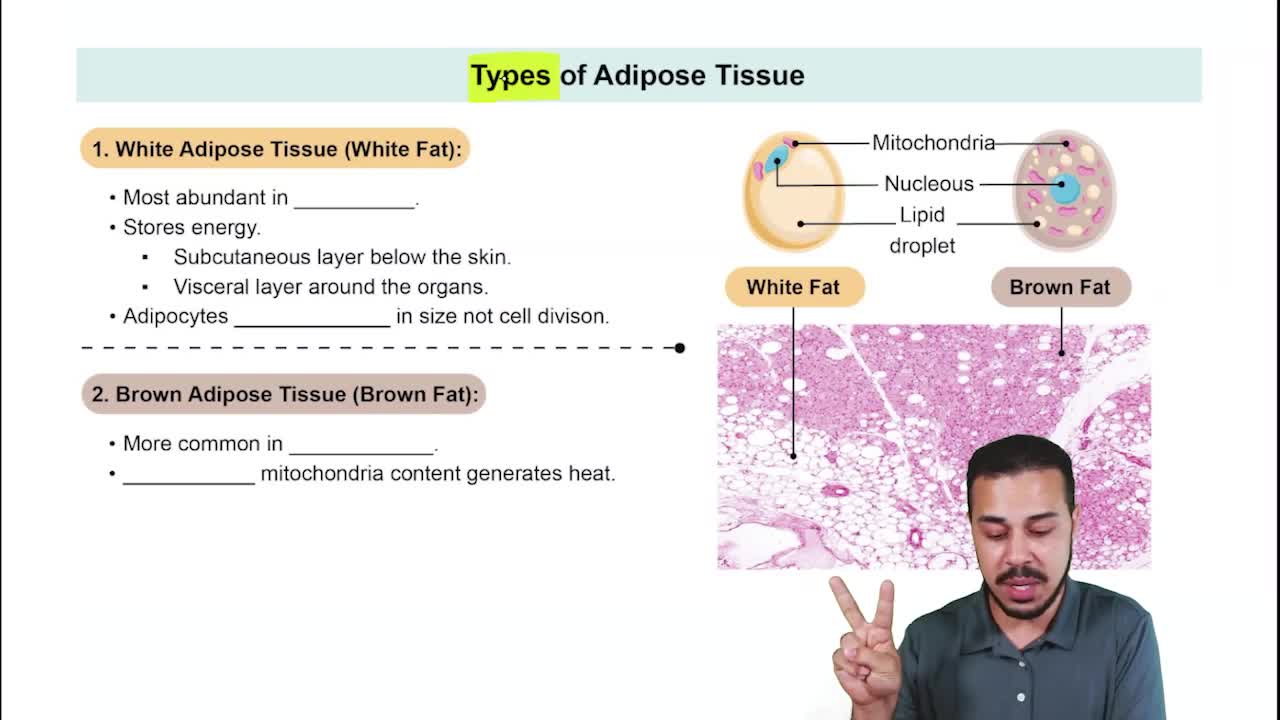
Step 4: For part (g), focus on subcutaneous tissue, which is located beneath the skin. This tissue serves as insulation, energy storage, and cushioning. The connective tissue type here is primarily involved in fat storage and structural support.
Step 5: Match each body location to its specific connective tissue type based on its function and structure. For example, intervertebral discs are associated with fibrocartilage, joint surfaces with hyaline cartilage, and subcutaneous tissue with adipose tissue.
Verified video answer for a similar problem:
This video solution was recommended by our tutors as helpful for the problem above
Video duration:
1m
Play a video:
0 Comments
Key Concepts
Here are the essential concepts you must grasp in order to answer the question correctly.
Fibrocartilage
Fibrocartilage is a tough, dense connective tissue that provides support and absorbs shock. It is primarily found in areas such as intervertebral discs, where it helps cushion the spine, and in the pubic symphysis. Its structure includes a high density of collagen fibers, which contribute to its strength and resilience.
Hyaline cartilage is a smooth, glassy type of connective tissue that covers the ends of bones at joint surfaces. It reduces friction between bones during movement and acts as a shock absorber. This type of cartilage is also found in the rib cage, nose, and trachea, providing flexibility and support.
Adipose tissue, commonly known as body fat, is a type of loose connective tissue that stores energy in the form of fat. It serves as insulation and cushioning for organs and is the main component of subcutaneous tissue, which lies beneath the skin. This tissue plays a crucial role in energy metabolism and hormone regulation.