In the disease pulmonary fibrosis, elastic fibers of the lung are destroyed and replaced with collagen fibers. Predict the effect this would have on breathing.
Verified step by step guidance
1
Understand the role of elastic fibers in the lungs: Elastic fibers are crucial for the lungs' ability to stretch and recoil during breathing. They allow the lungs to expand when inhaling and return to their original shape during exhaling.
Recognize the properties of collagen fibers: Collagen fibers are less elastic and more rigid compared to elastic fibers. Their presence in the lungs would reduce the ability of the lung tissue to stretch and recoil effectively.
Analyze the impact on inhalation: With reduced elasticity, the lungs would require more effort to expand during inhalation, making it harder for the individual to take in air.
Analyze the impact on exhalation: The loss of elastic recoil means the lungs would not return to their original shape easily, making exhalation less efficient and potentially trapping air in the lungs.
Predict the overall effect on breathing: Breathing would become labored, and the individual may experience shortness of breath, reduced oxygen exchange, and increased fatigue due to the extra effort required for both inhalation and exhalation.
Verified video answer for a similar problem:
This video solution was recommended by our tutors as helpful for the problem above
Play a video:
0 Comments
Key Concepts
Here are the essential concepts you must grasp in order to answer the question correctly.
Pulmonary Fibrosis
Pulmonary fibrosis is a lung disease characterized by the thickening and stiffening of lung tissue, which can lead to a decline in lung function. In this condition, the normal elastic fibers in the lungs are damaged and replaced by collagen, resulting in reduced elasticity and compliance of the lung tissue. This change impairs the lungs' ability to expand and contract effectively during breathing.
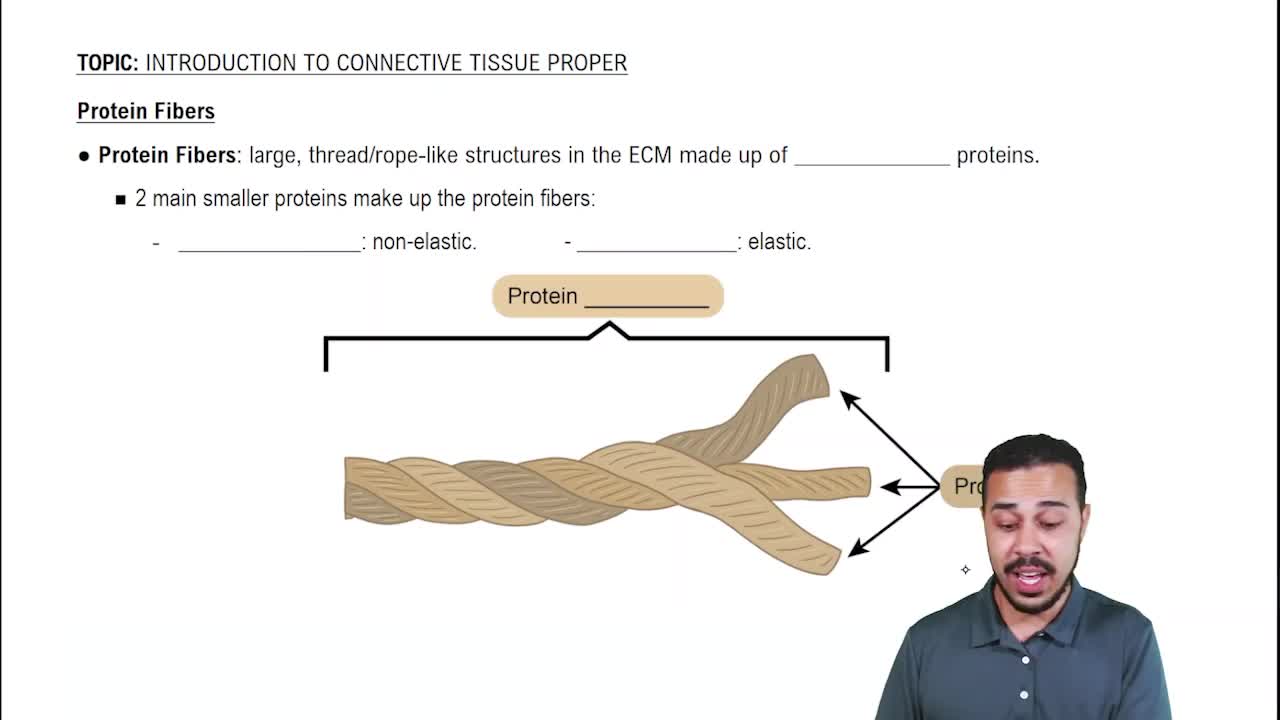
Elastic fibers are proteins that provide elasticity and resilience to tissues, allowing them to stretch and return to their original shape. In contrast, collagen fibers are strong and provide structural support but lack elasticity. The replacement of elastic fibers with collagen in pulmonary fibrosis leads to a stiffer lung structure, making it more difficult for the lungs to expand during inhalation, which can result in shortness of breath.
Lung compliance refers to the ability of the lung tissue to stretch and expand in response to pressure changes during breathing. High compliance indicates that the lungs can easily expand, while low compliance means they are stiff and require more effort to inflate. In pulmonary fibrosis, the replacement of elastic fibers with collagen decreases lung compliance, making it harder for individuals to breathe deeply and efficiently, leading to respiratory distress.

 Verified step by step guidance
 05:21
05:21