Predict which organelles are likely to be abundant in cells such as fibroblasts that actively produce and secrete proteins.
Verified step by step guidance
1
Understand the role of fibroblasts: Fibroblasts are specialized cells responsible for producing and secreting proteins, such as collagen, which are essential for the extracellular matrix and tissue repair.
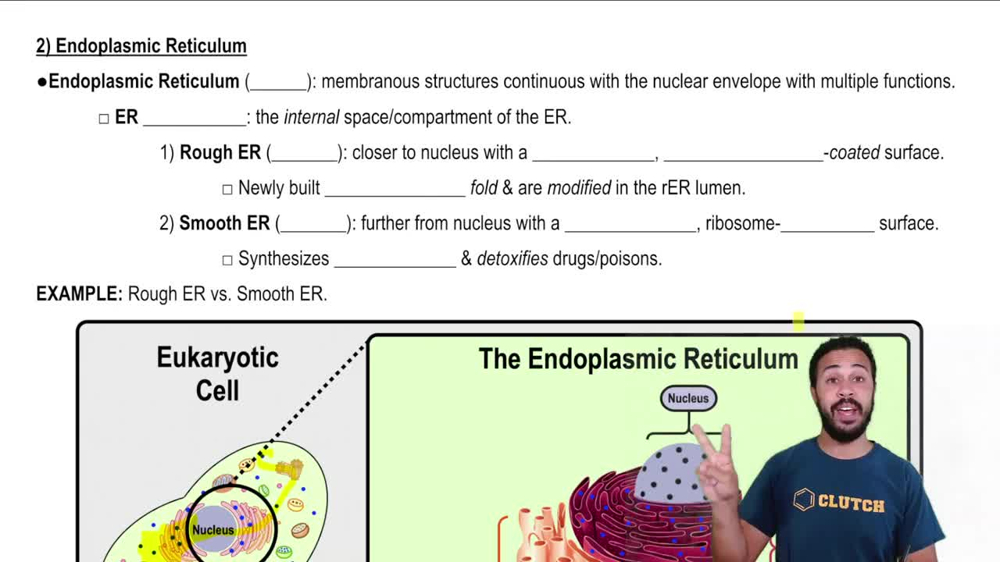
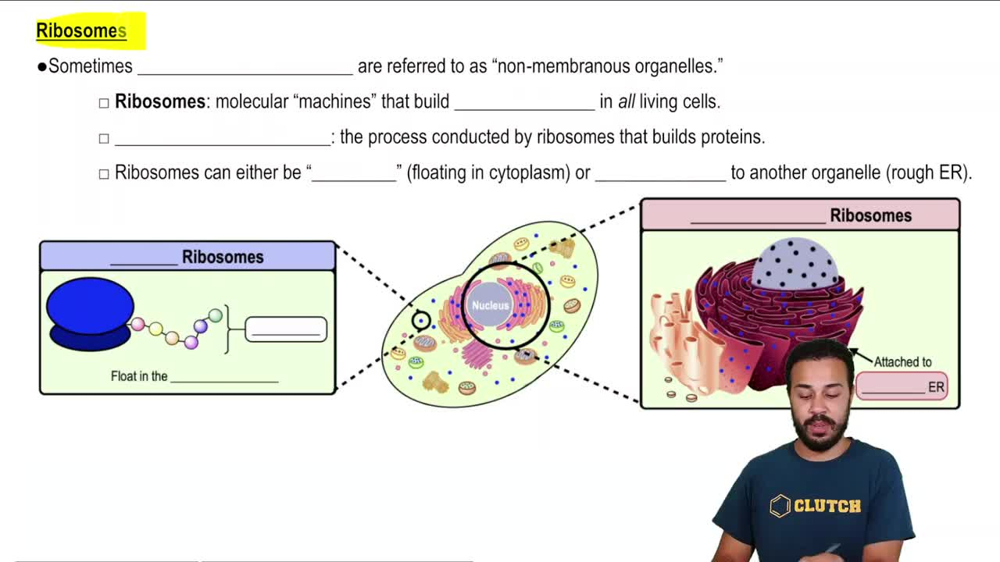
Identify the organelles involved in protein synthesis: Protein production involves the nucleus (for transcription of DNA to mRNA), ribosomes (for translation of mRNA into proteins), and the rough endoplasmic reticulum (RER), which is studded with ribosomes and specializes in synthesizing and folding proteins.
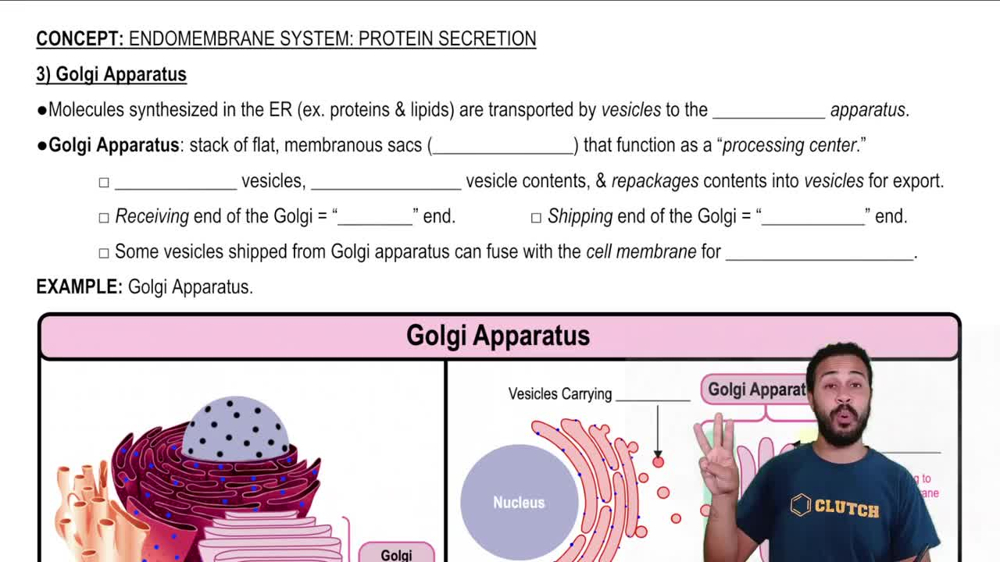
Consider the organelles involved in protein modification and packaging: The Golgi apparatus is responsible for modifying, sorting, and packaging proteins for secretion. Cells that secrete proteins in large quantities typically have an abundant and well-developed Golgi apparatus.
Account for energy requirements: Protein synthesis and secretion are energy-intensive processes. Mitochondria, the organelles responsible for ATP production, are likely to be abundant in fibroblasts to meet the high energy demands.
Conclude the likely organelles: Based on the above, fibroblasts are expected to have an abundance of rough endoplasmic reticulum, Golgi apparatus, and mitochondria to support their role in protein production and secretion.
Verified video answer for a similar problem:
This video solution was recommended by our tutors as helpful for the problem above
Play a video:
0 Comments
Key Concepts
Here are the essential concepts you must grasp in order to answer the question correctly.
Ribosomes
Ribosomes are cellular structures responsible for protein synthesis. They can be found either free-floating in the cytoplasm or attached to the endoplasmic reticulum. In fibroblasts, which are known for producing proteins like collagen, a high number of ribosomes is essential for meeting the demands of protein production.
The endoplasmic reticulum is a network of membranes involved in the synthesis and processing of proteins and lipids. The rough ER, studded with ribosomes, plays a crucial role in the folding and modification of newly synthesized proteins. In fibroblasts, an abundant rough ER is indicative of their active role in protein secretion.
The Golgi apparatus is an organelle that modifies, sorts, and packages proteins and lipids for secretion or delivery to other organelles. It acts as a processing center where proteins synthesized in the ER are further modified before being sent to their final destinations. In fibroblasts, a well-developed Golgi apparatus is essential for efficiently managing the high volume of protein secretion.