Skip to main content
Anatomy & Physiology
My Course
Learn
Exam Prep
AI Tutor
Study Guides
Textbook Solutions
Flashcards
Explore
Try the app
My Course
Learn
Exam Prep
AI Tutor
Study Guides
Textbook Solutions
Flashcards
Explore
Try the app
Back
Types of Muscle Tissue quiz #4
You can tap to flip the card.
Voluntary muscle is:
You can tap to flip the card.
👆
Voluntary muscle is:
Voluntary muscle is skeletal muscle.
Track progress
Control buttons has been changed to "navigation" mode.
1/40
Related flashcards
Related practice
Recommended videos
Types of Muscle Tissue definitions
Types of Muscle Tissue
15 Terms
Types of Muscle Tissue quiz #1
Types of Muscle Tissue
38 Terms
Types of Muscle Tissue quiz #2
Types of Muscle Tissue
38 Terms
Types of Muscle Tissue
4. Tissues & Histology
4 problems
Topic
Bruce
Introduction to Nervous Tissue
4. Tissues & Histology
2 problems
Topic
4. Tissues & Histology - Part 1 of 2
9 topics
14 problems
Chapter
Bruce
4. Tissues & Histology - Part 2 of 2
12 topics
14 problems
Chapter
Bruce
Guided course
00:36
3 Types of Muscle Tissue
5088
views
56
rank
Guided course
06:56
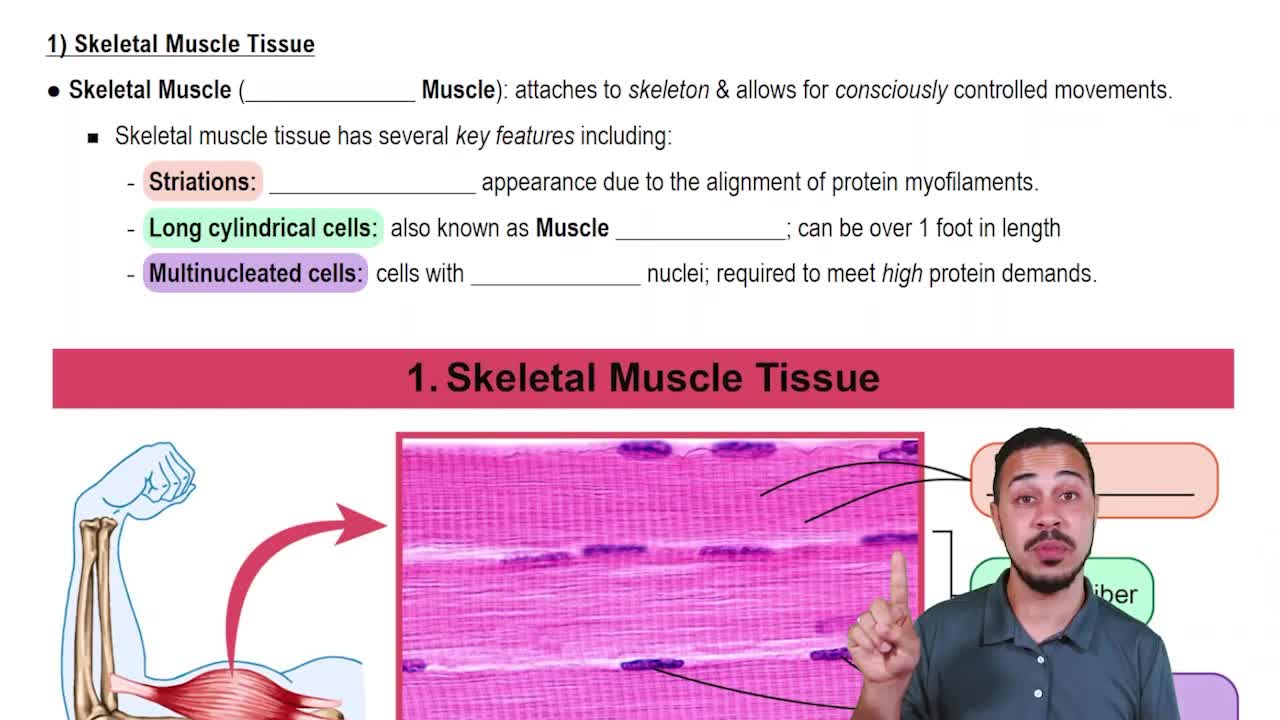
Skeletal Muscle Tissue
5250
views
94
rank
Guided course
07:35
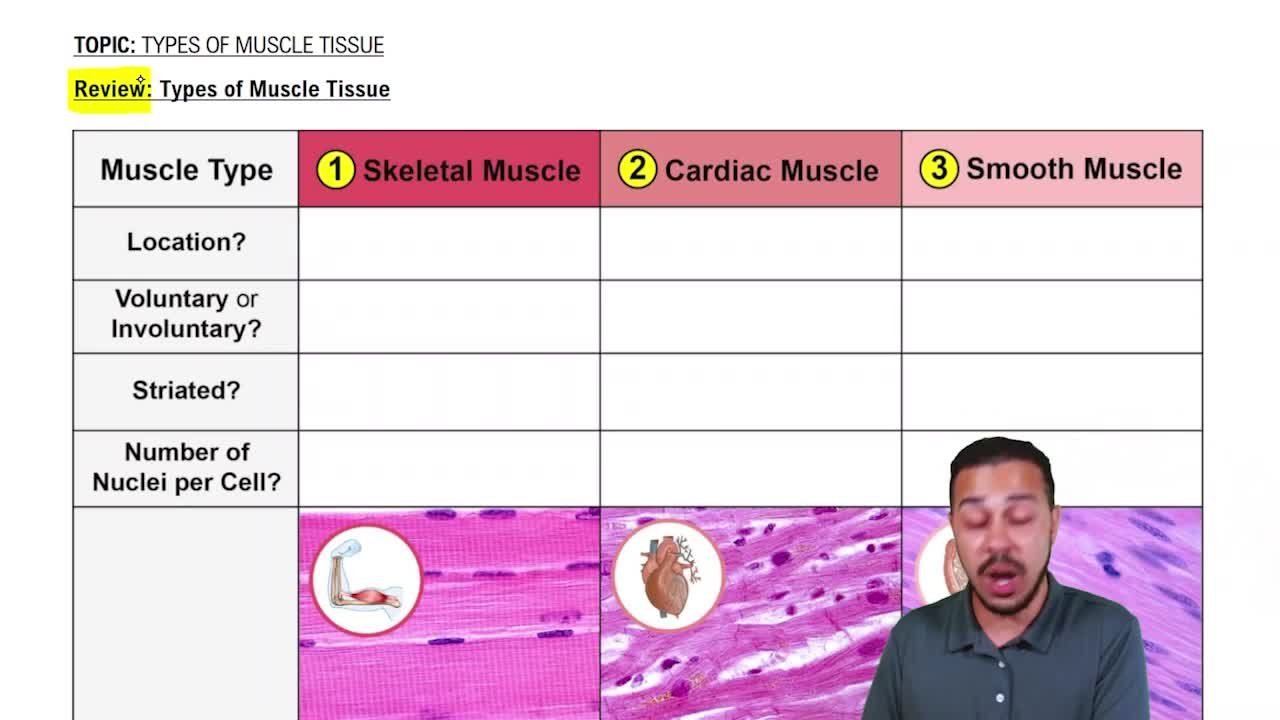
Review of Types of Muscle Tissue
3610
views
48
rank
Terms in this set (40)
Hide definitions
Voluntary muscle is:
Voluntary muscle is skeletal muscle.
The muscle tissue that can be consciously controlled is:
Skeletal muscle tissue can be consciously controlled.
What type of muscle is striated?
Both skeletal and cardiac muscle tissues are striated.
Visceral muscle is another name for:
Visceral muscle is another name for smooth muscle tissue.
Visceral muscle is also known as:
Visceral muscle is also known as smooth muscle tissue.
Which muscle type is striated?
Skeletal and cardiac muscle tissues are striated.
Which muscle is voluntary?
Skeletal muscle is voluntary.
Which type of muscle is striated and involuntary?
Cardiac muscle tissue is striated and involuntary.
Which type of muscle controls your digestive system?
Smooth muscle tissue controls the digestive system.
Which muscle type is striated and involuntary?
Cardiac muscle tissue is striated and involuntary.
Which muscle types are striated?
Skeletal and cardiac muscle tissues are striated.
Which muscle tissue is under voluntary control?
Skeletal muscle tissue is under voluntary control.
Which muscle type is voluntary?
Skeletal muscle tissue is voluntary.
Which muscle tissue is multinucleated?
Skeletal muscle tissue is multinucleated.
Which type of muscle tissue is voluntary?
Skeletal muscle tissue is voluntary.
Which muscle tissue is striated?
Skeletal and cardiac muscle tissues are striated.
Which muscle is involuntary?
Cardiac and smooth muscles are involuntary.
Which type of muscle is involuntary?
Cardiac and smooth muscle tissues are involuntary.
Intercalated discs are found in which muscle?
Intercalated discs are found in cardiac muscle tissue.
Which type of muscle is found in your digestive system?
Smooth muscle tissue is found in the digestive system.
Which muscle is striated and involuntary?
Cardiac muscle is striated and involuntary.
Which muscle tissue are under involuntary control?
Cardiac and smooth muscle tissues are under involuntary control.
Which muscle types are involuntary?
Cardiac and smooth muscle tissues are involuntary.
Which muscle tissues are voluntary?
Skeletal muscle tissue is voluntary.
Which muscle types are voluntary?
Skeletal muscle tissue is voluntary.
Which muscle tissue is under involuntary control?
Cardiac and smooth muscle tissues are under involuntary control.
Which muscle tissue type attaches to bone?
Skeletal muscle tissue attaches to bone.
Which muscle is not striated?
Smooth muscle tissue is not striated.
Which type of muscle tissue makes up the biceps?
Skeletal muscle tissue makes up the biceps.
Which type of muscle can be found inside organs?
Smooth muscle tissue can be found inside organs.
Which of the three muscle types are voluntary?
Skeletal muscle tissue is voluntary.
What muscle is voluntary?
Skeletal muscle is voluntary.
What muscle is striated and involuntary?
Cardiac muscle is striated and involuntary.
What muscle is striated?
Skeletal and cardiac muscles are striated.
What muscle is striated and voluntary?
Skeletal muscle is striated and voluntary.
What type of muscle is involuntary?
Cardiac and smooth muscle tissues are involuntary.
What type of muscle is found in the digestive system?
Smooth muscle tissue is found in the digestive system.
What is the function of intercalated discs in cardiac muscle?
Intercalated discs join cardiac muscle cells together and enable coordinated contractions.
What type of muscle attaches to bone?
Skeletal muscle attaches to bone.
What muscle is attached to bones?
Skeletal muscle is attached to bones.
 BackBack
 00:36
00:36