 Back
BackAnatomy & Physiology: The Human Body—An Orientation and Structural Organization
Study Guide - Smart Notes
 Tailored notes based on your materials, expanded with key definitions, examples, and context.
The Human Body: An Orientation
Introduction to Anatomy and Physiology
Anatomy and physiology are foundational sciences in understanding the human body. Anatomy is the study of the structure and shape of the body and its parts, while physiology is the study of how those parts function. The intimate relationship between structure and function is a central theme: structure determines function.
Anatomy: Study of body structure and relationships among parts.
Physiology: Study of body function at many levels (cellular, organ, systemic).
Structure determines function: For example, the thin walls of lung air sacs allow for gas exchange, while the muscular heart chambers enable blood pumping.
Levels of Structural Organization
From Atoms to Organisms
The human body is organized into a hierarchy of structural levels, each building on the previous:
Chemical level: Atoms combine to form molecules (e.g., water, proteins).
Cellular level: Molecules form cells, the basic units of life.
Tissue level: Similar cells group to perform a common function.
Organ level: Two or more tissue types combine to form organs with specific functions.
Organ system level: Organs work together for a common purpose.
Organismal level: The sum of all structural levels working together to keep us alive.
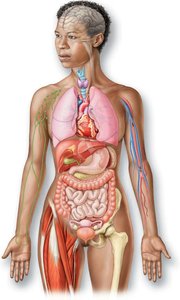
Overview of the Organ Systems
The body contains 11 major organ systems, each with distinct functions:
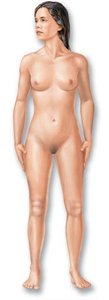
Integumentary System: External body covering (skin, hair, nails); protects deeper tissues, synthesizes vitamin D, houses sensory receptors.
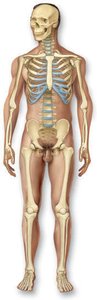
Skeletal System: Bones, cartilages, joints; supports and protects organs, provides framework for muscles, stores minerals, forms blood cells.
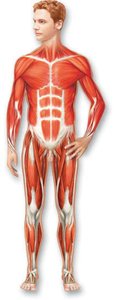
Muscular System: Skeletal muscles; allows movement, maintains posture, produces heat.
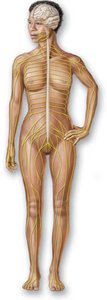
Nervous System: Brain, spinal cord, nerves; fast-acting control system, responds to stimuli.
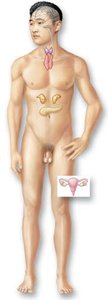
Endocrine System: Glands (pituitary, thyroid, adrenals, etc.); secretes hormones for regulation.
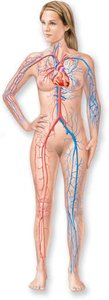
Cardiovascular System: Heart and blood vessels; transports blood, nutrients, gases, wastes.
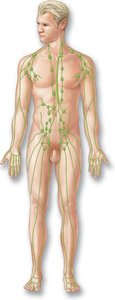
Lymphatic System: Lymph nodes, vessels, spleen, tonsils; returns leaked fluids, immunity.
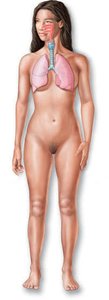
Respiratory System: Nasal cavity, pharynx, larynx, trachea, bronchi, lungs; gas exchange.
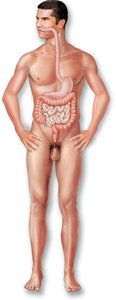
Digestive System: Oral cavity, esophagus, stomach, intestines, liver, pancreas; breaks down food, absorbs nutrients, eliminates waste.
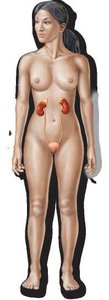
Urinary System: Kidneys, ureters, bladder, urethra; eliminates nitrogenous wastes, regulates water and electrolytes.
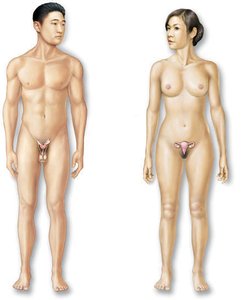
Reproductive System: Testes, ovaries, associated structures; produces offspring.
Necessary Life Functions and Survival Needs
Life Functions
To maintain life, humans must perform several essential functions:
Maintaining boundaries: Separation of internal and external environments (e.g., skin, cell membranes).
Movement: Locomotion and movement of substances (e.g., blood, food).
Responsiveness: Ability to sense and respond to stimuli (e.g., nervous system).
Digestion: Breakdown of food for absorption.
Metabolism: All chemical reactions in the body, including catabolism and anabolism.
Excretion: Removal of wastes (e.g., urine, feces, sweat).
Reproduction: Cellular and organismal reproduction.
Growth: Increase in size and number of cells.

Survival Needs
Nutrients: For energy and cell building (carbohydrates, proteins, fats, vitamins, minerals).
Oxygen: Required for metabolic reactions.
Water: Most abundant chemical in the body; site of chemical reactions.
Normal body temperature: Needed for proper metabolic reactions.
Appropriate atmospheric pressure: Required for gas exchange in the lungs.
The Language of Anatomy
Anatomical Position and Directional Terms
The anatomical position is the standard reference: body erect, feet parallel, arms at sides, palms facing forward. Directional terms describe the location of body parts relative to each other (e.g., superior, inferior, anterior, posterior, medial, lateral, proximal, distal, superficial, deep).
Body Planes and Sections
Sagittal plane: Divides body into right and left parts.
Frontal (coronal) plane: Divides body into anterior and posterior parts.
Transverse (horizontal) plane: Divides body into superior and inferior parts.



Body Cavities
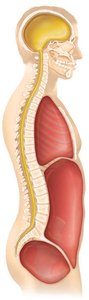
Dorsal body cavity: Cranial and spinal cavities (protects brain and spinal cord).
Ventral body cavity: Thoracic and abdominopelvic cavities (houses viscera).
Medical Imaging in Anatomy & Physiology
Overview of Imaging Techniques
Modern imaging techniques allow visualization of internal structures and functions:
X-ray: Best for visualizing bones and dense structures.
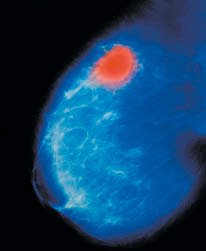
Mammography: Specialized X-ray for breast tissue.
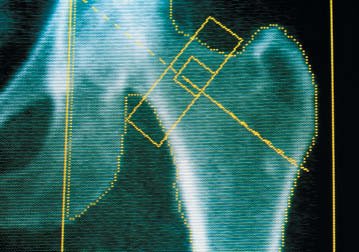
Bone densitometry: Measures bone mineral density.
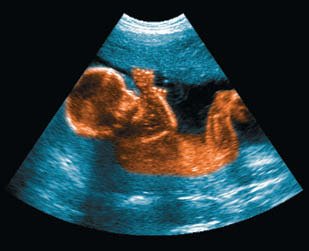
Ultrasound (sonography): Uses sound waves; safe for fetal imaging.
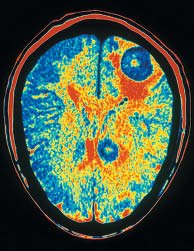
CT (computed tomography): Cross-sectional images; good for brain and abdomen.
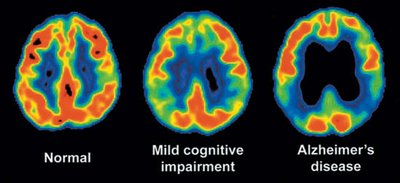
PET (positron emission tomography): Visualizes metabolic activity (e.g., brain function).
MRI (magnetic resonance imaging): Uses magnetic fields; excellent for soft tissues.
fMRI (functional MRI): Tracks blood flow in real time.
Summary Table: Major Organ Systems and Functions
Organ System | Main Components | Primary Functions |
|---|---|---|
Integumentary | Skin, hair, nails | Protection, vitamin D synthesis, sensation |
Skeletal | Bones, joints, cartilages | Support, protection, movement, blood cell formation |
Muscular | Skeletal muscles | Movement, posture, heat production |
Nervous | Brain, spinal cord, nerves | Control, communication, response to stimuli |
Endocrine | Glands (pituitary, thyroid, etc.) | Hormone secretion, regulation of growth and metabolism |
Cardiovascular | Heart, blood vessels | Transport of nutrients, gases, wastes |
Lymphatic | Lymph nodes, vessels, spleen | Fluid return, immunity |
Respiratory | Lungs, trachea, bronchi | Gas exchange |
Digestive | Mouth, esophagus, stomach, intestines | Breakdown and absorption of food, waste elimination |
Urinary | Kidneys, bladder, ureters, urethra | Waste elimination, water and electrolyte balance |
Reproductive | Testes, ovaries, associated ducts | Production of offspring |
Conclusion
Understanding the organization and function of the human body is essential for the study of anatomy and physiology. The integration of organ systems, the relationship between structure and function, and the use of modern imaging techniques all contribute to our knowledge of how the body maintains life and health.
