 Back
BackCell Division: Meiosis, Chromosomes, and Genetic Variation
Study Guide - Smart Notes
 Tailored notes based on your materials, expanded with key definitions, examples, and context.
Cell Division and Chromosomes
Karyotype and Chromosome Structure
A karyotype is a photographic representation of all the chromosomes in a cell, organized by size, shape, and type. Chromosomes contain genes, which are specific sequences of DNA that code for proteins and determine inherited traits.
Autosomes: Chromosomes that do not determine the sex of an individual (humans have 22 pairs).
Sex Chromosomes: Chromosomes that determine an individual's sex (XX = female, XY = male in humans).
Gene Locus: The specific location of a gene on a chromosome.
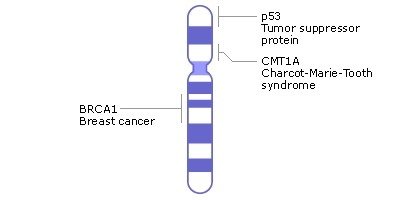
Homologous chromosomes are pairs of chromosomes (one from each parent) that carry the same types of genes at the same loci, but may have different versions (alleles) of those genes.
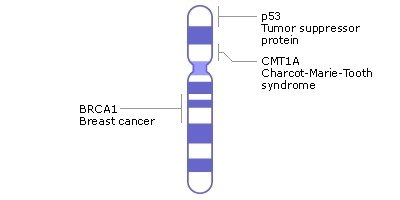
Each chromosome is made of DNA, which contains many genes. The structure of DNA allows for the storage and transmission of genetic information.
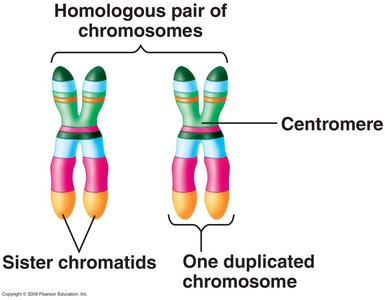
Haploid vs. Diploid Cells
Cells can be classified based on the number of chromosome sets they contain:
Diploid (2n): Cells with two sets of chromosomes (one from each parent); typical of somatic (body) cells.
Haploid (n): Cells with one set of chromosomes; typical of gametes (egg and sperm cells).
For any gene, there can be different variants called alleles. For example, the gene for freckles has an allele for freckles and an allele for no freckles.
Meiosis: The Basis of Sexual Reproduction
Overview of Meiosis
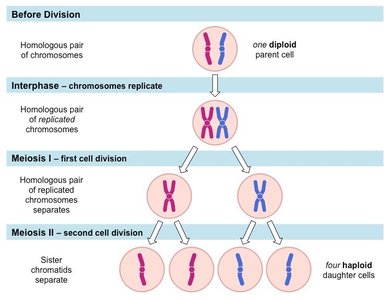
Meiosis is a special type of cell division that reduces the chromosome number by half, producing haploid gametes (egg and sperm). This process is essential for sexual reproduction and increases genetic diversity.
Meiosis involves two consecutive cell divisions (Meiosis I and Meiosis II) without an intervening round of DNA replication.
It results in four haploid cells from one diploid parent cell.
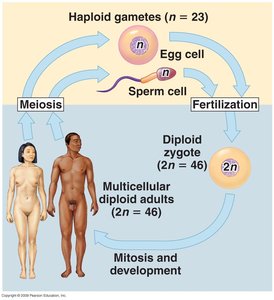
Gametes and Fertilization
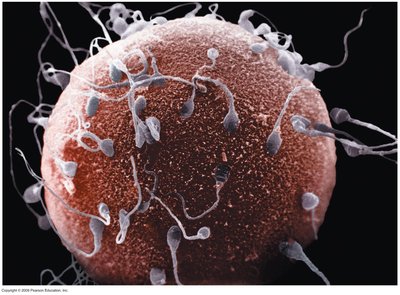
Gametes are sex cells (egg and sperm) that must be haploid so that when they fuse during fertilization, the resulting zygote is diploid. The zygote then grows into a new individual through mitosis.
Phases of Meiosis
Meiosis consists of two main stages: Meiosis I and Meiosis II. Each stage has several phases:
Interphase: Chromosomes are duplicated during the S phase.
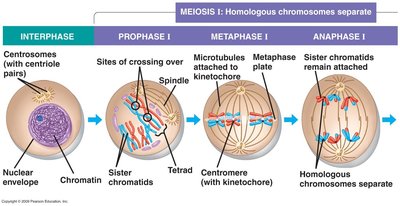
Meiosis I: Homologous chromosomes separate.
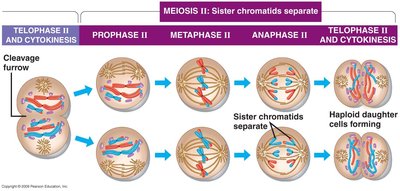
Meiosis II: Sister chromatids separate.
Meiosis I
Prophase I: Homologous chromosomes pair up (synapsis) and exchange genetic material (crossing over).
Metaphase I: Tetrads (paired homologous chromosomes) align at the cell's equator.
Anaphase I: Homologous chromosomes are pulled to opposite poles.
Telophase I and Cytokinesis: Two haploid cells are formed, each with duplicated chromosomes.
Meiosis II
Prophase II: Chromosomes condense, new spindles form.
Metaphase II: Chromosomes align at the equator.
Anaphase II: Sister chromatids are separated to opposite poles.
Telophase II and Cytokinesis: Four haploid daughter cells are produced.
Genetic Variation in Meiosis
Independent Assortment
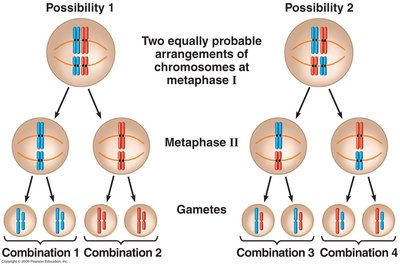
During metaphase I, homologous chromosome pairs align randomly at the cell's equator. This independent assortment leads to a variety of possible genetic combinations in gametes.
Humans have 23 pairs of chromosomes, resulting in over 8 million possible combinations for eggs and sperm each.
The total possible combinations in a zygote are at least 64 trillion (8 million x 8 million).
Crossing Over (Genetic Recombination)
During prophase I, homologous chromosomes exchange genetic material in a process called crossing over. This increases genetic diversity by producing new combinations of alleles.
Comparison: Mitosis vs. Meiosis
Mitosis and meiosis are both forms of cell division, but they serve different purposes and produce different outcomes.
Feature | Mitosis | Meiosis |
|---|---|---|
Number of Divisions | 1 | 2 |
Number of Daughter Cells | 2 | 4 |
Chromosome Number in Daughter Cells | Diploid (2n) | Haploid (n) |
Genetic Identity | Identical to parent | Genetically unique |
Function | Growth, repair | Sexual reproduction |
Oogenesis: Egg Formation in Humans
In human females, egg cells (oocytes) are formed before birth. At birth, there are about 1 million eggs, but only 300,000 remain at puberty. Of these, only 300-400 will be ovulated during a woman's reproductive years.
Summary
Meiosis is essential for sexual reproduction and genetic diversity.
It produces haploid gametes, which combine to form a diploid zygote.
Genetic variation arises from independent assortment and crossing over.
Mitosis and meiosis differ in their outcomes and biological roles.
