 Back
BackCentral Nervous System: Structure and Function Study Guide
Study Guide - Smart Notes
 Tailored notes based on your materials, expanded with key definitions, examples, and context.
Q1. What are the two organs that compose the CNS, and what is their primary function?
Background
Topic: Central Nervous System (CNS) Overview
This question tests your understanding of the basic anatomical components of the CNS and their main roles in the body.
Key Terms:
CNS: Central Nervous System
Organs: Structures that carry out specific functions
Step-by-Step Guidance
Recall the two main organs that make up the CNS. Think about the structures protected by the skull and vertebral column.
Consider the primary function these organs share, which is related to processing and integrating information.
Write down the names of these organs and describe their shared function in a sentence.
Try solving on your own before revealing the answer!
Q2. What are the new directional terms associated with the CNS: rostral and caudal?
Background
Topic: Anatomical Directional Terms
This question is about understanding anatomical terminology used to describe locations within the CNS.
Key Terms:
Rostral: Toward the nose or front
Caudal: Toward the tail or back
Step-by-Step Guidance
Define each term based on its Latin root and anatomical context.
Think about how these terms are used to describe positions in the brain and spinal cord.
Write a brief description for each term, relating it to the CNS.
Try solving on your own before revealing the answer!
Q3. Describe the organization of white and gray matter in the brain.
Background
Topic: Brain Structure
This question tests your knowledge of the locations and functions of white and gray matter in the brain.
Key Terms:
Gray matter: Contains neuron cell bodies
White matter: Contains myelinated axons
Step-by-Step Guidance
Identify where gray matter is found in the brain (think about cortex and nuclei).
Identify where white matter is found (think about deeper regions and connecting tracts).
List specific examples of each, such as cortex for gray matter and corpus callosum for white matter.
Try solving on your own before revealing the answer!
Q4. What are the four major regions of the brain?
Background
Topic: Brain Anatomy
This question is about identifying the main anatomical divisions of the brain.
Key Terms:
Major regions: Large structural divisions
Step-by-Step Guidance
Recall the names of the four main regions (think about cerebrum, diencephalon, brainstem, cerebellum).
Write each region in order from largest to smallest or from top to bottom.
Try solving on your own before revealing the answer!
Q5. What are the functions and structures of the cerebrum?
Background
Topic: Cerebrum Anatomy and Function
This question tests your understanding of the cerebrum's role and its structural features.
Key Terms:
Cerebrum: Largest part of the brain
Gyri: Ridges
Sulci: Grooves
Fissures: Deep grooves
Step-by-Step Guidance
List the main functions of the cerebrum (think about sensory, motor, integration, higher functions).
Identify the location and structural features (halves, gyri, sulci, fissures).
Describe the significance of gyri and sulci in increasing surface area.
Identify the major fissures and their locations.
Try solving on your own before revealing the answer!
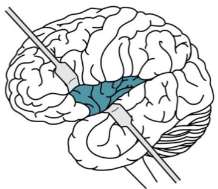
Q6. What are the lobes of the cerebrum and their general functions?
Background
Topic: Cerebral Lobes
This question is about identifying the locations and functions of the different lobes of the cerebrum.
Key Terms:
Frontal, Parietal, Temporal, Occipital, Insula: Names of lobes
Step-by-Step Guidance
Identify the location of each lobe relative to landmarks like the central sulcus.
List the general functions of each lobe (e.g., frontal: motor, parietal: sensory integration).
Describe the boundaries between lobes (e.g., fissures, sulci).
Try solving on your own before revealing the answer!
Q7. What are the functional areas of the cerebral cortex?
Background
Topic: Cerebral Cortex Functional Areas
This question tests your knowledge of sensory, association, and motor areas in the cortex.
Key Terms:
Primary somatosensory cortex: Receives sensory input
Primary motor cortex: Controls voluntary movement
Association areas: Integrate information
Step-by-Step Guidance
Fill in the table for sensory areas, noting their locations and what information they receive.
Describe the role of association areas and their locations.
Identify the location of motor areas relative to the central sulcus.
Explain the significance of the somatosensory and motor homunculus.
Try solving on your own before revealing the answer!
Q8. What are the major regions and functions of the diencephalon?
Background
Topic: Diencephalon Anatomy
This question is about identifying the thalamus, hypothalamus, and epithalamus and their functions.
Key Terms:
Thalamus: Relay station
Hypothalamus: Homeostasis
Epithalamus: Pineal gland, melatonin
Step-by-Step Guidance
Identify the location of each region within the diencephalon.
Describe the main functions of each region.
List the hormone secreted by the epithalamus and its function.
Try solving on your own before revealing the answer!
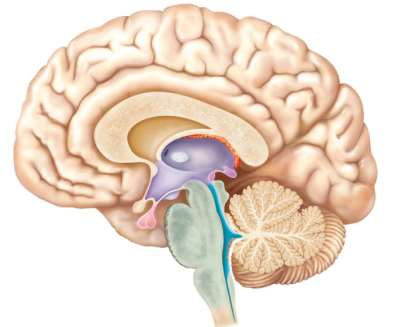
Q9. What are the general functions and regions of the brainstem?
Background
Topic: Brainstem Anatomy
This question tests your knowledge of the medulla oblongata, pons, and midbrain and their functions.
Key Terms:
Medulla oblongata: Vital centers
Pons: Bridge, breathing
Midbrain: Reflexes, relay
Step-by-Step Guidance
Identify the three regions of the brainstem and their locations.
Describe the main functions of each region (e.g., medulla: cardiac, respiratory centers).
List the cranial nerves associated with each region.
Try solving on your own before revealing the answer!
Q10. What are the structure and functions of the cerebellum?
Background
Topic: Cerebellum Anatomy and Function
This question is about the cerebellum's role in movement and its structural features.
Key Terms:
Cerebellar cortex: Gray matter
Arbor vitae: White matter
Cerebellar nuclei: Deep gray matter
Step-by-Step Guidance
Identify the location and main structural features of the cerebellum.
Describe the functions related to movement coordination and equilibrium.
List the types of matter and their locations within the cerebellum.
Try solving on your own before revealing the answer!
