 Back
BackChapter 21: The Immune System – Innate and Adaptive Body Defenses
Study Guide - Smart Notes
 Tailored notes based on your materials, expanded with key definitions, examples, and context.
The Immune System: Overview
Introduction
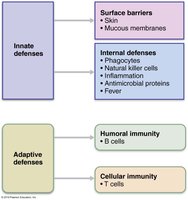
The immune system is a complex network that provides resistance to disease and protects the body from pathogens and harmful substances. It is composed of two main defense systems: innate (nonspecific) and adaptive (specific) defenses.
Innate defenses: Provide immediate, nonspecific protection through surface barriers and internal mechanisms.
Adaptive defenses: Target specific pathogens and require activation and memory.
Innate (Nonspecific) Defense System
First Line of Defense: Surface Membrane Barriers
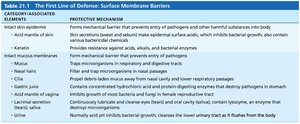
The first line of defense consists of physical and chemical barriers that prevent entry of pathogens.
Skin: Acts as a mechanical barrier; acidic secretions inhibit bacterial growth.
Mucous membranes: Trap pathogens and contain antimicrobial substances.
Other secretions: Include saliva, tears, gastric juice, and urine, each with protective mechanisms.
Category/Associated Elements | Protective Mechanism |
|---|---|
Intact skin epidermis | Mechanical barrier; prevents entry of pathogens. |
Acid mantle of skin | Skin secretions make epidermal surface acidic; inhibits bacterial growth. |
Mucous membranes | Physical barrier; traps pathogens. |
Nasal hairs | Filter and trap microorganisms in nasal passages. |
Cilia | Propel mucus away from nasal cavity and lower respiratory passages. |
Gastric juice | Destroys pathogens in stomach. |
Acid mantle of vagina | Inhibits growth of bacteria and fungi. |
Urine | Acidic; inhibits bacterial growth and flushes pathogens. |
Second Line of Defense: Cells and Chemicals
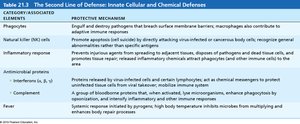
If pathogens breach surface barriers, the second line of defense is activated, involving various cells and chemicals.
Phagocytes: Engulf and digest pathogens.
Natural killer (NK) cells: Destroy infected or cancerous cells.
Inflammatory response: Localizes infection and promotes healing.
Antimicrobial proteins: Interferons and complement proteins attack pathogens.
Fever: Inhibits microbial growth and enhances repair.
Category/Associated Elements | Protective Mechanism |
|---|---|
Phagocytes | Engulf and destroy pathogens. |
Natural killer (NK) cells | Induce apoptosis in infected/cancerous cells. |
Inflammatory response | Prevents spread, disposes debris, alerts adaptive system, sets stage for repair. |
Interferons | Warn neighboring cells, block viral reproduction. |
Complement | Enhances inflammation, lyses bacteria, opsonizes pathogens. |
Fever | Inhibits microbial growth, increases metabolic rate. |
Phagocytosis
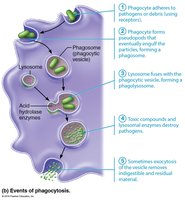
Phagocytes, such as neutrophils and macrophages, ingest and digest foreign invaders. The process involves recognition, adherence, engulfment, and digestion of pathogens.
Opsonization: Antibodies or complement proteins coat pathogens, enhancing phagocytosis.
Phagosome formation: Pathogen is engulfed in a vesicle.
Phagolysosome formation: Fusion with lysosome leads to digestion.
Exocytosis: Indigestible waste is expelled.
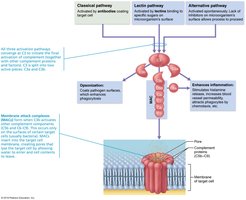
Complement System
The complement system consists of about 20 blood proteins that enhance both innate and adaptive immunity.
Activation pathways: Classical, lectin, and alternative pathways.
Functions: Opsonization, inflammation, cell lysis.
Adaptive (Specific) Defense System
Characteristics of Adaptive Immunity
The adaptive immune system is specific, systemic, and has memory. It consists of two main branches:
Humoral immunity: Mediated by B cells and antibodies; targets extracellular pathogens.
Cellular immunity: Mediated by T cells; targets infected or abnormal cells.
Antigens
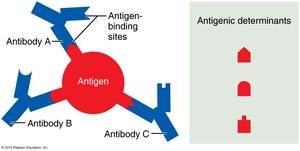
Antigens: Substances that provoke an immune response; usually large, complex molecules.
Antigenic determinants: Specific regions of an antigen recognized by antibodies.
Haptens: Small molecules that become immunogenic when attached to proteins.
Lymphocyte Development and Activation
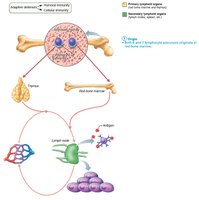
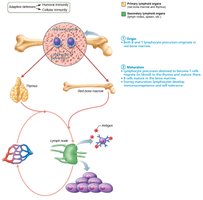
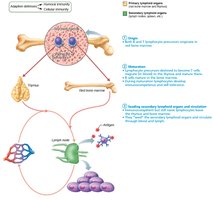
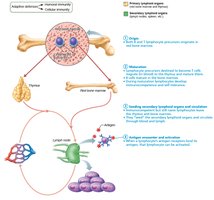
Lymphocytes (B and T cells) undergo a series of steps: origin, maturation, seeding, activation, and proliferation.
Origin: Both B and T cells originate in red bone marrow.
Maturation: B cells mature in bone marrow; T cells mature in thymus.
Seeding: Immunocompetent cells colonize secondary lymphoid organs.
Activation: Encounter with antigen triggers clonal selection.
Proliferation: Activated cells form clones; most become effector cells, some become memory cells.
T Cell Education: Positive and Negative Selection
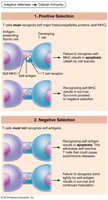
T cells are "educated" in the thymus to ensure self-tolerance and proper recognition.
Positive selection: T cells must recognize self-MHC proteins.
Negative selection: T cells that bind to self-antigens are eliminated.
Overview of B and T Lymphocytes
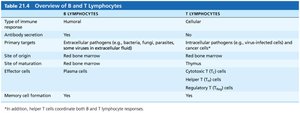
B Lymphocytes | T Lymphocytes | |
|---|---|---|
Type of immune response | Humoral | Cellular |
Antibody secretion | Yes | No |
Primary targets | Extracellular pathogens | Intracellular pathogens, cancer cells |
Site of maturation | Red bone marrow | Thymus |
Effector cells | Plasma cells | Cytotoxic, helper, regulatory T cells |
Memory cell formation | Yes | Yes |
Humoral Immune Response
B Cell Activation and Clonal Selection
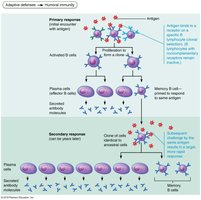
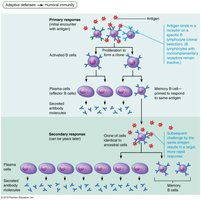
When B cells encounter their specific antigen, they undergo clonal selection, proliferate, and differentiate into plasma cells and memory cells.
Plasma cells: Secrete antibodies specific to the antigen.
Memory cells: Provide rapid response upon re-exposure.
Immunological Memory
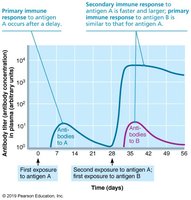
Primary response: Slow, occurs upon first exposure; antibody levels peak in 10 days.
Secondary response: Faster and stronger due to memory cells; antibody levels peak in 2–3 days.
Active and Passive Humoral Immunity
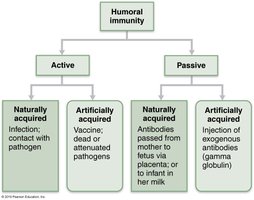
Active immunity: Body produces antibodies; can be naturally (infection) or artificially (vaccination) acquired.
Passive immunity: Antibodies are provided externally; can be naturally (mother to fetus) or artificially (injection of antibodies) acquired.
Antibodies (Immunoglobulins)
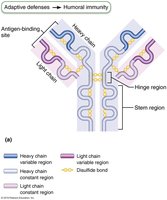
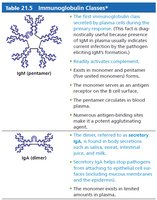
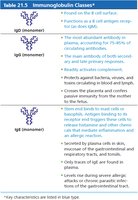
Antibodies are proteins produced by plasma cells that bind specifically to antigens. There are five major classes: IgM, IgA, IgD, IgG, and IgE.
IgM: First antibody released; potent agglutinating agent.
IgA: Found in secretions; prevents pathogen entry.
IgD: Functions as B cell receptor.
IgG: Most abundant; crosses placenta.
IgE: Active in allergies and parasitic infections.
Mechanisms of Antibody Action
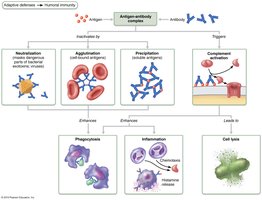
Antibodies inactivate antigens and mark them for destruction by various mechanisms:
Neutralization: Blocks harmful effects.
Agglutination: Clumps pathogens.
Precipitation: Soluble antigens are made insoluble.
Complement activation: Leads to cell lysis.
Cellular Immune Response
Major Types of T Cells
Helper T (TH) cells: Activate both humoral and cellular responses.
Cytotoxic T (TC) cells: Directly attack and kill infected or abnormal cells.
Regulatory T cells: Moderate immune response.
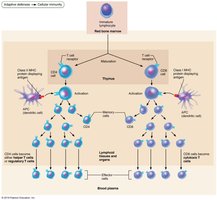
Clonal Selection of T Cells
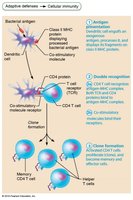
T cell activation requires recognition of both self and nonself antigens presented by antigen-presenting cells (APCs).
Double recognition: T cell receptor binds to antigen-MHC complex.
Clonal formation: Activated T cells proliferate and differentiate.
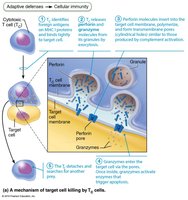
Cytotoxic T Cell Mechanism
Cytotoxic T cells kill target cells by releasing perforins and granzymes, inducing apoptosis.
Perforins: Create pores in target cell membrane.
Granzymes: Enter through pores and trigger apoptosis.
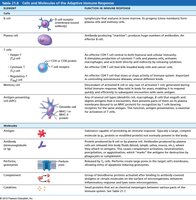
Cells and Molecules of the Adaptive Immune Response
Component | Function |
|---|---|
B cells | Produce antibodies; mediate humoral immunity. |
Plasma cells | Secrete antibodies. |
T cells | Helper, cytotoxic, regulatory functions. |
Antigen-presenting cells | Present antigens to T cells. |
Antigens | Trigger immune response. |
Antibodies | Bind antigens; mediate immune functions. |
Immune System Disorders
Immunodeficiencies
Congenital or acquired conditions that impair immune function.
Examples: Severe combined immunodeficiency (SCID), Hodgkin’s disease, AIDS.
Autoimmune Diseases
Immune system attacks self tissues.
Examples: Rheumatoid arthritis, multiple sclerosis, type 1 diabetes, lupus.
Treatments: Immunosuppressive drugs, blocking cytokines, research into regulatory T cells.
Hypersensitivities
Immune responses to harmless antigens cause tissue damage.
Immediate hypersensitivity: Allergies, anaphylactic shock.
Subacute hypersensitivity: Cytotoxic and immune complex reactions (e.g., mismatched blood transfusion).
Delayed hypersensitivity: T cell-mediated (e.g., contact dermatitis, TB skin test).
Summary Table: Key Concepts
Innate immunity: Immediate, nonspecific, includes barriers and internal defenses.
Adaptive immunity: Specific, systemic, memory; includes humoral and cellular responses.
Antigens: Trigger immune response; recognized by antibodies and lymphocytes.
B cells: Mediate humoral immunity; produce antibodies.
T cells: Mediate cellular immunity; kill infected cells and regulate immune response.
Immunodeficiencies: Impaired immune function.
Autoimmune diseases: Immune system attacks self.
Hypersensitivities: Overactive immune responses to harmless antigens.
