 Back
BackChapter 24: Nutrition, Metabolism, and Energy Balance – Anatomy & Physiology II Study Notes
Study Guide - Smart Notes
 Tailored notes based on your materials, expanded with key definitions, examples, and context.
Nutrition and Dietary Guidelines
Macronutrients and Micronutrients
Nutrition is the process by which the body converts nutrients into energy and building blocks for growth, maintenance, and repair. Nutrients are classified as macronutrients (carbohydrates, lipids, proteins) and micronutrients (vitamins, minerals). Water is also considered a nutrient due to its essential role in physiological processes.
Macronutrients: Provide energy and structural components. Includes carbohydrates, lipids, and proteins.
Micronutrients: Required in small amounts. Includes vitamins and minerals.
Essential nutrients: Must be obtained from the diet because the body cannot synthesize them.
Energy value: Measured in kilocalories (kcal). 1 dietary "Calorie" = 1 kcal.
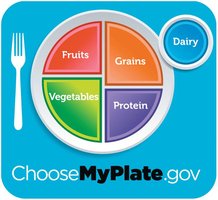
Basic dietary principles emphasize balanced intake of fruits, vegetables, whole grains, and proteins, while minimizing processed foods and excess calories.
Macronutrient Metabolism
Carbohydrates
Carbohydrates are primarily derived from plant sources and serve as the main fuel for cellular ATP production. They are classified as simple (sugars) and complex (starches, fibers).
Dietary sources: Grains, vegetables, fruits, sugarcane, honey, milk.
Role: Glucose is the preferred fuel for neurons and red blood cells.
Dietary requirements: 45–65% of total calories, mainly from complex carbohydrates.
Lipids
Lipids include triglycerides, phospholipids, and cholesterol. They provide energy, structural components, and are involved in hormone synthesis.
Dietary sources: Saturated fats (meat, dairy), unsaturated fats (seeds, nuts, vegetable oils), cholesterol (egg yolk, meats).
Essential fatty acids: Linoleic acid (omega-6) and linolenic acid (omega-3).
Dietary requirements: 20–35% of total caloric intake; saturated fats limited to 10% or less.
Proteins
Proteins are vital for structural and functional roles in the body. Complete proteins contain all essential amino acids, while incomplete proteins lack one or more.
Dietary sources: Animal products (eggs, milk, fish, meats), soybeans, legumes, nuts, cereals.
Uses: Structural (keratin, collagen), functional (enzymes, hormones).
Dietary requirements: 0.8 g per kg body weight per day.
Protein synthesis depends on the presence of all essential amino acids, adequate caloric intake, and hormonal regulation.
Micronutrients: Vitamins and Minerals
Vitamins
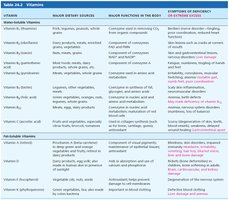
Vitamins are organic compounds that function as coenzymes in metabolic reactions. They are classified by solubility:
Water-soluble: B complex, C; not stored, excess excreted.
Fat-soluble: A, D, E, K; stored in body, excess can be toxic.
Antioxidants: Vitamins C, E, A, and mineral selenium neutralize free radicals.
Vitamin | Major Dietary Sources | Major Functions | Deficiency Symptoms |
|---|---|---|---|
Vitamin A | Liver, fish, dairy, carrots | Vision, epithelial health | Night blindness |
Vitamin D | Eggs, dairy, sunlight | Calcium absorption | Rickets |
Vitamin E | Vegetable oils, nuts | Antioxidant | Neurological issues |
Vitamin K | Green vegetables | Blood clotting | Bleeding |
B complex | Whole grains, meats | Energy metabolism | Anemia, neurological issues |
Vitamin C | Citrus fruits | Collagen synthesis | Scurvy |
Minerals
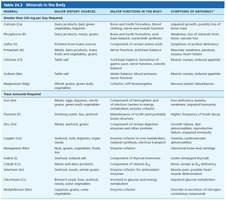
Minerals are inorganic elements required for various physiological functions, including bone formation, nerve function, and electrolyte balance.
Mineral | Major Dietary Sources | Major Functions | Deficiency Symptoms |
|---|---|---|---|
Calcium | Dairy, leafy greens | Bone health, muscle contraction | Osteoporosis |
Phosphorus | Meat, dairy | Bone, ATP formation | Weakness |
Potassium | Fruits, vegetables | Electrolyte balance | Muscle cramps |
Iron | Meat, legumes | Hemoglobin synthesis | Anemia |
Iodine | Seafood, iodized salt | Thyroid hormone synthesis | Goiter |
Metabolism: Biochemical Reactions
Anabolism and Catabolism
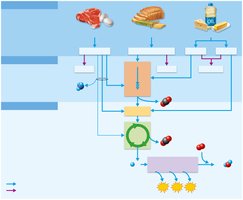
Metabolism encompasses all biochemical reactions in the body. Anabolism builds complex molecules, while catabolism breaks them down. Cellular respiration is a catabolic process that generates ATP from food fuels.
Anabolism: Synthesis of macromolecules (proteins, glycogen).
Catabolism: Breakdown of macromolecules (glycolysis, fatty acid oxidation).
Phosphorylation: Transfer of phosphate groups to activate molecules.
ATP Synthesis
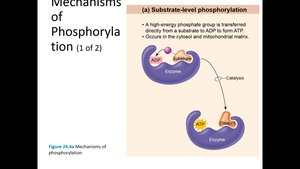
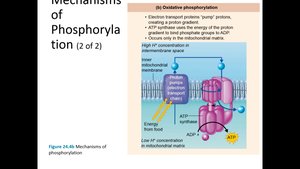
ATP is synthesized by two main mechanisms: substrate-level phosphorylation and oxidative phosphorylation.
Substrate-level phosphorylation: Direct transfer of phosphate to ADP during glycolysis and Krebs cycle.
Oxidative phosphorylation: Uses electron transport chain and chemiosmosis in mitochondria to generate most ATP.
Carbohydrate Metabolism
Pathways of Glucose Catabolism
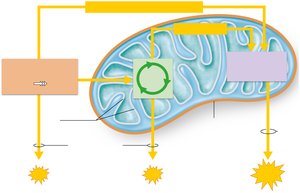
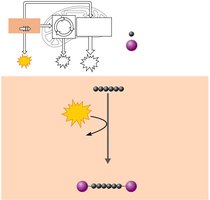
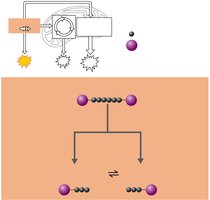
Complete glucose catabolism involves three pathways: glycolysis, Krebs cycle, and electron transport chain.
Glycolysis: Occurs in cytosol, breaks glucose into pyruvic acid.
Krebs cycle: Occurs in mitochondrial matrix, oxidizes pyruvic acid to CO2.
Electron transport chain: Occurs in inner mitochondrial membrane, produces most ATP.
Glycolysis: Major Phases
Phase 1: Sugar activation – Glucose is phosphorylated and converted to fructose-1,6-bisphosphate.
Phase 2: Sugar cleavage – Fructose-1,6-bisphosphate is split into two 3-carbon fragments.
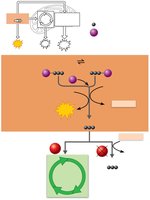
Phase 3: Sugar oxidation and ATP formation – 3-carbon fragments are oxidized, producing ATP and NADH.
Lipid Metabolism
Fat Catabolism and Synthesis
Lipids are metabolized for energy and stored as triglycerides. Fatty acids undergo beta oxidation to form acetyl CoA, which enters the citric acid cycle.
Oxidation: Glycerol and fatty acids are broken down for ATP production.
Lipogenesis: Synthesis of triglycerides when energy and glucose are abundant.
Lipolysis: Breakdown of stored fats for energy.
Ketogenesis: Formation of ketone bodies during prolonged fasting or carbohydrate deficiency.
Protein Metabolism
Amino Acid Catabolism
Proteins are continually degraded and synthesized. Excess amino acids are oxidized for energy or converted to fat. Catabolism involves transamination, oxidative deamination, and keto acid modification.
Transamination: Transfer of amine group to keto acid.
Oxidative deamination: Removal of amine group as ammonia, converted to urea.
Keto acid modification: Conversion to citric acid cycle intermediates.
Metabolic States of the Body
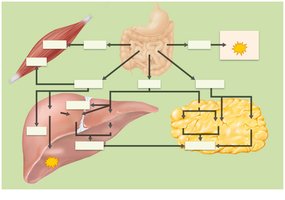
Absorptive State
The absorptive (fed) state occurs after eating, when nutrients are absorbed and stored. Insulin is the primary hormone regulating this state.
Carbohydrates: Glucose is used for energy or stored as glycogen/fat.
Triglycerides: Hydrolyzed and stored in adipose tissue.
Amino acids: Used for protein synthesis or converted to fat.
Postabsorptive State
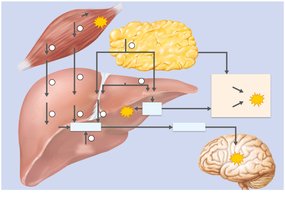
The postabsorptive (fasting) state occurs when the GI tract is empty and energy is supplied by breakdown of reserves. Glucagon is the primary hormone regulating this state.
Glycogenolysis: Breakdown of glycogen to glucose.
Gluconeogenesis: Formation of glucose from noncarbohydrate sources.
Lipolysis: Breakdown of fats for energy.
Protein catabolism: Used during prolonged fasting.
Metabolic Role of the Liver
Liver Functions
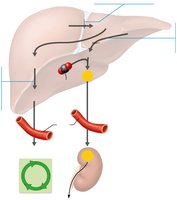
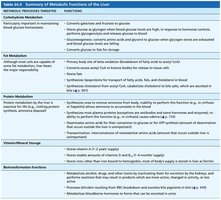
The liver is central to metabolism, processing nutrients, regulating cholesterol, storing vitamins/minerals, and detoxifying substances.
Carbohydrate metabolism: Glycogenesis, glycogenolysis, gluconeogenesis.
Fat metabolism: Lipoprotein synthesis, cholesterol production, bile salt formation.
Protein metabolism: Deamination, urea formation, plasma protein synthesis.
Cholesterol and Lipoproteins
Cholesterol Transport
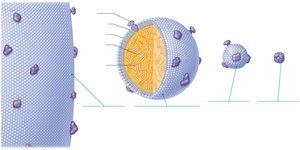
Cholesterol is transported in blood by lipoproteins. Types include chylomicrons, VLDL, LDL, and HDL, each with distinct roles and compositions.
Lipoprotein | Main Function | Composition |
|---|---|---|
Chylomicron | Transport absorbed lipids from intestine to liver | Mostly triglycerides |
VLDL | Transport triglycerides from liver to adipose tissue | High triglyceride content |
LDL | Deliver cholesterol to tissues | High cholesterol content |
HDL | Remove cholesterol from tissues to liver | High protein content |
Energy Balance and Obesity
Energy Intake and Output
Energy balance is achieved when energy intake equals energy output. Imbalance leads to weight gain or loss. Body mass index (BMI) is used to assess obesity.
BMI formula:
Overweight: BMI 25–30
Obese: BMI > 30
Regulation of Food Intake
Neural and Hormonal Controls
Food intake is regulated by neural signals, hormones, and nutrient levels. Key hormones include insulin, leptin, ghrelin, and neuropeptide Y.
Short-term controls: GI tract distension, nutrient signals, gut hormones.
Long-term controls: Leptin from adipose tissue, insulin from pancreas.
Metabolic Rate and Body Temperature
Basal and Total Metabolic Rate
Metabolic rate is the total heat produced by the body. Basal metabolic rate (BMR) reflects energy needed for essential functions and is influenced by age, gender, temperature, stress, and thyroxine levels.
BMR measurement: Postabsorptive state, relaxed, room temperature.
Factors: Age, gender, temperature, stress, hormones.
Regulation of Body Temperature
Body temperature is regulated by balancing heat production and loss. The hypothalamus acts as the main thermoregulatory center.
Heat production: Metabolism, muscular activity, hormones.
Heat loss: Radiation, conduction, convection, evaporation.
Core temperature: Highest in internal organs; shell temperature fluctuates.
Clinical Correlations and Disorders
Metabolic Disorders
Diabetes mellitus: Inadequate insulin production or abnormal receptors; leads to hyperglycemia, protein wasting, metabolic acidosis.
Ketosis: Accumulation of ketone bodies during starvation or diabetes.
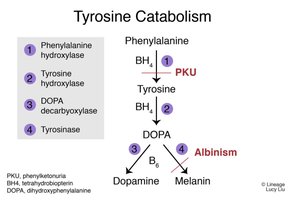
Phenylketonuria (PKU): Inability to metabolize phenylalanine; neurotoxic effects.
Galactosemia: Deficit in converting galactose to glucose; mental deficits.
Glycogen storage disease: Enzyme deficiency; glycogen accumulation.
Metabolic Syndrome
Metabolic syndrome is a cluster of risk factors that increase the risk of heart disease and diabetes.
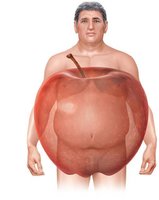
Increased waist circumference
Increased blood pressure
Increased blood glucose
Increased blood triglycerides
Decreased HDL cholesterol
Developmental Aspects and Aging
Nutrition Across the Lifespan
Proper nutrition is critical during early development. Metabolic rate declines with age, and medications or chronic conditions can affect nutritional status and metabolism.
Early childhood: Deficiencies can cause mental deficits.
Aging: Reduced metabolic rate, increased risk of malnutrition, tissue stiffening.
