 Back
BackComprehensive Study Notes: The Reproductive System (Male & Female Anatomy and Physiology, Meiosis, Birth Control, and STIs)
Study Guide - Smart Notes
 Tailored notes based on your materials, expanded with key definitions, examples, and context.
The Reproductive System
Overview of the Reproductive System
The reproductive system is essential for the survival of a species, though not for the individual. It remains inactive until puberty, when reproductive organs mature and become functional. Both male and female systems share core principles such as feedback loops, structure-function relationships, gradients, and cell-to-cell communication.
Similarities Between Male and Female Reproductive Organs
Gonads (primary sex organs): Secrete sex hormones (testosterone in males, estrogen in females) and produce gametes (sperm in males, ova in females) via meiosis.
Accessory reproductive organs: Support the function of the gonads and gametes.
Cell Division: Mitosis and Meiosis
Overview of Meiosis
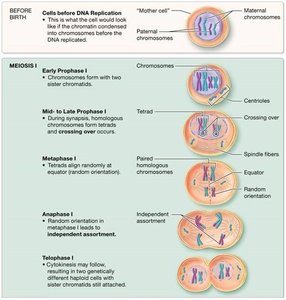
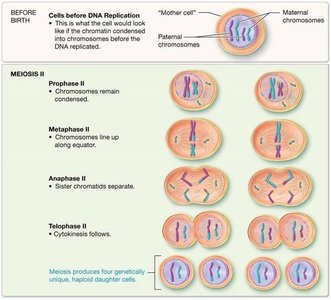
Meiosis is a specialized form of cell division that produces gametes with half the number of chromosomes (haploid, 1n) compared to somatic cells (diploid, 2n). This ensures the correct chromosome number in the zygote after fertilization.
Fertilization: Fusion of sperm and egg to form a zygote, restoring the diploid chromosome number.
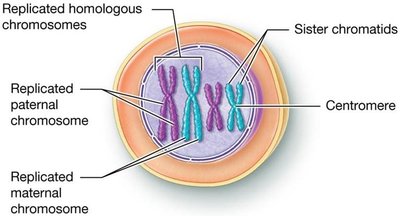
Homologous chromosomes: Each pair consists of one chromosome from each parent, carrying the same genes but possibly different alleles.
Phases of Meiosis
Meiosis I: Homologous chromosomes separate, producing two haploid cells with duplicated chromosomes.
Meiosis II: Sister chromatids separate, resulting in four genetically unique haploid cells.
Key processes: Crossing over (exchange of genetic material) and independent assortment (random distribution of chromosomes) increase genetic diversity.
Comparison: Mitosis vs. Meiosis
Mitosis: Produces two genetically identical diploid cells for growth and repair.
Meiosis: Produces four genetically unique haploid gametes for sexual reproduction.
Male Reproductive System
Anatomy of the Male Reproductive System
Testes: Produce sperm and secrete testosterone.
Duct system: Transports sperm (epididymis, ductus deferens, ejaculatory duct, urethra).
Penis: Delivers sperm into the female reproductive tract.
Accessory sex glands: Seminal vesicles, prostate, and bulbourethral glands produce seminal fluid.
Support structures: Scrotum and spermatic cord regulate temperature and support the testes.
Testes and Spermatogenesis
Spermatogenic cells: Form sperm in seminiferous tubules.
Sustentacular (Sertoli) cells: Support and nourish developing sperm, form the blood-testis barrier, and secrete testicular fluid.
Interstitial (Leydig) cells: Produce testosterone.
Myoid cells: Contract to move sperm and fluid through tubules.
Sperm Transport Pathway
Seminiferous tubules
Straight tubule
Rete testis
Efferent ductules
Epididymis (site of sperm maturation and storage)
Ductus (vas) deferens
Ejaculatory duct
Urethra (prostatic, membranous, spongy regions)
Accessory Sex Glands and Semen
Seminal vesicles: Produce alkaline, fructose-rich fluid (60–70% of semen volume).
Prostate gland: Secretes milky, slightly alkaline fluid with enzymes and antimicrobial chemicals (20–30% of semen volume).
Bulbourethral glands: Secrete alkaline mucus for lubrication and neutralization of acidic urine.
Hormonal Regulation of Male Reproduction
HPG axis: Hypothalamus releases GnRH → anterior pituitary releases FSH and LH → testes produce testosterone and inhibin.
Negative feedback: Testosterone and inhibin inhibit GnRH, FSH, and LH release.
Male Sexual Response
Erection: Parasympathetic reflex causes vasodilation and engorgement of erectile tissue.
Ejaculation: Sympathetic reflex expels semen in two stages—emission and expulsion.
Orgasm: Accompanied by ejaculation, followed by a refractory period.
Male Infertility and Aging
Infertility: Often due to low sperm count, hormonal imbalances, or anatomical defects.
Male climacteric (andropause): Gradual decline in reproductive function and testosterone levels with age.
Erectile dysfunction (ED): May result from psychological or physical factors; risk increases with age.
Female Reproductive System
Anatomy of the Female Reproductive System
Ovaries: Produce ova and secrete hormones (estrogens, progesterone, inhibin, relaxin).
Uterine tubes (fallopian tubes): Transport oocyte; site of fertilization.
Uterus: Site of implantation, protection, and nourishment of embryo/fetus.
Vagina: Receives penis and semen; birth canal.
External genitalia (vulva): Includes mons pubis, labia majora/minora, clitoris, vestibule.
Mammary glands: Produce milk for newborns.
Oogenesis and the Ovarian Cycle
Oogenesis: Formation of ova; begins before birth, pauses until puberty, resumes monthly until menopause.
Ovarian cycle: Three phases—follicular (follicle development), ovulation (release of secondary oocyte), luteal (corpus luteum formation and hormone secretion).
Hormonal Regulation of the Female Reproductive System
HPG axis: Hypothalamus (GnRH) → anterior pituitary (FSH, LH) → ovaries (estrogens, progesterone, inhibin).
Feedback mechanisms: Estrogen and inhibin regulate FSH/LH; LH surge triggers ovulation.
The Uterine (Menstrual) Cycle
Menstrual phase (days 1–5): Shedding of stratum functionalis.
Proliferative phase (days 6–14): Regeneration of endometrium; ovulation occurs around day 14.
Secretory phase (days 15–28): Endometrium prepares for implantation; if no fertilization, cycle restarts.
Female Sexual Response, Puberty, and Menopause
Sexual response: Similar to males; involves engorgement of tissues and increased lubrication.
Puberty: Initiated by increased estrogen/progesterone; development of secondary sex characteristics and menarche.
Menopause: Cessation of menstruation due to depletion of ovarian follicles; associated with decreased estrogen/progesterone and various physiological changes.
Birth Control (Contraception)
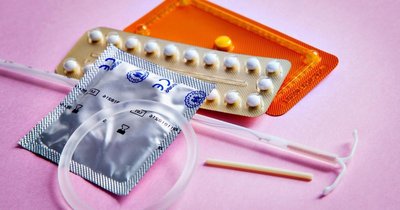
Birth control methods are designed to prevent pregnancy and include behavioral, barrier, hormonal, intrauterine, and permanent methods.
Behavioral: Abstinence, rhythm method, withdrawal.
Barrier: Condoms, diaphragms, cervical caps, sponges (often used with spermicide).
Hormonal: Oral contraceptives, patches, rings, injections, implants (inhibit FSH/LH release).
Intrauterine devices (IUD/IUS): Prevent implantation or release hormones to inhibit ovulation.
Permanents: Vasectomy (male), tubal ligation (female).
Sexually Transmitted Infections (STIs)
STIs are infections transmitted through sexual contact, caused by bacteria, viruses, or parasites. They are a major cause of reproductive disorders and infertility.
Bacterial/Parasitic STIs: Chlamydia, gonorrhea, syphilis, trichomoniasis.
Viral STIs: Human papillomavirus (HPV), genital herpes.
Prevention includes safe sexual practices, regular screening, and vaccination (e.g., HPV vaccine).
Tables: Functions of Male and Female Reproductive Structures
Structure | Function |
|---|---|
Testis | Produces sperm cells, testosterone, and inhibin |
Epididymis | Promotes sperm maturation, stores sperm, moves sperm to ductus deferens |
Ductus deferens | Stores sperm, moves sperm to ejaculatory duct |
Seminal vesicle | Secretes alkaline fluid with nutrients, prostaglandins, and enzymes |
Prostate gland | Secretes slightly alkaline fluid with nutrients, supports and activates sperm |
Bulbourethral gland | Secretes mucus to lubricate glans penis and neutralize acidic urine |
Ovary | Produces oocytes, estrogens, progesterone, and inhibin |
Uterine tube | Moves oocyte/fertilized ovum toward uterus; site of fertilization |
Uterus | Protects and sustains conceptus during pregnancy; menstrual flow |
Vagina | Receives penis during intercourse; passageway for menstrual flow and birth |
Comparison Table: Spermatogenesis vs. Oogenesis
Characteristic | Spermatogenesis | Oogenesis |
|---|---|---|
Time of onset | Begins at puberty | Begins before birth; arrested at Prophase I |
Number of cells produced | Millions of sperm daily | One secondary oocyte per month |
Result of meiosis | Four haploid spermatids | One haploid ovum, two polar bodies |
Duration | Continuous throughout life | Pauses twice: at prophase I and metaphase II |
Key Terms and Concepts
Gonads: Primary sex organs (testes/ovaries)
Gametes: Sex cells (sperm/ova)
Meiosis: Cell division producing haploid gametes
Fertilization: Fusion of sperm and egg to form zygote
HPG axis: Hormonal regulation pathway (hypothalamus-pituitary-gonadal)
Menarche: First menstrual period
Menopause: End of reproductive cycles in women
Infertility: Inability to conceive after one year of unprotected intercourse
