 Back
BackDietary Supplements, Deficiency Prevention, and Population Health: A Study Guide
Study Guide - Smart Notes
 Tailored notes based on your materials, expanded with key definitions, examples, and context.
Pills and Powders: Nutrients and Deficiency Prevention
Introduction to Dietary Supplements
Dietary supplements are products intended to add nutritional value to the diet. While supplementation can be beneficial in certain situations, pills and powders cannot replace the complex benefits of whole foods. Nutrients in foods work together synergistically to promote health and prevent deficiency diseases.
Should You Take Dietary Supplements?
Supplements may be considered for individuals with specific nutritional needs or deficiencies. However, it is important to read nutrition label claims carefully to avoid deceptive marketing and to understand that supplements are not a substitute for a balanced diet.

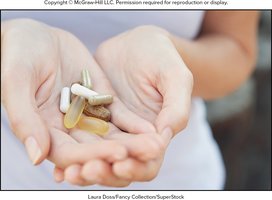
Understanding Dietary Supplements
What Is a Dietary Supplement?
Dietary supplements can be categorized by their ingredients or intended use:
Ingredients: Vitamins, minerals, botanicals, amino acids, enzymes, and other dietary substances.
Uses: Weight loss, sports performance, brain function, pain relief, age/life stage support, and specific health conditions.
Are Dietary Supplements Considered Food or Drugs?
Supplements occupy a unique regulatory space between foods and drugs. Foods are consumed for nutrition and growth, while drugs are used to diagnose, treat, or prevent diseases. Supplements are not classified as drugs and do not undergo the same rigorous testing.
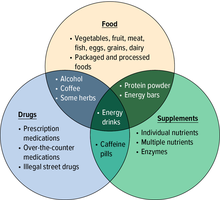
Safety and Effectiveness of Dietary Supplements
Unlike drugs, dietary supplements do not require rigorous scientific testing before being marketed. The FDA must prove harm before removing a supplement from the market, and adverse event reporting is less stringent than for foods.
Nutritionism vs. Food Synergy
Nutritionism
Nutritionism is the idea that a food’s value is defined solely by its nutrient content. This can lead to the misconception that isolated nutrients (e.g., antioxidant supplements) are as beneficial as whole foods.
Food Synergy
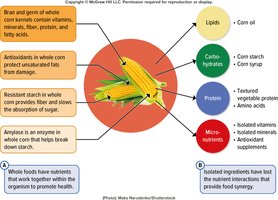
Food synergy refers to the concept that nutrients in whole foods interact to promote health more effectively than isolated nutrients. For example, the bran and germ of whole corn contain vitamins, minerals, fiber, protein, and fatty acids that work together for optimal health.
Supplement Use Among College Students
Patterns of Use
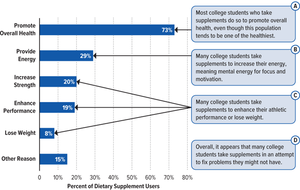
Over 60% of college students have taken a dietary supplement recently, a rate higher than the general population. Male collegiate athletes are particularly likely to use supplements.
Sources of Information
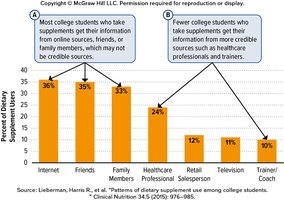
Most college students obtain supplement information from the internet, friends, or family members, which may not be reliable. Fewer students consult healthcare professionals or trainers.
Label Claims on Dietary Supplements
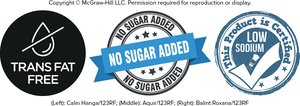
Nutrient Content Claims
These claims indicate the amount of a nutrient in a supplement. Common terms include:
High/Excellent Source: ≥20% of daily recommended intake
Good Source: 10–19% of daily recommended intake
High Potency: ≥100% of daily recommended intake
Structure-Function Claims
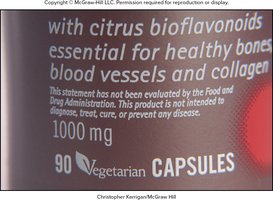
These claims relate a nutrient to a normal body function (e.g., "supports immune health") but cannot claim to prevent or cure disease. They must be accompanied by a disclaimer.
Authorized and Qualified Health Claims
Authorized health claims are FDA-approved and based on extensive research, linking nutrient intake to disease risk reduction. Qualified health claims are less substantiated and not FDA-evaluated.
Risks and Regulation of Dietary Supplements
Mislabeled Dietary Supplements
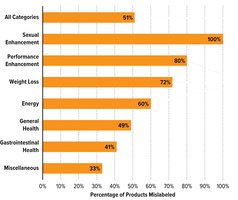
Some supplements contain adulterants—chemical substances that compromise safety or effectiveness. Common adulterants include anabolic steroids and pharmaceutical drugs.
Populations at Risk for Nutrient Deficiencies
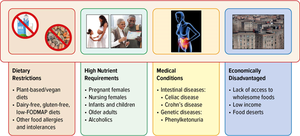
Certain groups are at higher risk for nutrient deficiencies, including those with dietary restrictions, high nutrient requirements (e.g., pregnant women, children), medical conditions affecting absorption, and those who are economically disadvantaged.
Types of Supplementation
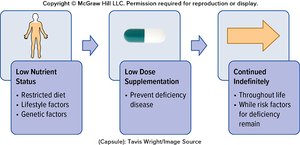
Maintenance Supplementation
For individuals with chronically low intake of a nutrient, low-dose supplementation may be necessary to prevent deficiency diseases and is continued as long as risk factors remain.
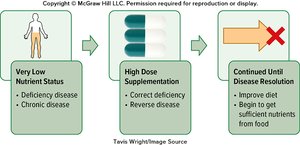
Therapeutic Supplementation
High-dose supplementation may be required temporarily to correct deficiencies or treat specific health conditions, and is discontinued once normal nutrient status is restored.
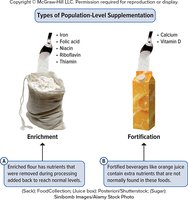
Population-Level Supplementation
Public health strategies such as food enrichment and fortification ensure adequate nutrient intake across populations. Examples include adding iodine to salt and fortifying flour with B vitamins.
Role of Iodine in the Body
Iodine is a trace mineral essential for the production of thyroid hormones, which regulate metabolic rate, bone growth, brain development, and reproductive health. Deficiency can lead to goiter, an enlargement of the thyroid gland.

Fortification of Iodized Table Salt
Adding iodine to table salt is a cost-effective way to prevent iodine deficiency in the population, especially important for pregnant and nursing women who have increased needs.
Summary Table: Populations at Risk for Nutrient Deficiencies
Risk Factor | Examples |
|---|---|
Dietary Restrictions | Plant-based/vegan diets, dairy-free, gluten-free, low-FODMAP, allergies |
High Nutrient Requirements | Pregnant/nursing women, infants, children, older adults, alcoholics |
Medical Conditions | Intestinal diseases (celiac, Crohn's), genetic diseases (PKU) |
Economically Disadvantaged | Lack of access to wholesome foods, low income, food deserts |
Additional info: These notes provide foundational knowledge relevant to Anatomy & Physiology, especially regarding nutrient metabolism, deficiency diseases, and the physiological roles of vitamins and minerals.
