 Back
BackDigestive System and Metabolism: Anatomy & Physiology Study Guide
Study Guide - Smart Notes
 Tailored notes based on your materials, expanded with key definitions, examples, and context.
Digestive System Overview
Priorities and Functions
The digestive system is responsible for acquiring nutrients, digesting food into fundamental chemical units, protecting the body from pathogens, absorbing nutrients, and eliminating waste. It consists of the alimentary canal and accessory organs.
Alimentary Canal: Includes oral cavity, pharynx, esophagus, stomach, small intestine, large intestine, rectum, and anus. Performs mechanical digestion, secretion, absorption, and propulsion.
Accessory Organs: Teeth, salivary glands, liver, gall bladder, pancreas. Aid in mechanical digestion and provide secretions.
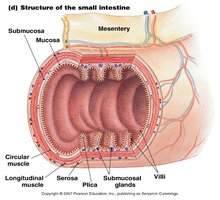
Processes of Digestion
Unregulated and Regulated Processes
Digestion involves breaking down food into biomolecules and absorbing them. Motility and secretion are regulated by the type and quantity of food.
Motility: Includes tonic (sustained) and phasic (cyclic) contractions. Peristalsis propels food; segmentation mixes chyme.
Secretion: Water, ions, mucus, enzymes, and other solutes are secreted into the GI tract. Mucus protects and lubricates.
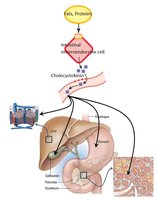
Regulation of Secretion and Motility
Neural and Hormonal Regulation
Secretion and motility are regulated by neural reflexes and GI hormones.
Neural Regulation: Long reflexes (autonomic) and short reflexes (enteric nervous system). Myenteric plexus controls motility; submucosal plexus controls secretion.
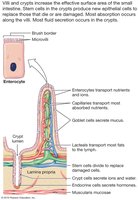
GI Hormones: Produced by enteroendocrine cells. Key hormones include gastrin (stomach), cholecystokinin, secretin, GIP, and GLP-1 (small intestine).
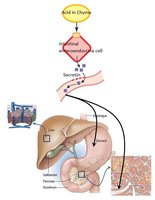
Phases of Digestion
Cephalic, Gastric, and Intestinal Phases
Digestion is divided into three phases, each with distinct priorities and secretions.
Cephalic Phase: Mechanical breakdown, saliva production, swallowing.
Gastric Phase: Storage, mixing, acid secretion, protein digestion, water absorption.
Intestinal Phase: Inhibition of stomach, increased intestinal secretion and motility, digestion and absorption.
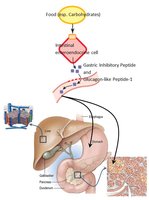
Digestion and Absorption of Biomolecules
Carbohydrates, Proteins, and Lipids
Each class of biomolecule is digested and absorbed through specific mechanisms.
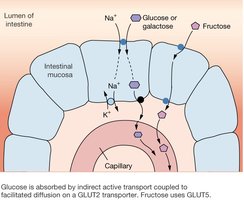
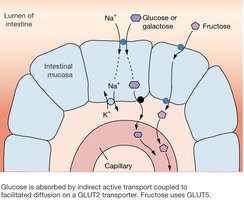
Carbohydrates: Digested by amylase and brush border enzymes. Absorbed via Na+-dependent transport or facilitated diffusion.
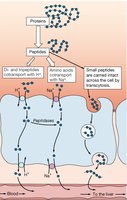
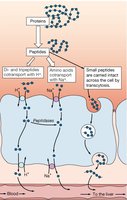
Proteins: Digested by pepsin, pancreatic proteases, and peptidases. Amino acids absorbed by Na+ or H+ dependent transport; peptides by transcytosis.
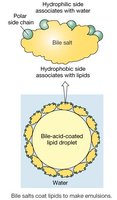
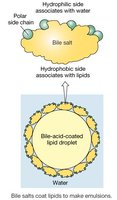
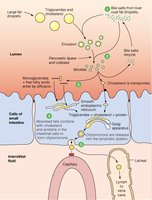
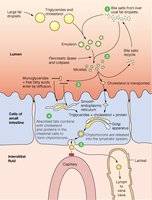
Lipids: Emulsified by bile salts, digested by lipases, absorbed as monoglycerides and fatty acids, reassembled into triglycerides, and transported as chylomicrons.
Metabolism and ATP Synthesis
Cellular Energy Pathways
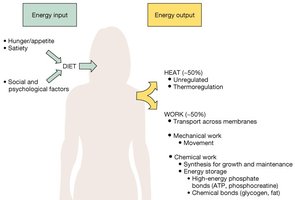
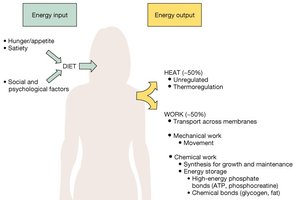
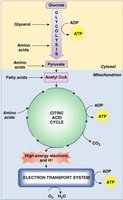
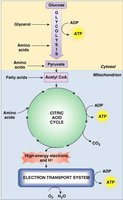
Absorbed nutrients are used in ATP synthesis via catabolic and anabolic pathways. ATP is the primary energy transfer molecule in cells.
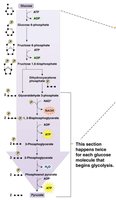
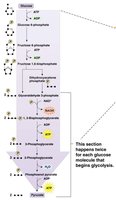
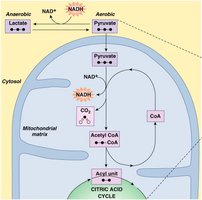
Glycolysis: Occurs in cytosol, converts glucose to pyruvate. Net production: 2 ATP, 2 NADH.
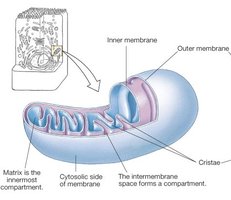
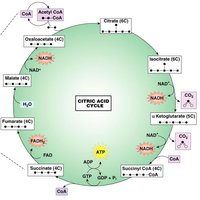
Aerobic Respiration: Pyruvate enters mitochondria, converted to acetyl CoA, enters citric acid cycle. Net production: 2 ATP, 6 NADH, 2 FADH2.
Electron Transport Chain: NADH and FADH2 donate electrons, creating a proton gradient that powers ATP synthase.
Catabolism and Anabolism of Biomolecules
Handling of Glucose, Amino Acids, and Lipids
Metabolic pathways are regulated based on nutrient availability and energy balance.
Glucose: Used for ATP synthesis, stored as glycogen, converted to fatty acids for storage.
Amino Acids: Used for protein synthesis, deaminated for energy, converted to urea for excretion.
Lipids: Used for energy when glucose is low, stored as triglycerides, broken down by lipolysis.
Hormonal Regulation of Metabolism
Insulin and Glucagon
Metabolism is hormonally regulated by insulin and glucagon, secreted by pancreatic islets.
Insulin: Promotes glucose uptake, glycogenesis, and lipogenesis. Secreted when plasma glucose and amino acids are elevated.
Glucagon: Promotes glycogenolysis, gluconeogenesis, and lipolysis. Secreted when plasma glucose is low.
Phases of Metabolism
Postabsorptive and Absorptive States
The body alternates between postabsorptive (unfed) and absorptive (fed) states, prioritizing maintenance of plasma glucose and storage or mobilization of nutrients.
Postabsorptive Phase: GI tract empty, plasma glucose declining, glucagon dominant, mobilization of stored nutrients.
Absorptive Phase: Food in GI tract, plasma glucose elevated, insulin dominant, storage of excess nutrients.
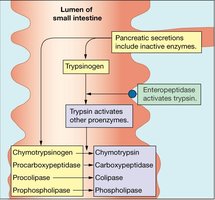
Summary Table: Digestive Enzyme Activation Cascade
This table summarizes the activation of pancreatic enzymes in the small intestine.
Enzyme Precursor | Activated Enzyme |
|---|---|
Trypsinogen | Trypsin |
Chymotrypsinogen | Chymotrypsin |
Procarboxypeptidase | Carboxypeptidase |
Procolipase | Colipase |
Prophospholipase | Phospholipase |
Summary Table: Nutrient Absorption Mechanisms
This table summarizes the main mechanisms for absorption of carbohydrates, proteins, and lipids in the small intestine.
Nutrient | Absorption Mechanism |
|---|---|
Carbohydrates | Na+-dependent active transport, facilitated diffusion |
Proteins | Na+ or H+ dependent active transport, transcytosis |
Lipids | Diffusion, chylomicron formation, lymphatic absorption |
Key Equations
ATP synthesis and metabolic pathways involve several key equations:
Glycolysis:
Aerobic Respiration:
Citric Acid Cycle:
Electron Transport Chain:
