 Back
BackFluid, Electrolyte, and Acid-Base Balance: Study Notes for Anatomy & Physiology
Study Guide - Smart Notes
 Tailored notes based on your materials, expanded with key definitions, examples, and context.
Fluid & Electrolyte Balance
Introduction to Body Fluid Balance
Fluid and electrolyte balance is essential for maintaining homeostasis in the human body. Water is the most abundant compound in the body, and its distribution and composition are tightly regulated to support cellular function, transport, and physiological processes.
Body Fluid Volumes and Distribution
Relative Volumes of Body Fluids
Total body water averages 40 L in a healthy, non-obese 70-kg male, accounting for about 60% of body weight.
Distribution by compartment:
Plasma: 3 L
Interstitial fluid (IF): 12 L
Intracellular fluid (ICF): 25 L
Water content varies by age and gender: 80% in newborns, 60% in adult males, 50% in adult females.
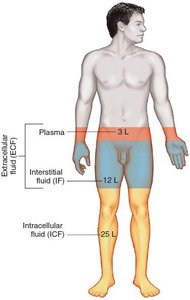
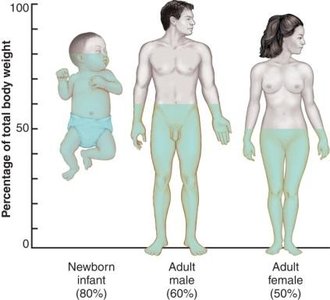
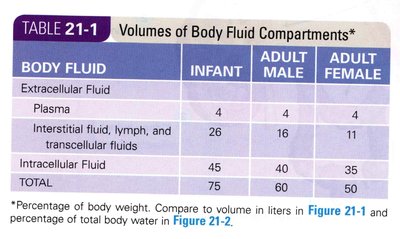
Table: Volumes of Body Fluid Compartments
BODY FLUID | INFANT | ADULT MALE | ADULT FEMALE |
|---|---|---|---|
Plasma | 4 | 4 | 4 |
Interstitial fluid, lymph, and transcellular fluids | 26 | 16 | 11 |
Intracellular Fluid | 45 | 40 | 35 |
TOTAL | 75 | 60 | 50 |
Distribution of Total Body Water
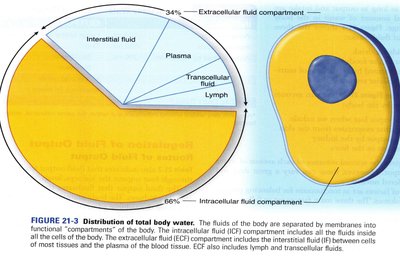
Extracellular fluid (ECF): Includes plasma, interstitial fluid, lymph, and transcellular fluids; makes up about 34% of total body water.
Intracellular fluid (ICF): Located inside cells; comprises about 66% of total body water.
Body Fluid Compartments
Extracellular Fluid (ECF)
Acts as the internal environment, surrounding cells and transporting substances.
Subdivided into plasma, interstitial fluid, lymph, and transcellular fluids (e.g., cerebrospinal fluid, joint fluids, eye humors).
Intracellular Fluid (ICF)
Largest fluid compartment, located within cells.
Serves as a solvent for intracellular chemical reactions.
Fluid Intake and Output
Sources of Fluid Intake
Liquids we drink
Water in food
Metabolic water (produced by cellular respiration)
Sources of Fluid Output
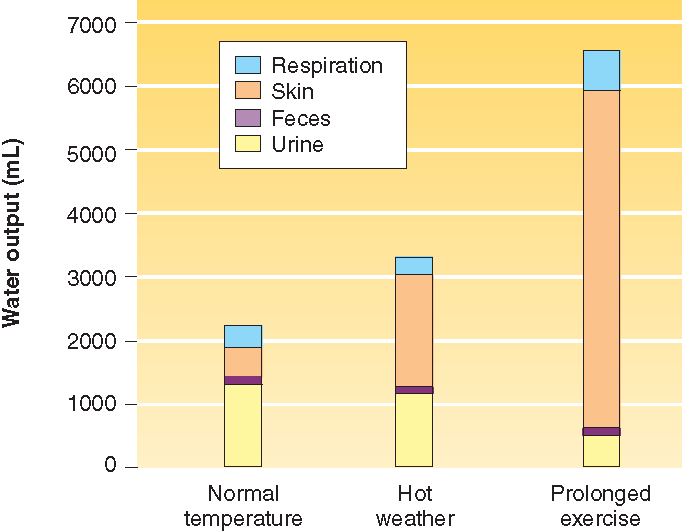
Water vapor (respiration)
Sweat (skin)
Urine (kidneys)
Feces (intestines)
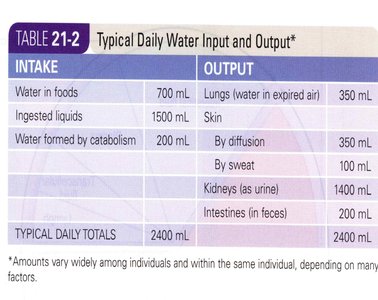
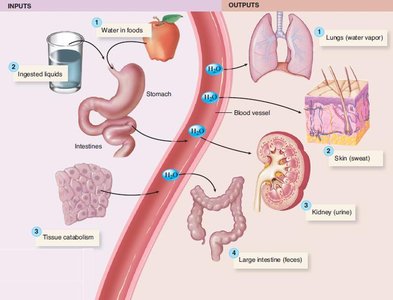
Table: Typical Daily Water Input and Output
INTAKE | OUTPUT |
|---|---|
Water in foods: 700 mL | Lungs (expired air): 350 mL |
Ingested liquids: 1500 mL | Skin (diffusion): 350 mL |
Water formed by catabolism: 200 mL | Skin (sweat): 100 mL |
Kidneys (urine): 1400 mL | |
Intestines (feces): 200 mL | |
TOTAL: 2400 mL | TOTAL: 2400 mL |
Regulation of Fluid Balance
Regulation of Fluid Output
Fluid output is primarily regulated by the kidneys, but the lungs, skin, and large intestine also contribute. The body adjusts urine volume to match fluid intake, maintaining homeostasis.
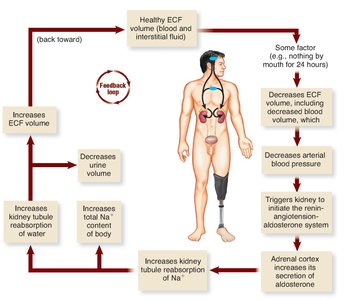
Antidiuretic hormone (ADH): Released from the posterior pituitary when ECF volume is low; increases water reabsorption in the kidneys, reducing urine output.
Aldosterone: Increases sodium and water reabsorption in the kidneys, expanding ECF volume.
Atrial natriuretic hormone (ANH): Released from the atrial wall when blood volume is high; promotes sodium and water loss in urine, reducing ECF volume.
Regulation of Fluid Intake
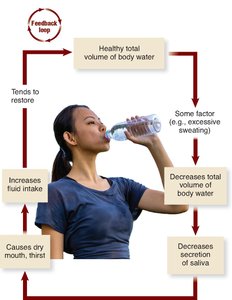
Thirst is regulated by sensory receptors that detect changes in ECF volume and concentration, sending signals to the hypothalamus. Thirst prompts fluid intake, restoring balance.
Factors Affecting Fluid Balance
Total body weight
Fat content (adipose tissue contains less water)
Gender (females have less body water than males)
Age (infants have more, elderly have less water per kg)
Fluid Imbalances
Dehydration
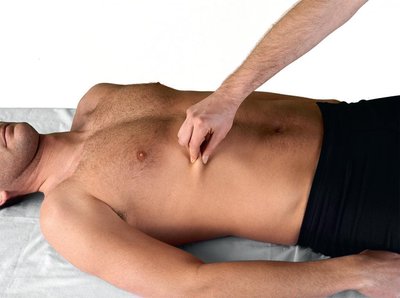
Total body fluid volume is lower than normal.
IF volume decreases first, followed by ICF and plasma if untreated.
Caused by fluid output exceeding intake for an extended period.
Overhydration
Total body fluid volume is higher than normal.
Excess intake burdens the heart and may cause water intoxication (neurological impairment due to electrolyte imbalance).
Electrolytes and Their Importance
Definitions and Roles
Electrolytes: Compounds that dissociate in water to form ions (e.g., NaCl).
Nonelectrolytes: Organic substances that do not dissociate in water (e.g., glucose).
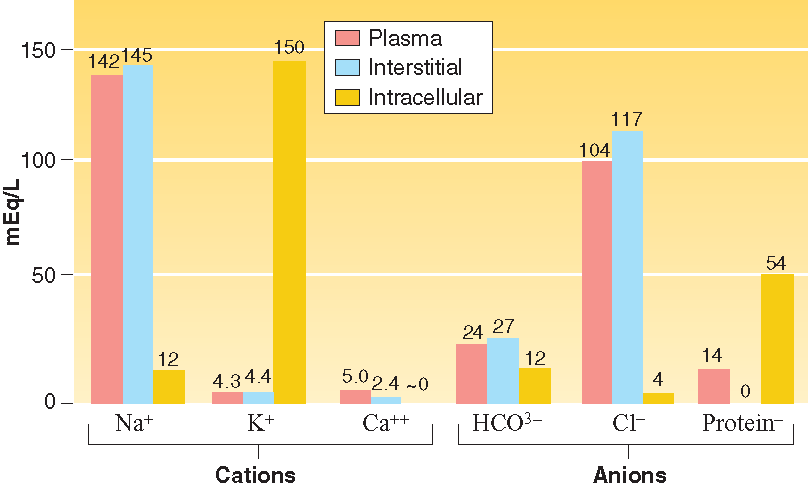
Ions: Charged particles; cations are positive (e.g., Na+, K+), anions are negative (e.g., Cl−, HCO3−).
Electrolyte Imbalances
Imbalances can result from altered intake, output, absorption, or distribution of electrolytes.
Common clinical manifestations include edema, muscle weakness, cardiac arrhythmias, and neurological symptoms.
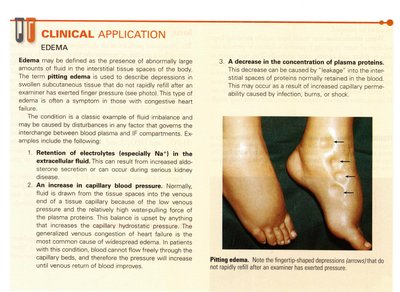
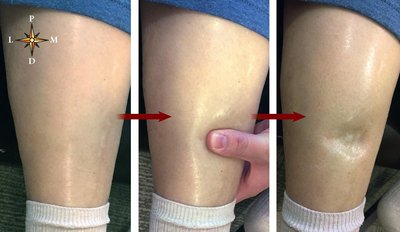
Table: Electrolyte Imbalances
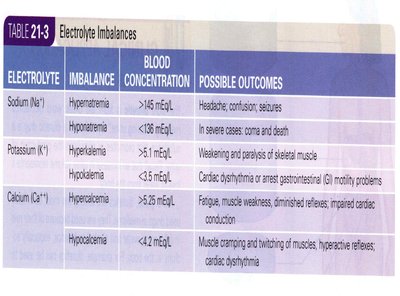
Electrolyte | Imbalance | Blood Concentration | Possible Outcomes |
|---|---|---|---|
Sodium (Na+) | Hypernatremia | >145 mEq/L | Headache, confusion, seizures; coma and death in severe cases |
Sodium (Na+) | Hyponatremia | <136 mEq/L | Headache, confusion, seizures; coma and death in severe cases |
Potassium (K+) | Hyperkalemia | >5.1 mEq/L | Weakening and paralysis of skeletal muscle; cardiac arrest |
Potassium (K+) | Hypokalemia | <3.5 mEq/L | Cardiac dysrhythmia or arrest; GI motility problems |
Calcium (Ca2+) | Hypercalcemia | >10.5 mg/dL | Fatigue, muscle weakness, diminished reflexes, impaired cardiac conduction |
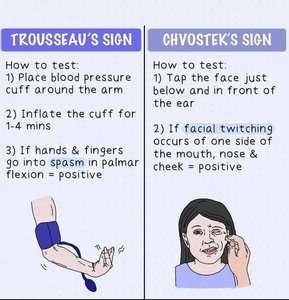
Calcium (Ca2+) | Hypocalcemia | <8.4 mg/dL | Muscle cramping, twitching, hyperactive reflexes, cardiac dysrhythmia |
Clinical Signs of Electrolyte Imbalances
Hypernatremia: CNS symptoms (headache, confusion, seizures, coma).
Hyponatremia: CNS symptoms (as above); often due to excess water relative to sodium.
Hyperkalemia: Muscle weakness, paralysis, cardiac arrest.
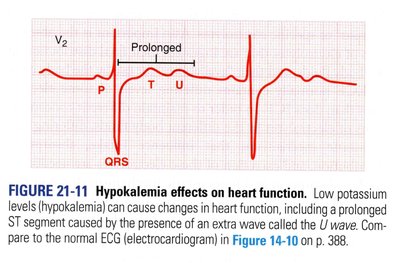
Hypokalemia: Cardiac arrhythmias, muscle weakness, GI motility issues.
Hypercalcemia: Fatigue, muscle weakness, diminished reflexes, cardiac problems.
Hypocalcemia: Muscle cramping, twitching, hyperactive reflexes, cardiac dysrhythmia.
Summary Table: Key Concepts
Concept | Definition/Explanation |
|---|---|
Electrolyte | Compound that dissociates in water to form ions |
Fluid balance | Maintenance of proper amounts and distribution of body fluids |
ICF | Intracellular fluid; largest compartment, inside cells |
ECF | Extracellular fluid; includes plasma, IF, lymph, transcellular fluids |
Edema | Excess IF volume causing swelling |
Dehydration | Deficit of body fluids |
Overhydration | Excess of body fluids |
Quick Review Questions
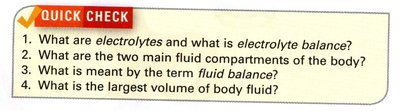
What are electrolytes and what is electrolyte balance?
What are the two main fluid compartments of the body?
What is meant by the term fluid balance?
What is the largest volume of body fluid?
Which does the body primarily adjust, fluid intake or fluid output?
What are the chief ways that fluid leaves the body?
How does the body maintain fluid balance?
Name the hormones that regulate urine volume.
Describe the mechanism that regulates fluid intake.
What is the difference between an electrolyte and a nonelectrolyte?
What are some of the major roles of ions in the body?
Identify the functions of electrolytes in the body.
What are the causes of hypernatremia? Hyponatremia?
Hypokalemia may cause what conditions?
Why is calcium a significant mineral in our body?
