 Back
BackGrowth, Development, and Aging: From Conception to Senescence
Study Guide - Smart Notes
 Tailored notes based on your materials, expanded with key definitions, examples, and context.
Growth, Development, and Aging
Introduction to Human Development
Human development is a continuous biological process involving modification and change from conception through death. The study of development is organized into distinct stages for clarity, but in reality, growth and aging are ongoing processes.
Prenatal Development
Fertilization and Early Development
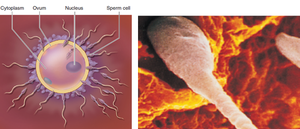
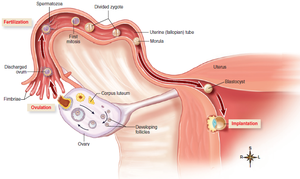
Fertilization marks the beginning of human life, occurring when a sperm cell unites with an ovum in the outer third of the uterine (fallopian) tube. The resulting zygote is genetically complete and undergoes rapid cell division.
Zygote: The single cell formed by the union of sperm and ovum.
Morula: A solid ball of cells formed after several divisions of the zygote.
Blastocyst: A hollow ball of cells that implants in the uterine wall about 10 days after fertilization.
Implantation and Blastocyst Development
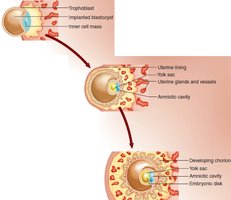
The blastocyst forms the amniotic cavity and chorion, which later develops into the placenta. The amniotic cavity becomes a fluid-filled sac that protects the embryo, while the chorion facilitates nutrient and waste exchange between mother and fetus.
The Placenta
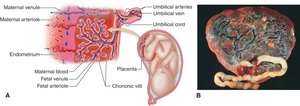
The placenta is the interface between maternal and fetal circulation. It anchors the fetus, allows for nutrient and waste exchange, and acts as an excretory, respiratory, and endocrine organ. Maternal and fetal blood do not mix; a thin placental barrier separates them, protecting the fetus from many harmful substances.
Formation of Primary Germ Layers
After implantation, three primary germ layers form in the embryo:
Ectoderm: Outer layer; forms skin and nervous system.
Mesoderm: Middle layer; forms muscles, bones, and circulatory system.
Endoderm: Inner layer; forms digestive and respiratory tracts.
Stem cells within these layers differentiate into specialized tissues and organs. By the fourth month of gestation, all organ systems are formed and functional.
Histogenesis and Organogenesis
Organogenesis is the formation of organs, while histogenesis is the formation of tissues. These processes occur through cell differentiation, multiplication, and rearrangement. After four months, fetal development is primarily characterized by growth.
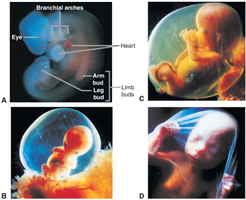
Prenatal Periods of Development
Gestation period: Approximately 39 weeks.
Embryonic phase: Weeks 3–8; major organ systems form.
Fetal phase: Weeks 8–39; growth and maturation of organ systems.
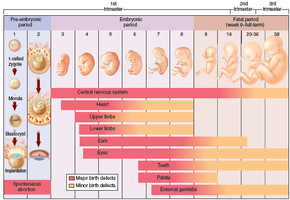
Critical Periods of Neonatal Development
Critical periods are times when developing organs are most sensitive to environmental influences. Teratogens can cause congenital abnormalities if exposure occurs during these periods.
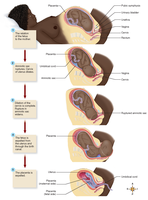
Birth (Parturition) and Stages of Labor
Birth, or parturition, occurs at the end of gestation. The process involves uterine contractions, rupture of the amniotic sac, cervical dilation, and delivery of the fetus and placenta.
Stage 1: Onset of contractions to complete cervical dilation.
Stage 2: Maximal dilation to delivery of the baby.
Stage 3: Expulsion of the placenta.
Stage 4 (recovery): Immediate postpartum period (clinically recognized).
Multiple Births
Identical (monozygotic) twins: Result from splitting of a single zygote; genetically identical.
Fraternal (dizygotic) twins: Result from fertilization of two separate ova; genetically distinct.
Conditions Associated with Pregnancy
Implantation Disorders
Ectopic pregnancy: Implantation outside the uterus, often in the fallopian tube.
Placenta previa: Placenta grows near or over the cervical opening, risking separation and hemorrhage.
Abruptio placentae: Premature separation of a normally placed placenta, causing fetal death and maternal hemorrhage.
Preeclampsia and Eclampsia
Preeclampsia is a pregnancy syndrome marked by hypertension, proteinuria, and edema. It can progress to eclampsia, a life-threatening condition. The primary symptom is acute hypertension.
Miscarriage and Birth Defects
Spontaneous abortion (miscarriage): Fetal loss before 20 weeks or 500 g.
Stillbirth: Fetal loss after 20 weeks.
Congenital conditions: Present at birth; may be inherited or caused by teratogens.
Postpartum Conditions
Puerperal fever: Bacterial infection after delivery, potentially leading to septicemia.
Mastitis: Inflammation or infection of the breast.
Lactation issues: Can be affected by anemia, malnutrition, or lactose intolerance in infants.
Postnatal Development
Divisions of the Postnatal Period
Infancy: Birth to 18 months; rapid growth and development of motor skills.
Childhood: End of infancy to puberty; continued growth and development of coordination.
Adolescence: Puberty to adulthood; sexual maturity and growth spurts.
Adulthood: Maintenance of body tissues; eventual onset of degeneration.
Older adulthood (senescence): Degenerative changes in all organ systems.
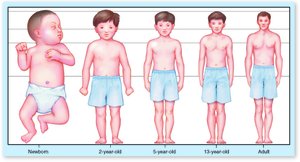
Infancy
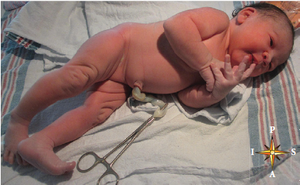
First 4 weeks: Neonatal period; major cardiovascular and respiratory changes occur.
By 4 months: Birth weight doubles.
By 1 year: Birth weight triples; body length increases by 50%.
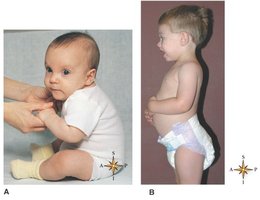
By 15 months: Normal spinal curvature develops.
By 18 months: Ability to run is achieved.
Childhood
Childhood extends from the end of infancy to puberty (about 13 years in girls, 15 in boys). Growth rate slows but remains steady. Motor skills and coordination improve, and permanent teeth replace deciduous teeth.
Adolescence
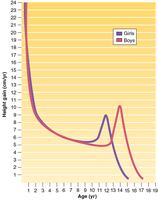
Adolescence is marked by rapid growth and sexual maturation, typically from ages 13 to 19. Secondary sex characteristics appear, and growth spurts occur earlier in girls than boys.
Adulthood and Older Adulthood
Adulthood is characterized by the maintenance of body tissues, with growth plates closing and organs reaching maturity. Senescence, or older adulthood, involves degenerative changes in all organ systems, culminating in death.
Theories and Effects of Aging
Theories of Aging
Free-radical theory: Accumulation of oxygen free radicals increases cellular damage over time.
Genetic theory: "Aging" genes program cellular senescence.
Other factors: Nutrition, disease, injury, and environmental influences affect aging.
Effects of Aging on Organ Systems
Skeletal system: Bones become porous, joint degeneration (osteoarthritis) is common.
Integumentary system: Skin thins, wrinkles, and loses elasticity; hair loss occurs.
Central nervous system: Risk of dementia and depression increases.
Special senses: Decline in vision (presbyopia, cataracts, glaucoma), hearing, taste, and smell.
Cardiovascular system: Atherosclerosis, arteriosclerosis, and hypertension are common.
Respiratory system: Decreased efficiency due to muscle wasting and thickened membranes.
Urinary system: Nephron loss, decreased kidney function, and bladder problems.
Reproductive system: Men experience reduced sexual function; women undergo menopause, ending fertility.
Menopause: Natural cessation of reproductive cycling in women, typically between ages 45 and 60, accompanied by symptoms such as hot flashes and sleep disturbances. Hormone replacement therapy (HRT) is sometimes used but carries risks.
