 Back
BackIntroduction to Anatomy & Physiology: Foundations, Methods, and Major Themes
Study Guide - Smart Notes
 Tailored notes based on your materials, expanded with key definitions, examples, and context.
Introduction to Anatomy & Physiology
Overview of Anatomy and Physiology
Anatomy and Physiology (A&P) is the scientific study of the structure and function of the human body. Understanding A&P is essential for advanced studies in health care, exercise physiology, and related fields. Anatomy focuses on the form and structure of body parts, while physiology explores how these parts function and interact.
Anatomy: Study of body structures, their relationships, and organization.
Physiology: Study of the functions and processes of the body’s structures.
The Scope and Methods of Anatomy
Approaches to Studying Anatomy
Anatomists use various methods to examine the human body, ranging from non-invasive techniques to direct dissection. These methods help reveal the relationships between structures and their functions.
Inspection: Observing the body’s surface for abnormalities.
Palpation: Feeling body structures with hands (e.g., taking a pulse).
Auscultation: Listening to body sounds (e.g., heartbeats).
Percussion: Tapping the body to detect underlying structures.
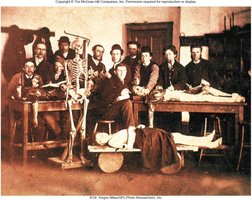
Cadaver Dissection: Cutting and separating tissues to study relationships.
Comparative Anatomy: Comparing structures across species to understand evolutionary trends.
Modern Techniques in Anatomy
Exploratory Surgery: Opening the body to observe internal structures.
Medical Imaging: Non-invasive visualization of internal structures (e.g., X-rays, CT scans).
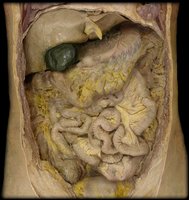
Gross Anatomy: Study of structures visible to the naked eye.
Cytology: Study of cells and their functions.
Histology: Microscopic study of tissues.
Ultrastructure: Study of molecular details using electron microscopy.
Histopathology: Microscopic examination of tissues for disease.
The Scope and Methods of Physiology
Subdisciplines of Physiology
Physiology is divided into several subfields, each focusing on specific systems or processes:
Neurophysiology: Study of nervous system function.
Endocrinology: Study of hormone function.
Pathophysiology: Study of disease mechanisms.
Comparative Physiology: Study of different species to understand bodily functions and develop medical procedures.
Historical Foundations of Anatomy & Physiology
Greek and Roman Contributions
Hippocrates: Known as the "Father of Medicine," established ethical standards and promoted natural causes for disease.
Aristotle: Distinguished between supernatural (theologi) and natural (physiologi) causes of disease, influencing the terms "physician" and "physiology."
Claudius Galen: Conducted animal dissections, emphasized observation, and influenced medical practice for centuries.
The Birth of Modern Medicine
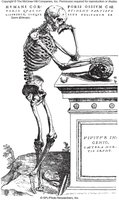
Andreas Vesalius: Revolutionized anatomy with direct cadaver dissections and published the first comprehensive atlas of human anatomy.
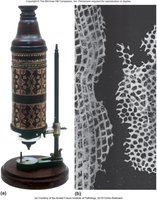
Antony van Leeuwenhoek: Invented the simple microscope, first to observe microorganisms.
Carl Zeiss & Ernst Abbe: Improved compound microscopes, enhancing optical clarity.
Robert Hooke: Improved microscopes, coined the term "cell," and published Micrographia.
Schleiden & Schwann: Formulated the cell theory, stating all organisms are composed of cells.
Scientific Method in Anatomy & Physiology
The Hypothetico–Deductive Method
The scientific method in biology involves forming hypotheses that can be tested and potentially falsified. Key components include:
Hypothesis: A testable statement, often in "if–then" format.
Falsifiability: The ability to specify evidence that could prove a hypothesis wrong.
Experimental Design
Sample Size: Number of subjects in a study, affecting reliability.
Controls: Comparison groups (control vs. treatment) to account for variables.
Psychosomatic Effects: Influence of the subject’s mind on physiological outcomes; controlled with placebos.
Experimenter Bias: Minimized with double-blind studies.
Statistical Testing: Determines if results are due to chance or the variable tested.
Peer Review and Scientific Knowledge
Peer Review: Evaluation by experts to ensure accuracy and objectivity.
Scientific Fact: Information independently verified.
Law of Nature: Generalization about predictable natural phenomena, often expressed mathematically.
Theory: Comprehensive explanation derived from facts, laws, and hypotheses.
Evolution and Human Adaptation
Darwin and Natural Selection
Charles Darwin’s theory of natural selection explains how species evolve and adapt to their environments. This understanding is crucial for interpreting human anatomy and physiology.
Evolution: Change in genetic composition of populations over time.
Natural Selection: Individuals with advantageous traits are more likely to survive and reproduce.
Selection Pressures: Environmental factors that influence reproductive success.
Adaptations: Features evolved to help organisms cope with environmental challenges.
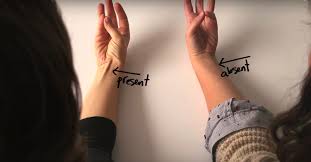
Vestigial Organs
Vestigial organs are remnants of structures that were functional in ancestral species but have lost most or all of their original function in humans.
Examples: Wisdom teeth, appendix, coccyx, palmaris longus tendon.
The Hierarchy of Complexity
Levels of Structural Organization
The human body is organized into a hierarchy of increasing complexity, from atoms to the entire organism.
Atoms → Molecules → Organelles → Cells → Tissues → Organs → Organ Systems → Organism
Anatomical Variation
Individual Differences
No two humans are exactly alike. Anatomical variation includes differences in the number, structure, and location of organs.
Most common structure: 70% of population
Anatomical variants: 30% (e.g., missing muscles, extra vertebrae, variable organ locations)
Situs solitus: Normal organ arrangement
Situs inversus: Mirror-image reversal of organs
Dextrocardia: Heart on the right side
Situs perversus: Organ in an abnormal location
Characteristics of Life
Defining Life
Living organisms share several key characteristics that distinguish them from nonliving matter:
Organization: Complex structure and order
Cellular Composition: Composed of one or more cells
Metabolism: Sum of all chemical reactions (anabolism and catabolism)
Excretion: Removal of metabolic wastes
Responsiveness: Ability to sense and react to stimuli
Homeostasis: Maintenance of stable internal conditions
Development: Growth and differentiation
Reproduction: Production of offspring
Evolution: Genetic change over generations
Homeostasis and Feedback Mechanisms
Homeostasis
Homeostasis is the body's ability to maintain stable internal conditions despite external changes. This concept is central to physiology and health.
Claude Bernard: Proposed the idea of constant internal conditions.
Walter Cannon: Coined the term "homeostasis."
Negative Feedback
Negative feedback mechanisms detect changes and activate responses that reverse the change, maintaining dynamic equilibrium.
Example: Regulation of room temperature by a thermostat.
Example: Regulation of body temperature by vasodilation (cooling) and vasoconstriction (warming).
Positive Feedback
Positive feedback amplifies a change rather than reversing it. It is less common but important in processes like childbirth.
Example: During labor, uterine contractions increase in response to oxytocin, leading to more contractions until birth occurs.
Anatomical Terminology
Standardization of Terms
International standards ensure consistency in anatomical terminology. Most terms have Greek or Latin roots, and structures are named based on location, function, or discoverer.
Terminologia Anatomica (TA): Standardized list of anatomical terms.
Nomina Anatomica (NA): Earlier standard, rejected eponyms in favor of Latin names.
Analyzing Medical Terms
Terms are built from roots, prefixes, and suffixes (e.g., gastroenterology = study of the stomach and intestines).
Acronyms (e.g., PET scan) and abbreviations (e.g., DNA) are common.
Plural, Adjectival, and Possessive Forms
Pluralization can be irregular (e.g., cortex → cortices).
Adjectival forms often follow the noun (e.g., pectoralis major).
Comparative and superlative forms are used (e.g., magnus, major, maximus).
Major Themes in Anatomy & Physiology
Cell Theory: All structure and function result from cellular activity.
Homeostasis: Most physiological processes maintain internal stability.
Evolution: Human structure and function are products of evolutionary change.
Hierarchy of Structure: Organization from atoms to organism.
Unity of Form and Function: Structure and function are interrelated.
Medical Imaging Techniques
Radiography (X-rays)
Uses X-rays to visualize dense tissues such as bones. Dense structures appear white on film.
Radiopaque Substances
Injected or swallowed to fill hollow structures (e.g., blood vessels, intestines) for enhanced imaging.
Computed Tomography (CT Scan)
Uses low-intensity X-rays and computer analysis to produce detailed cross-sectional images of the body.
Positron Emission Tomography (PET Scan)
Assesses metabolic activity by detecting gamma rays emitted after injection of radioactive substances. Active tissues appear bright; damaged tissues appear dark.
Magnetic Resonance Imaging (MRI)
Uses magnetic fields and radio waves to produce high-resolution images, especially useful for soft tissues.
Sonography (Ultrasound)
Uses high-frequency sound waves to create images of internal organs. Commonly used in obstetrics; avoids radiation exposure.
