 Back
BackIntroduction to Anatomy & Physiology: The Language, Organization, and Homeostasis of the Human Body
Study Guide - Smart Notes
 Tailored notes based on your materials, expanded with key definitions, examples, and context.
The Language of Anatomy & Physiology
Characteristics of Living Things
All living organisms share fundamental properties that distinguish them from non-living matter. These characteristics are essential for understanding the structure and function of the human body.
Cellular Composition: Cells are the smallest units capable of performing life functions. All organisms are composed of cells.
Movement: Movement is achieved through muscle tissue. Skeletal muscle moves body parts, cardiac muscle moves blood, and smooth muscle moves substances such as urine and food.
Responsiveness: The ability to detect and respond to environmental stimuli, regulated primarily by the nervous system. For example, a withdrawal reflex minimizes tissue damage.
Excretion: Removal of waste products from the body, regulated by the digestive, urinary, and respiratory systems.
Reproduction: Occurs at both cellular (cell division for growth and repair) and organismal levels (production of offspring via reproductive systems, regulated by the endocrine system).
Growth: Increase in size of a body part or the organism as a whole.
Metabolism: The sum of all chemical reactions in the body, including catabolism (breaking down substances) and anabolism (synthesizing substances). Cellular respiration produces ATP for cellular work.

Anatomy & Physiology: Definitions and Relationship
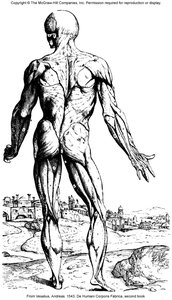
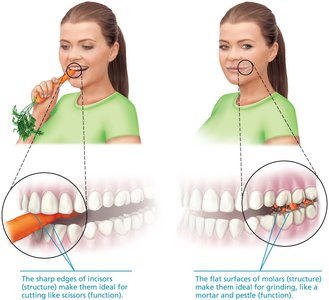
Anatomy is the study of the structure of body parts and their relationships, while physiology is the study of their function. The principle that structure determines function is fundamental in understanding the human body.
Anatomy: Oldest form of medical science; means "cutting open".
Physiology: Explains how anatomical structures work.
Levels of Organization in the Human Body
Hierarchical Structure
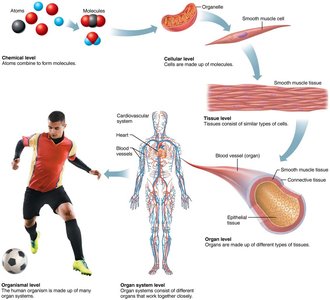
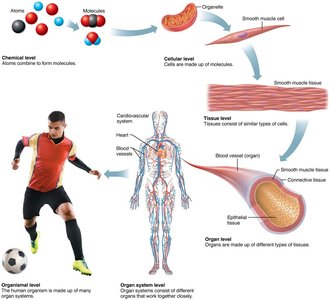
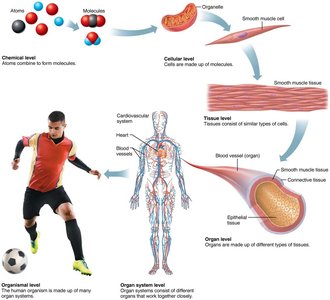
The human body is organized into increasingly complex levels, each building upon the previous. This hierarchy is essential for understanding how simple molecules contribute to complex organ systems.
Chemical Level: Atoms combine to form molecules.
Cellular Level: Molecules form organelles, which make up cells.
Tissue Level: Groups of similar cells perform specific functions.
Organ Level: Two or more tissues form organs.
Organ System Level: Groups of organs interact to perform specific functions.
Organism Level: All organ systems working together maintain life.

Major Organ Systems
The human body consists of eleven major organ systems, each with distinct organs and functions.
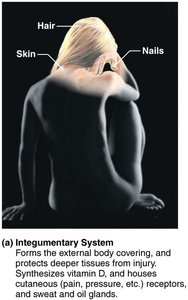
Integumentary System: Skin, hair, nails, sweat glands. Provides protection, regulates temperature, and sensory information.
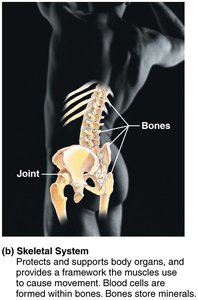
Skeletal System: Bones, cartilages, ligaments. Provides support, protection, stores minerals, forms blood cells.
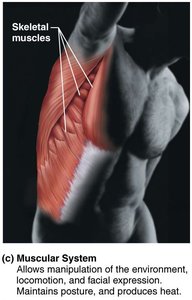
Muscular System: Skeletal muscles, tendons. Provides movement, maintains posture, generates heat.
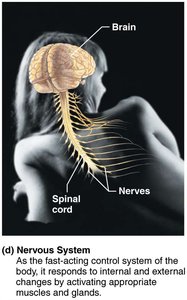
Nervous System: Brain, spinal cord, nerves, sense organs. Interprets sensory information, directs responses, controls other systems.
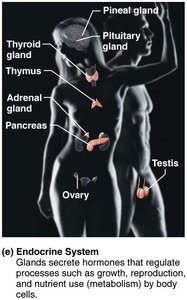
Endocrine System: Glands (thyroid, pancreas, ovaries, testes, pituitary, adrenal). Adjusts metabolism, controls other systems.
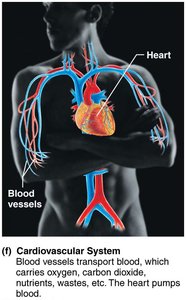
Cardiovascular System: Heart, blood, blood vessels. Transports gases, nutrients, wastes, hormones; distributes heat.
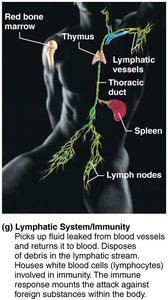
Lymphatic System: Spleen, thymus, lymph nodes, lymphatic vessels. Provides immunity, returns tissue fluids to bloodstream.
Respiratory System: Lungs, trachea, bronchi, alveoli. Site of gas exchange.
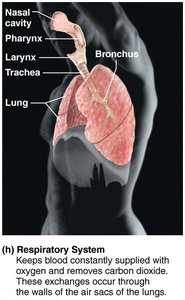
Digestive System: Stomach, intestines, esophagus, teeth. Breaks down food, absorbs nutrients and water.
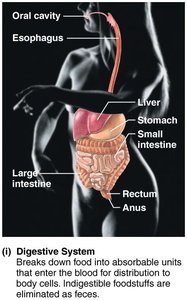
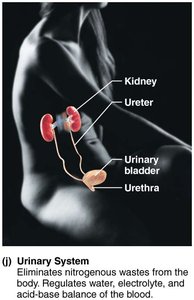
Urinary System: Kidneys, ureters, bladder, urethra. Excretes wastes, controls water balance, regulates blood pH and electrolytes.
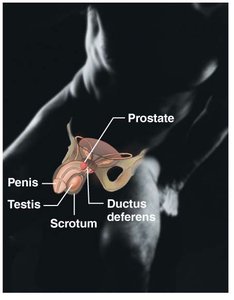
Male Reproductive System: Penis, testes, prostate gland, vas deferens. Produces sperm, seminal fluid, male sex hormones.
Female Reproductive System: Ovaries, uterus, vagina, uterine tubes. Produces eggs, female sex hormones, supports embryo.

Anatomical Position and Directional Terms
Anatomical Position
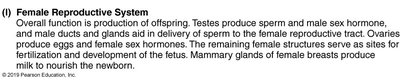
The anatomical position is a standardized frame of reference for describing the location and orientation of body parts.
Body standing upright
Head facing forward
Feet shoulder width apart
Arms at sides, palms forward, thumbs away from body
Directional Terms
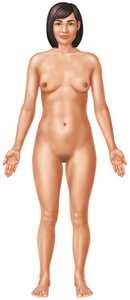
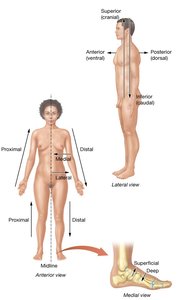
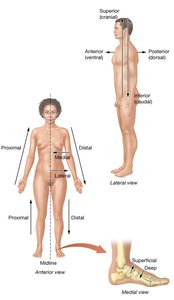
Directional terms describe the position of one body part relative to another and are grouped in pairs with opposite meanings.
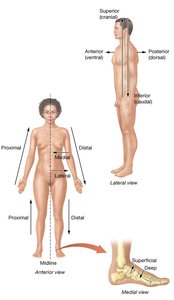
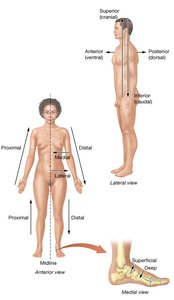
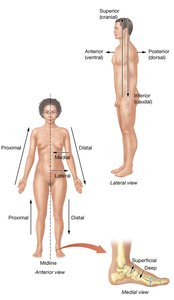
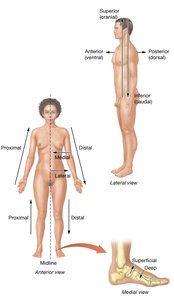
Superior (cranial): Above or toward the head
Inferior (caudal): Below or away from the head
Anterior (ventral): Front surface
Posterior (dorsal): Back surface
Medial: Nearer to the midline
Lateral: Farther from the midline
Proximal: Nearer to the attachment of a limb
Distal: Farther from the attachment of a limb
Superficial (external): Toward or on the surface
Deep (internal): Away from the surface
Planes and Sections
Body Planes
Body planes are imaginary flat surfaces that divide the body or organs for anatomical study.
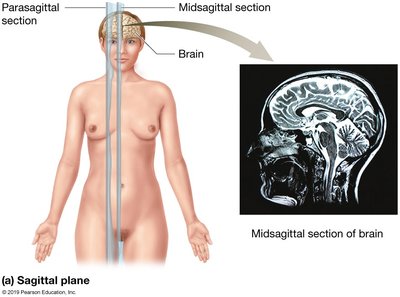
Sagittal Plane: Divides body into left and right portions. Midsagittal passes through midline; parasagittal is parallel to midline.
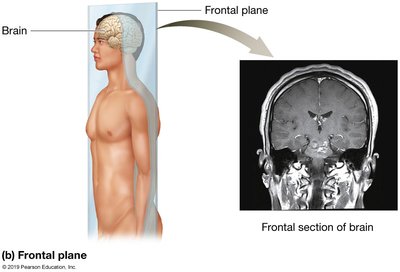
Frontal (Coronal) Plane: Divides body into anterior and posterior portions.
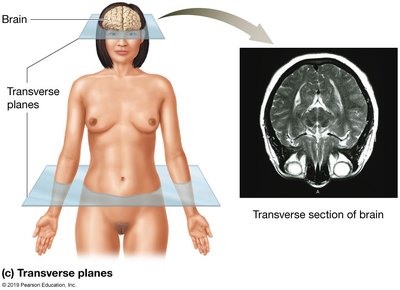
Transverse Plane: Divides body into superior and inferior portions.
Body Cavities
Major Body Cavities
Body cavities are spaces within the body that protect, separate, and support internal organs. The human body is divided into axial (head, neck, trunk) and appendicular (limbs) portions.
Posterior (Dorsal) Cavity: Protects the nervous system; includes cranial and vertebral cavities.
Anterior (Ventral) Cavity: Houses internal organs; includes thoracic and abdominopelvic cavities.

Thoracic and Abdominopelvic Cavities
The thoracic cavity contains the heart, lungs, trachea, esophagus, and thymus. It is divided into pleural cavities (lungs), mediastinum (all thoracic viscera except lungs), and pericardial cavity (heart).
Abdominopelvic Cavity: Extends from diaphragm to pelvis; includes abdominal (stomach, kidneys, liver, etc.) and pelvic (large intestine, bladder, reproductive organs) cavities.


Abdominopelvic Quadrants and Regions
The abdominopelvic cavity is divided for clinical and anatomical reference into four quadrants and nine regions.
Four Quadrants: Vertical and horizontal lines pass through the umbilicus.
Nine Regions: Lines resemble a tic-tac-toe grid.
Membranes
Serous Membranes
Serous membranes line the walls and organs of the thoracic and abdominopelvic cavities, providing protection and reducing friction.
Pleural Membranes: Parietal pleura lines thoracic cavity walls; visceral pleura lines surface of lungs.
Pericardial Membranes: Parietal pericardium lines pericardial cavity walls; visceral pericardium lines surface of heart.
Peritoneal Membranes: Parietal peritoneum lines abdominopelvic cavity walls; visceral peritoneum lines surface of some organs. Retroperitoneal organs lie behind the peritoneal cavity (e.g., kidneys).
Regional Terms
Body Regions
Regional terms are used to describe specific areas of the body, aiding in precise anatomical communication.
Cephalic: Head
Frontal: Forehead
Cranial: Skull
Facial: Face
Oral: Mouth
Axillary: Armpit
Abdominal: Abdomen
Mammary: Breast
Thoracic: Chest
Cervical: Neck
Manual: Hand
Pelvic: Pelvis
Femoral: Thigh
Gluteal: Buttock
Popliteal: Back of knee
Plantar: Sole of foot
Homeostasis
Definition and Importance
Homeostasis is the maintenance of a stable internal environment, essential for survival. Interstitial fluid, also called extracellular fluid, is considered the body's internal environment.
Includes blood plasma, cerebrospinal fluid, synovial fluid, lymph, aqueous humor, etc.
Physiological systems are constantly monitored and adjusted to maintain homeostasis.
Failure to maintain homeostasis results in disease or death.
Control of Homeostasis: Feedback Loops
The nervous and endocrine systems regulate homeostasis through feedback loops, which monitor, evaluate, and adjust variables such as blood pressure, temperature, and electrolyte concentrations.
Stimulus: Any disruption that changes a variable.
Receptor: Receives stimulus and sends information to control center.
Control Center: Sets range of values, evaluates input, generates output commands.
Effector: Receives output and produces a response to change the variable.
Types of Feedback Loops
Negative Feedback Loop: Response reduces or shuts off original stimulus; variable changes in opposite direction. Example: regulation of body temperature.
Positive Feedback Loop: Response enhances or exaggerates original stimulus; variable changes in same direction. Example: blood clotting.
Summary Table: Major Organ Systems
Organ System | Major Organs | Primary Functions |
|---|---|---|
Integumentary | Skin, hair, nails | Protection, temperature regulation, sensory info |
Skeletal | Bones, cartilages, ligaments | Support, protection, mineral storage, blood cell formation |
Muscular | Skeletal muscles, tendons | Movement, posture, heat generation |
Nervous | Brain, spinal cord, nerves | Sensory interpretation, response, control of systems |
Endocrine | Glands | Metabolism, growth, regulation of systems |
Cardiovascular | Heart, blood vessels | Transport of gases, nutrients, wastes |
Lymphatic | Spleen, thymus, lymph nodes | Immunity, fluid return |
Respiratory | Lungs, trachea, bronchi | Gas exchange |
Digestive | Stomach, intestines, esophagus | Food breakdown, nutrient absorption |
Urinary | Kidneys, bladder, urethra | Waste excretion, water balance, pH regulation |
Reproductive | Ovaries, uterus, testes, penis | Production of offspring |
Key Equations
Metabolism:
Cellular Respiration:
Additional info: Academic context was added to clarify the hierarchical structure of organization, the role of feedback loops, and the summary table for organ systems.
