 Back
BackIntroduction to the Body: Foundations of Anatomy & Physiology
Study Guide - Smart Notes
 Tailored notes based on your materials, expanded with key definitions, examples, and context.
Introduction to Anatomy, Physiology, and Pathology
Definitions and Scope
The study of the human body begins with understanding three foundational disciplines:
Anatomy: The study of the structure of an organism and the relationships among its parts.
Physiology: The study of the functions of living organisms and their parts.
Pathology: The scientific study of disease, focusing on structural and functional changes caused by illness.
The Scientific Method in Anatomy & Physiology
Steps in Scientific Investigation
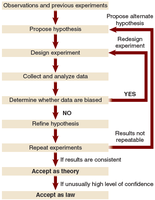
Scientific knowledge in anatomy and physiology is built through a systematic process known as the scientific method. This process ensures that findings are reliable and repeatable.
Observations and previous experiments form the basis for new questions.
Hypotheses are proposed and tested through carefully designed experiments.
Data is collected, analyzed, and checked for bias.
If results are consistent and confidence is high, theories may be accepted as scientific laws.
Levels of Organization in the Human Body
Hierarchy of Structural Complexity
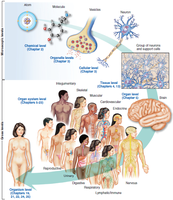
The human body is organized into a hierarchy of structural levels, each building upon the previous:
Chemical Level: Atoms and molecules form the chemical foundation of the body.
Cellular Level: Cells are the smallest living units, composed of various chemicals.
Tissue Level: Groups of similar cells form tissues with specific functions.
Organ Level: Different tissues combine to form organs, each with specialized roles.
System Level: Organs work together in systems to perform complex functions.
Organism Level: All systems together constitute the living human body.
Anatomical Position and Directional Terms
Standard Reference Position
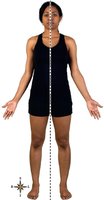
The anatomical position is the universally accepted starting point for describing body parts and positions. The body stands erect, feet slightly apart, arms at the sides, and palms facing forward.
Principal Directional Terms
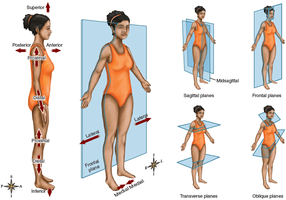
Superior: Toward the head or upper part of a structure.
Inferior: Away from the head or toward the lower part.
Anterior (Ventral): Toward the front of the body.
Posterior (Dorsal): Toward the back of the body.
Medial: Toward the midline of the body.
Lateral: Away from the midline or toward the side.
Proximal: Closer to the point of attachment or trunk.
Distal: Farther from the point of attachment or trunk.
Superficial: Nearer to the body surface.
Deep: Farther from the body surface.
Body Planes
Sagittal Plane: Divides the body into right and left sections.
Midsagittal Plane: Divides the body into equal right and left halves.
Frontal (Coronal) Plane: Divides the body into anterior and posterior sections.
Transverse Plane: Divides the body into superior and inferior sections.
Body Cavities and Subdivisions
Major Body Cavities
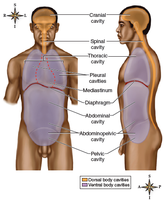
The body contains several major cavities that house and protect internal organs:
Dorsal Cavity: Includes the cranial cavity (brain) and spinal cavity (spinal cord).
Ventral Cavity: Subdivided into the thoracic cavity (heart, lungs) and abdominopelvic cavity (digestive, urinary, and reproductive organs).
Abdominopelvic Regions and Quadrants
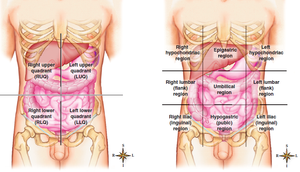
The abdominopelvic cavity is further divided for clinical and anatomical reference:
Four Quadrants: Right upper, left upper, right lower, left lower.
Nine Regions: Epigastric, umbilical, hypogastric, right/left hypochondriac, right/left lumbar, right/left iliac (inguinal).
Organs in Major Body Cavities
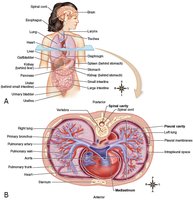
Each cavity contains specific organs essential for body function. For example, the thoracic cavity contains the heart and lungs, while the abdominal cavity contains digestive organs.
Axial and Appendicular Divisions of the Body
Body Regions
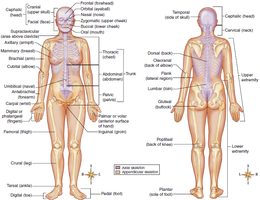
Axial Region: Includes the head, neck, and trunk (torso).
Appendicular Region: Includes the upper and lower limbs (extremities).
Homeostasis and Feedback Mechanisms
Definition and Importance
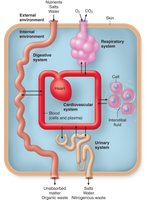
Homeostasis is the maintenance of a stable internal environment within the body, essential for survival and proper function. The body uses feedback mechanisms to regulate internal conditions.
Negative Feedback Loops
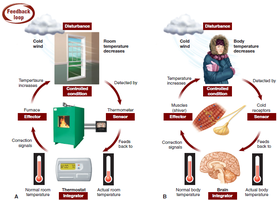
Negative feedback loops counteract changes in the internal environment, restoring balance. Most physiological processes use negative feedback.
Example: Regulation of body temperature—if temperature rises, mechanisms lower it; if it falls, mechanisms raise it.
Positive Feedback Loops
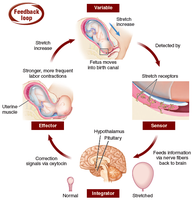
Positive feedback loops amplify changes, moving the system further from its starting state. These are less common but important in certain processes.
Example: Labor contractions during childbirth—stretching of the uterus triggers stronger contractions until delivery.
Internal Environment and Organ Function
All organs work together to maintain homeostasis. The ability to maintain balance decreases with age, affecting overall health and efficiency.
Summary Table: Body Cavities and Major Organs
Body Cavity | Major Organs |
|---|---|
Cranial | Brain |
Spinal | Spinal cord |
Thoracic | Heart, lungs, trachea, esophagus |
Abdominal | Stomach, intestines, liver, gallbladder, pancreas, spleen |
Pelvic | Urinary bladder, reproductive organs, lower intestine |
Key Terms and Concepts
Anatomical Position: Standard reference for body orientation.
Directional Terms: Used to describe locations and relationships of body parts.
Body Planes: Imaginary lines dividing the body for anatomical study.
Homeostasis: Maintenance of internal stability.
Feedback Loops: Mechanisms for regulating physiological processes.
