 Back
BackMeiosis and Mitosis: Cell Division and Genetic Variation
Study Guide - Smart Notes
 Tailored notes based on your materials, expanded with key definitions, examples, and context.
Cell Division: Mitosis and Meiosis
Introduction to Cell Division
Cell division is a fundamental process in all living organisms, essential for growth, repair, and reproduction. There are two main types of cell division: mitosis and meiosis. Each serves a distinct biological purpose and results in different types of daughter cells.
Mitosis
Definition and Purpose
Mitosis is the process by which a single cell divides to produce two genetically identical daughter cells.
This process is crucial for growth, tissue repair, and asexual reproduction in multicellular organisms.
The resulting cells are diploid (2n), meaning they have the same number of chromosomes as the parent cell.
Example: Skin cells dividing to heal a wound.
Meiosis
Definition and Purpose
Meiosis is a specialized form of cell division that reduces the chromosome number by half, producing four genetically unique daughter cells.
It is essential for sexual reproduction, generating gametes (sperm and eggs) in animals.
The resulting cells are haploid (n), containing half the chromosome number of the original diploid cell.
Example: Formation of sperm in testes and eggs in ovaries.
Where Does Meiosis Occur?
Meiosis takes place in diploid germ cells located in the testes (males) and ovaries (females).
In males, the process is called spermatogenesis (producing sperm).
In females, it is called oogenesis (producing eggs).
Key Vocabulary in Cell Division
Genetic and Cellular Structures
Gene: The basic functional unit of heredity, composed of DNA.
Chromosome: A structure made of DNA and proteins that contains many genes.
Homologous Chromosomes: Chromosome pairs (one from each parent) with the same genes at the same loci.
Sister Chromatid: An identical copy of a chromosome, formed during DNA replication and joined at the centromere.
Diploid (2n): A cell with two sets of chromosomes (one from each parent).
Haploid (n): A cell with one set of chromosomes.
Centromere: The region where sister chromatids are joined and spindle fibers attach during division.
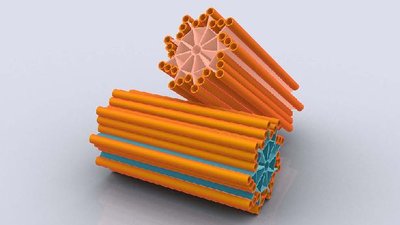
Centrosome: The microtubule-organizing center of the cell, containing centrioles.
Centriole: A cylindrical structure that helps organize microtubules during cell division.
Overview of Meiosis
General Process
Meiosis consists of two consecutive cell divisions: Meiosis I and Meiosis II.
One diploid parent cell divides to produce four haploid daughter cells.
Each daughter cell is genetically unique due to crossing over and independent assortment.
Stages of Meiosis
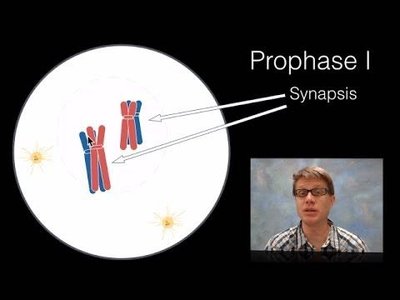
Prophase I: Homologous chromosomes pair up (synapsis) and exchange genetic material (crossing over).
Metaphase I: Homologous pairs align at the cell's equator.
Anaphase I: Homologous chromosomes are separated to opposite poles.
Telophase I and Cytokinesis: Two haploid cells are formed.
Meiosis II: Similar to mitosis; sister chromatids are separated, resulting in four haploid cells.
Comparison: Mitosis vs. Meiosis
Feature | Mitosis | Meiosis |
|---|---|---|
Number of Divisions | 1 | 2 |
Daughter Cells Produced | 2 | 4 |
Genetic Identity | Identical to parent | Genetically unique |
Chromosome Number | Diploid (2n) | Haploid (n) |
Function | Growth, repair | Sexual reproduction |
Key Equations
Diploid chromosome number:
Haploid chromosome number:
Additional info: The process of crossing over during Prophase I increases genetic diversity among offspring, which is a key advantage of sexual reproduction.
