 Back
BackMetabolism, Nutrition, and Energetics – Study Notes
Study Guide - Smart Notes
 Tailored notes based on your materials, expanded with key definitions, examples, and context.
Metabolism, Nutrition, and Energetics
Introduction
This chapter explores the biochemical processes that provide energy and building blocks for the human body. It covers the breakdown and synthesis of nutrients, the regulation of metabolic states, and the mechanisms of thermoregulation. Understanding these processes is essential for comprehending how the body maintains homeostasis and supports life.
Metabolism and Energetics
Overview of Metabolism
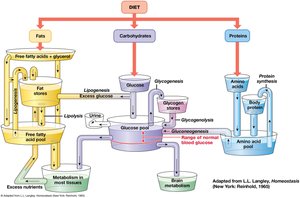
Metabolism is the sum of all chemical reactions (catabolic and anabolic) in the body.
Catabolism breaks down larger molecules into smaller ones, releasing energy.
Anabolism synthesizes larger molecules from smaller ones, requiring energy input.
The nutrient pool consists of all available nutrient molecules in the blood, including water, vitamins, mineral ions, and organic molecules (carbohydrates, proteins, lipids).
Energetics and Redox Reactions
Energetics is the study of energy flow and transformation in biological systems.
Oxidation is the loss of electrons or hydrogen atoms; reduction is the gain of electrons or hydrogen atoms.
Oxidation and reduction always occur together (redox reactions), transferring energy between molecules.
Some energy is lost as heat; the rest is used for cellular work (e.g., ATP synthesis).
Electron Transport Chain and Coenzymes
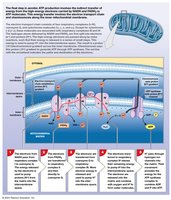
The electron transport chain (ETC) is a series of protein complexes in mitochondria that transfer electrons from nutrients to oxygen, forming water and generating ATP.
Coenzymes such as NAD (nicotinamide adenine dinucleotide) and FAD (flavin adenine dinucleotide) act as electron carriers, shuttling electrons to the ETC.
Carbohydrate Metabolism
Glycolysis
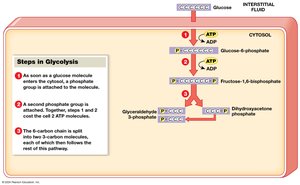
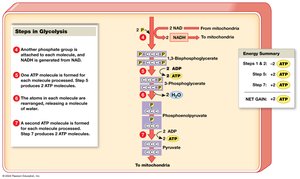
Glycolysis is the anaerobic breakdown of glucose (6C) into two molecules of pyruvate (3C) in the cytosol, yielding a net gain of 2 ATP and 2 NADH.
Does not require oxygen.
Pyruvate can be converted to lactate if oxygen is unavailable.
Citric Acid Cycle (Krebs Cycle)
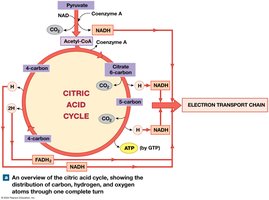
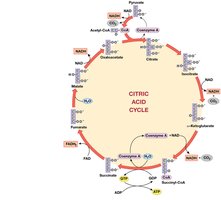
In the presence of oxygen, pyruvate enters mitochondria and is converted to acetyl-CoA, which enters the citric acid cycle. This cycle produces NADH, FADH2, GTP (equivalent to ATP), and CO2.
Each glucose yields two turns of the cycle.
Substrate-level phosphorylation produces GTP/ATP directly.
Electron Transport Chain and Chemiosmosis
NADH and FADH2 donate electrons to the ETC, which uses the energy to pump protons and generate ATP via chemiosmosis (ATP synthase).
Oxygen is the final electron acceptor, forming water.
Most ATP is produced in this stage.
ATP Yield from Glucose
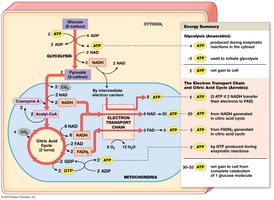
Glycolysis: 2 ATP
Citric Acid Cycle: 2 ATP (as GTP)
ETC: 23–28 ATP
Total: 30–32 ATP per glucose molecule
Glucose Anabolism
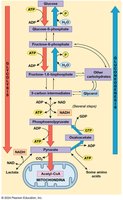
Gluconeogenesis: Synthesis of glucose from non-carbohydrate precursors (e.g., amino acids, lactate).
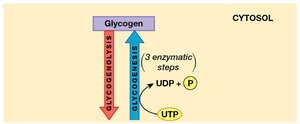
Glycogenesis: Formation of glycogen from glucose for storage.
Glycogenolysis: Breakdown of glycogen to release glucose.
Lipid Metabolism
Lipid Catabolism (Lipolysis and Beta-Oxidation)
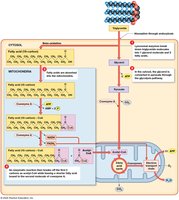
Lipolysis: Breakdown of triglycerides into glycerol and fatty acids.
Glycerol is converted to pyruvate; fatty acids undergo beta-oxidation in mitochondria, producing acetyl-CoA, NADH, and FADH2.
One 18-carbon fatty acid yields about 120 ATP.
Lipid Anabolism (Lipogenesis)
Lipogenesis: Synthesis of lipids from acetyl-CoA, especially when carbohydrate intake is high.
Essential fatty acids (e.g., linoleic acid) must be obtained from the diet.
Lipids are stored as droplets but are less accessible than carbohydrates.
Lipid Transport and Distribution
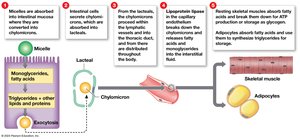
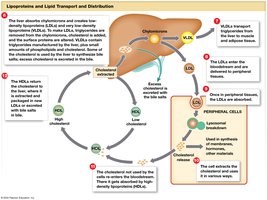
Lipids are transported in blood as lipoproteins (chylomicrons, VLDL, LDL, HDL).
Chylomicrons carry dietary lipids; VLDL and LDL transport triglycerides and cholesterol; HDL removes excess cholesterol.
Protein Metabolism
Protein Catabolism
Proteins are rarely used for energy but can be catabolized during starvation or inadequate carbohydrate/lipid supply.
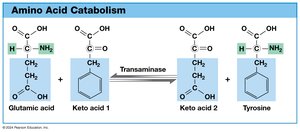
Transamination: Transfer of an amino group to a keto acid, forming a new amino acid.
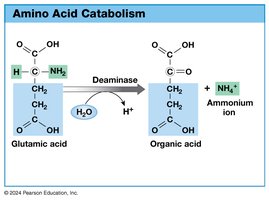
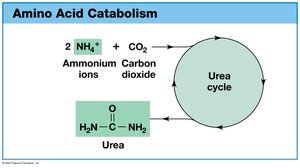
Deamination: Removal of an amino group, producing toxic ammonium ions, which are converted to urea in the liver (urea cycle).
Protein Synthesis
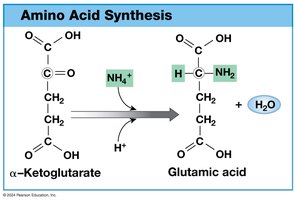
Nonessential amino acids can be synthesized by the body (amination).
Essential amino acids must be obtained from the diet.
Absorptive and Postabsorptive States
Metabolic States
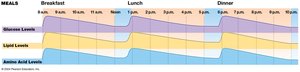
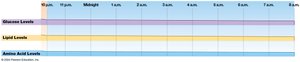
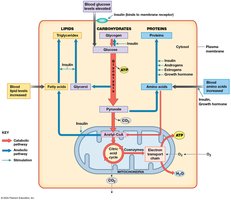
Absorptive state: Occurs after a meal; nutrients are absorbed and used for energy storage and growth.
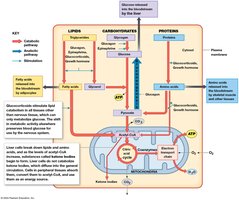
Postabsorptive state: Occurs between meals; the body relies on internal energy reserves, maintaining blood glucose for the nervous system.
Ketone Bodies and Ketosis
During prolonged fasting, the liver produces ketone bodies from fatty acids.
High levels can lead to ketoacidosis, a dangerous drop in blood pH.
Nutrition
Balanced Diet and Nutritional Requirements
A balanced diet provides all nutrients needed for homeostasis: carbohydrates, proteins, lipids, vitamins, minerals, and water.
Malnutrition results from inadequate or excessive nutrient intake.
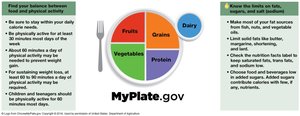
Dietary guidelines (e.g., MyPlate) help ensure proper proportions of food groups.
Proteins and Nitrogen Balance
Complete proteins contain all essential amino acids; incomplete proteins lack one or more.
Nitrogen balance is the difference between nitrogen intake and loss.
Positive balance: more nitrogen absorbed than lost (growth, pregnancy); negative balance: more lost than absorbed (starvation, illness).
Minerals and Vitamins
Minerals are inorganic ions essential for physiological processes (e.g., sodium, potassium, calcium).
Vitamins are organic compounds required in small amounts, functioning as coenzymes.
Fat-soluble vitamins (A, D, E, K) are stored in the body; water-soluble vitamins (B complex, C) are not stored in significant amounts.
Metabolic Rate and Thermoregulation
Metabolic Rate and Basal Metabolic Rate (BMR)
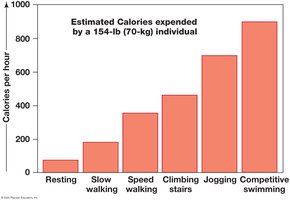
Metabolic rate is the rate of energy expenditure, measured in calories per hour or day.
BMR is the energy used at rest to maintain vital functions, proportional to oxygen consumption.
Factors affecting BMR: age, sex, body weight, hormones, physical activity.
Thermoregulation
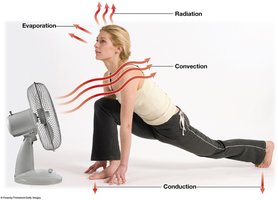
Maintains body temperature within a narrow range, balancing heat production and loss.
Heat exchange occurs via radiation, convection, conduction, and evaporation.
Heat Loss and Conservation Mechanisms
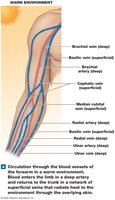
Heat loss: vasodilation, sweating, increased respiration.
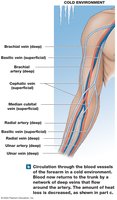
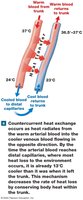
Heat conservation: vasoconstriction, countercurrent exchange, shivering, nonshivering thermogenesis (hormonal).
Special Considerations
Brown fat in infants generates heat without producing ATP (important for thermoregulation).
Fever is an elevated body temperature, which can result from infection, heat stroke, or other causes.
