 Back
BackNeurons: Cellular and Network Properties (MOD 3)
Study Guide - Smart Notes
 Tailored notes based on your materials, expanded with key definitions, examples, and context.
Neurons: Cellular and Network Properties
Overview of the Nervous System
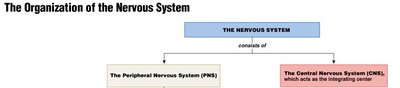
The nervous system is a complex network responsible for coordinating voluntary and involuntary actions and transmitting signals throughout the body. It is divided into the central nervous system (CNS) and the peripheral nervous system (PNS).
Central Nervous System (CNS): Consists of the brain and spinal cord, acting as the main integrating center.
Peripheral Nervous System (PNS): Composed of all nervous tissue outside the CNS, including cranial nerves, spinal nerves, ganglia, and sensory receptors.
Functional Organization of the Nervous System
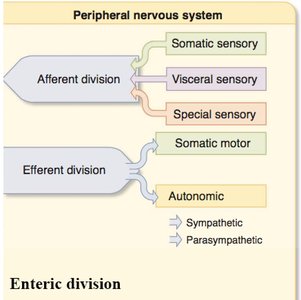
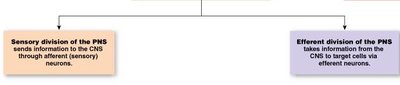
The PNS is further divided into afferent (sensory) and efferent (motor) divisions, each with specialized roles in signal transmission.
Afferent Division: Transmits sensory information from receptors to the CNS.
Efferent Division: Carries commands from the CNS to effectors such as muscles and glands.
Enteric Nervous System
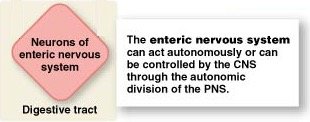
The enteric nervous system, located in the digestive tract, can function autonomously or be regulated by the CNS via the autonomic division of the PNS.
Structural and Functional Categories of Neurons
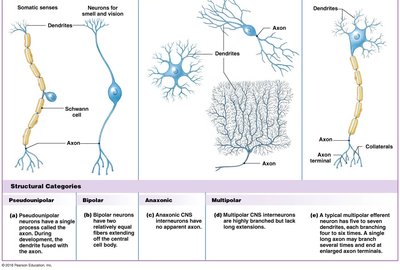
Neurons are classified based on their structure and function. Structural categories include pseudounipolar, bipolar, anaxonic, and multipolar neurons. Functionally, neurons are divided into sensory neurons, interneurons, and efferent neurons.
Sensory Neurons: Transmit sensory information to the CNS.
Interneurons: Facilitate communication within the CNS.
Efferent Neurons: Transmit signals from the CNS to effectors.
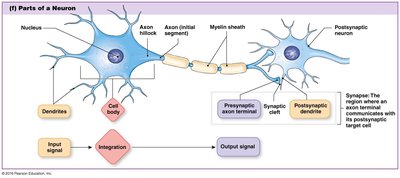
Parts of a Neuron
Neurons have specialized structures for signal transmission:
Dendrites: Receive incoming signals.
Cell Body (Soma): Contains the nucleus and organelles.
Axon: Conducts electrical impulses away from the cell body.
Axon Hillock: The trigger zone for action potentials.
Myelin Sheath: Insulates the axon to speed up signal transmission.
Synaptic Terminals: Release neurotransmitters to communicate with target cells.
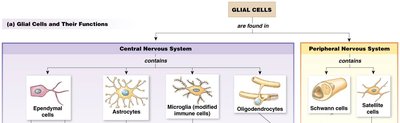
Glial Cells: Support and Function
Glial cells provide structural and metabolic support to neurons. Major types include:
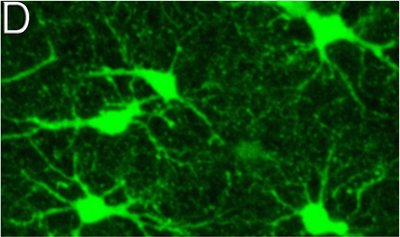
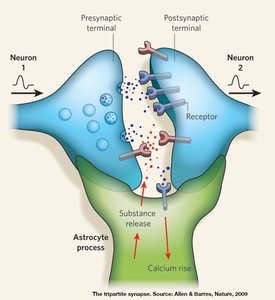
Astrocytes: Maintain the blood-brain barrier, regulate extracellular fluid, and support synaptic function.
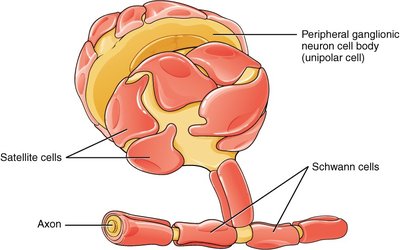
Oligodendrocytes (CNS) and Schwann Cells (PNS): Form myelin sheaths around axons.
Microglia: Act as immune cells in the CNS.
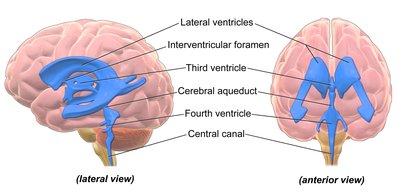
Ependymal Cells: Line the ventricles of the brain and spinal cord, involved in cerebrospinal fluid production.
Satellite Cells: Support neuron cell bodies in the PNS.
Axonal Transport
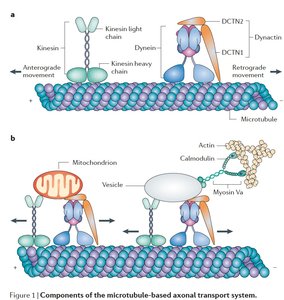
Axonal transport is essential for moving proteins, organelles, and other materials between the cell body and axon terminals. It occurs via two main mechanisms:
Fast Axonal Transport: Moves membrane-bound organelles rapidly using motor proteins (kinesins for anterograde, dyneins for retrograde transport).
Slow Axonal Transport: Moves cytoskeletal and cytoplasmic proteins more slowly.
Synapses and Signal Transmission
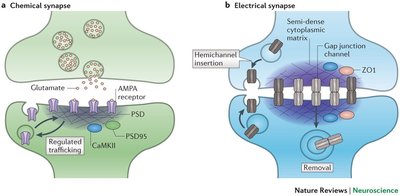
Synapses are specialized junctions where neurons communicate with other neurons or effector cells. Most synapses are chemical, involving neurotransmitter release, while some are electrical, allowing direct ion flow through gap junctions.
Chemical Synapses: Use neurotransmitters to transmit signals across the synaptic cleft.
Electrical Synapses: Allow direct passage of ions and electrical signals between cells.
Electrical Properties of Neurons
Neurons are excitable cells capable of generating and propagating electrical signals. The membrane potential is determined by the distribution of ions and membrane permeability.
Nernst Equation: Calculates the equilibrium potential for a single ion.
Goldman-Hodgkin-Katz (GHK) Equation: Predicts the membrane potential considering multiple ions and their permeabilities.
GHK Equation:

Ion Channels and Electrical Signals
Ion channels regulate the flow of ions across the neuronal membrane, influencing the membrane potential and the generation of electrical signals.
Types of Gated Channels: Mechanically gated, chemically gated, and voltage-gated channels.
Channelopathies: Disorders caused by dysfunctional ion channels, affecting neuronal excitability and signaling.
Graded Potentials and Action Potentials
Neurons generate two main types of electrical signals:
Graded Potentials: Variable-strength signals that decrease in amplitude as they spread from the point of origin. Can be depolarizing (excitatory) or hyperpolarizing (inhibitory).
Action Potentials: All-or-none electrical impulses that propagate along the axon without losing strength, enabling long-distance communication.
Ohm's Law: , where is current, is voltage, and is resistance.
Summary Table: Major Types of Glial Cells
Glial Cell Type | Location | Main Function |
|---|---|---|
Astrocytes | CNS | Support neurons, maintain blood-brain barrier, regulate extracellular fluid |
Oligodendrocytes | CNS | Form myelin sheaths |
Schwann Cells | PNS | Form myelin sheaths |
Microglia | CNS | Immune defense |
Ependymal Cells | CNS | Line ventricles, produce cerebrospinal fluid |
Satellite Cells | PNS | Support neuron cell bodies |
Example: Multiple sclerosis is a disease characterized by demyelination in the CNS, leading to impaired signal conduction and neurological symptoms.
Additional info: The notes above integrate and expand upon the provided materials, ensuring a comprehensive and academically robust overview suitable for ANP college students.
