 Back
BackSkin and Membranes: Structure, Function, and Clinical Aspects
Study Guide - Smart Notes
 Tailored notes based on your materials, expanded with key definitions, examples, and context.
Skin & Membranes
Classification of Body Membranes
The body contains several types of membranes that serve as coverings or linings for organs and cavities. These membranes are classified based on their tissue composition and location.
Epithelial membranes: Composed of epithelial tissue with an underlying layer of connective tissue. Types include:
Cutaneous membrane: Commonly known as the skin, it covers the body surface.
Serous membranes: Consist of simple squamous epithelium on a connective tissue basement membrane. They are further divided into:
Parietal layer: Lines the walls of body cavities.
Visceral layer: Covers organs within those cavities.
Pleura: Lines the thoracic cavity and covers the lungs.
Peritoneum: Lines the abdominal cavity and covers abdominal organs.
Mucous membranes: Line body surfaces that open directly to the exterior and secrete mucus to keep surfaces moist.
Connective tissue membranes: Made exclusively of connective tissue. They produce synovial fluid for lubrication, found in joint spaces and bursal sacs.
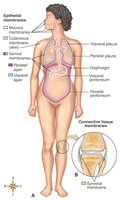
Diseases of Serous Membranes
Pleurisy: Inflammation of the pleura, causing chest pain and breathing difficulty.
Peritonitis: Inflammation of the peritoneum, often resulting in severe abdominal pain.
Skin Structure
Layers of the Skin
The skin consists of two primary layers: the epidermis and the dermis, each with distinct structures and functions.
Epidermis: The outermost, thinnest layer, composed of stratified squamous epithelium.
Stratum germinativum: Deepest layer, responsible for cell reproduction and melanin production by melanocytes.
Stratum corneum: Outermost layer, composed of keratin-filled cells that flake off.
Dermis: Thicker, deeper layer made mostly of connective tissue. Contains dermal papillae, collagen, elastic fibers, nerve endings, muscle fibers, hair follicles, sweat and sebaceous glands, and blood vessels.
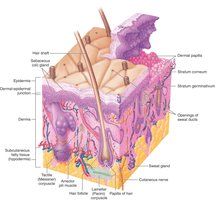
Thick and Thin Skin
Skin varies in thickness depending on location and function.
Thick skin: Found on palms and soles, has parallel friction ridges and no hair.
Thin skin: Covers most of the body, has hair and irregular grooves.
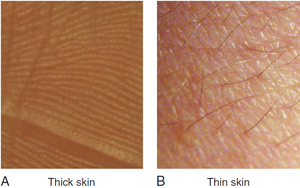
Skin Color and Variations
Pink flush: Indicates increased blood volume or oxygenation.
Cyanosis: Bluish-gray color due to decreased blood oxygen.
Vitiligo: Patchy loss of melanocytes causing light skin areas.
Freckles: Small, flat pigmented spots; normal variation.
Hormonal changes: Can increase pigmentation, especially during pregnancy.
Dermal-Epidermal Junction
This specialized area connects the epidermis and dermis, providing support. Damage can result in blisters.
Dermal Features and Birthmarks
Dermal papillae: Peglike projections that increase surface area for attachment.
Striae: Stretch marks from overstretching of skin.
Birthmarks: Malformations of dermal blood vessels, such as strawberry hemangioma, port-wine stain, and stork bite.
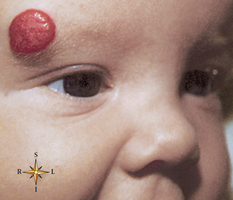
Appendages of the Skin
Hair
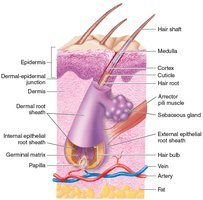
Hair serves protective and sensory functions and is produced by follicles in the skin.
Lanugo: Soft hair on fetuses and newborns.
Hair follicle: Epidermal tube where hair grows from the papilla.
Hair root: Hidden in the follicle; the shaft is the visible part.
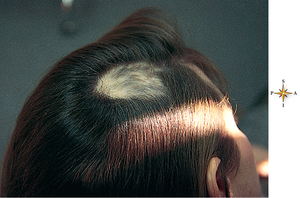
Alopecia: Hair loss condition.
Arrector pili: Smooth muscle causing hair to stand up (goosebumps).
Receptors
Tactile (Meissner) corpuscle: Detects light touch.
Lamellar (Pacini) corpuscle: Detects pressure.
Nails
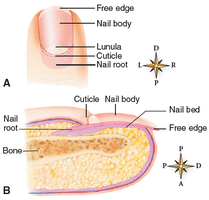
Nails are protective coverings produced by epidermal cells at the ends of fingers and toes.
Nail body: Visible part of the nail.
Root: Hidden by the cuticle.
Lunula: Crescent-shaped area near the root.
Nail bed: May change color with blood flow changes.
Nail Variations
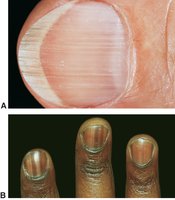
Normal: Longitudinal ridges (light-skinned individuals), pigmented bands (dark-skinned individuals).
Abnormal: Onycholysis (separation from nail bed), pitting (common in psoriasis).
Skin Glands
Sweat (sudoriferous) glands:
Eccrine glands: Most numerous, regulate body temperature by producing sweat.
Apocrine glands: Found in axilla and genital areas, secrete thicker fluid that can develop odor.
Sebaceous glands: Secrete sebum (oil) for hair and skin; activity increases during adolescence. Blockage can cause blackheads and acne.
Functions of the Skin
Protection
The skin acts as the body's first line of defense against infection, UV radiation, chemicals, and physical injury. Bruising occurs when blood vessels are damaged, leading to discoloration as blood breaks down.
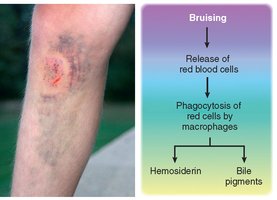
Skin grafts: May be required to replace damaged skin.
Temperature Regulation
Skin releases heat through sweat and regulation of blood flow near the surface.
Can release up to 3000 calories of heat per day.
Sensation
Receptors in the skin detect touch, pressure, pain, heat, and changes in the environment.
Excretion
Skin excretes waste products such as uric acid, ammonia, and urea through sweat.
Synthesis of Vitamin D
UV light stimulates skin cells to produce a precursor to vitamin D, which is then converted in the liver and kidneys.
Conditions and Disorders of the Skin
Lesions
Elevated lesions: Papule, plaque, vesicle, pustule, crust, wheal.
Flat lesions: Macule.
Depressed lesions: Excoriation, ulcer, fissure.
Burns
First-degree: Only epidermis affected.
Second-degree: Deep epidermal and upper dermal layers affected.
Third-degree: Complete destruction of epidermis and dermis; may extend to muscle and bone (fourth-degree).
Rule of Nines: Used to estimate body surface area affected by burns (body divided into 11 areas of 9% each, plus 1% for genitals).
Skin Infections
Impetigo: Bacterial infection (staphylococcal or streptococcal).
Tinea: Fungal infection.
Warts: Caused by papillomavirus.
Boils: Staphylococcal infection of hair follicles.
Scabies: Parasitic infection.
Vascular and Inflammatory Skin Conditions
Decubitus ulcers: Bedsores from reduced blood flow.
Urticaria (hives): Red lesions from fluid loss.
Scleroderma: Hardening of the skin due to connective tissue disorder.
Psoriasis: Chronic inflammation with scaly plaques.
Eczema: Inflammatory condition with papules, vesicles, and crusts.
Skin Cancer
Squamous cell carcinoma: Hard, raised tumors; most common type.
Basal cell carcinoma: Papules with a central crater; rarely metastasizes.
Melanoma: Malignancy in a mole; most serious type.
Kaposi sarcoma: Purple lesions, associated with immune deficiency (e.g., AIDS).
Sunlight exposure: Major risk factor for common skin cancers.
Additional info: For all clinical conditions, early detection and appropriate management are crucial for optimal outcomes.
