 Back
BackThe Chemical Level of Organization: Bonds, Biomolecules, and Energy
Study Guide - Smart Notes
 Tailored notes based on your materials, expanded with key definitions, examples, and context.
The Chemical Level of Organization
Chemical Bonds and Water Molecules
The structure and function of biological molecules depend on the types of chemical bonds that hold their atoms together. Water, a fundamental molecule in biology, is held together by polar covalent bonds, which create partial charges and allow for hydrogen bonding between molecules.
Polar Covalent Bond: A bond where electrons are shared unequally, resulting in partial positive and negative charges.
Hydrogen Bond: Weak attraction between the hydrogen atom of one water molecule and the oxygen atom of another.
Surface Tension: The cohesion of water molecules at the surface due to hydrogen bonding.
Universal Solvent: Water's polarity allows it to dissolve many substances, forming hydration spheres around ions.
Example: Water molecules are formed by polar covalent bonds, and their ability to form hydrogen bonds gives water its unique properties.
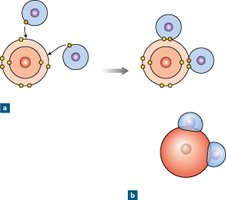
Types of Chemical Reactions
Chemical reactions in the body can be classified as catabolic (breaking down molecules) or anabolic (building molecules). Synthesis reactions, such as dehydration synthesis, are essential for forming complex carbohydrates and other macromolecules.
Catabolic Reaction: Breakdown of molecules, e.g., loss of muscle protein.
Anabolic Reaction: Formation of larger molecules from smaller ones.
Dehydration Synthesis: Removal of water to join two molecules.
Endergonic Reaction: Absorbs energy.
Exergonic Reaction: Releases energy.
Equation: (decomposition), (synthesis)
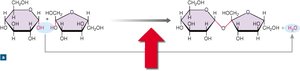
Carbohydrates: Structure and Function
Carbohydrates are essential for energy storage and structural support. They are classified as monosaccharides, disaccharides, and polysaccharides. Complex carbohydrates are preferred for health, as they reduce the risk of diabetes.
Monosaccharide: Single sugar unit (e.g., glucose).
Disaccharide: Two sugar units joined (e.g., sucrose).
Polysaccharide: Many sugar units (e.g., starch, cellulose).
Digestibility: Humans can digest starch but not cellulose due to the type of glycosidic linkage.
Example: Wheat produces both starch and cellulose; only starch is digestible by humans.
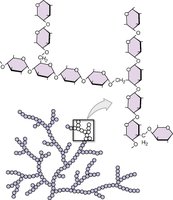
Lipids: Structure and Biological Roles
Lipids are diverse molecules involved in energy storage, cell membrane structure, and signaling. Triglycerides are the main form of stored energy, while phospholipids and cholesterol play structural and regulatory roles.
Triglyceride: Composed of glycerol and three fatty acids.
Phospholipid: Major component of cell membranes, forms micelles in water.
Cholesterol: Structural component of membranes, precursor for steroid hormones.
Omega-3 Fatty Acids: Unsaturated fats beneficial for cardiovascular health.
Example: The circular structure of micelles and the arrangement of phospholipids in membranes.
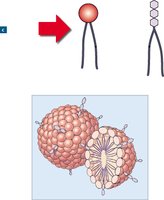
Proteins: Structure and Function
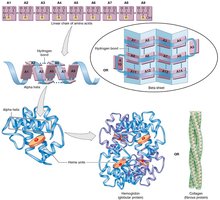
Proteins are polymers of amino acids and serve as enzymes, structural components, and signaling molecules. Their function depends on their structure, which is organized into four levels: primary, secondary, tertiary, and quaternary.
Primary Structure: Sequence of amino acids.
Secondary Structure: Alpha-helix and beta-sheet formed by hydrogen bonds.
Tertiary Structure: Three-dimensional folding.
Quaternary Structure: Association of multiple polypeptides.
Enzyme: Protein catalyst that lowers activation energy.
Example: The alpha-helix is a secondary structure; hemoglobin is a quaternary structure protein.
Nucleic Acids and ATP: Genetic Information and Cellular Energy
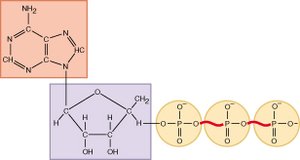
Nucleic acids (DNA and RNA) store and transmit genetic information. ATP (adenosine triphosphate) is the primary energy carrier in cells, releasing energy when its phosphate bonds are broken.
Nucleotide: Building block of nucleic acids, composed of a pentose sugar, phosphate group, and nitrogenous base.
DNA: Double-stranded, uses deoxyribose and thymine.
RNA: Single-stranded, uses ribose and uracil.
ATP: High-energy molecule; energy is released by breaking the covalent bond between phosphates.
Phosphorylation: Addition of a phosphate group to ADP to form ATP.
Equation:
Additional info:
Radiation sickness is caused by exposure to excessive radioactive isotopes, which can damage cellular structures and genetic material.
