 Back
BackThe Endocrine System: Structure, Function, and Hormone Regulation
Study Guide - Smart Notes
 Tailored notes based on your materials, expanded with key definitions, examples, and context.
Endocrine System Overview
General Functions and Coordination
The endocrine system works in concert with the nervous system to coordinate and integrate the activity of body cells. It influences metabolic activities through hormones transported in the blood, producing responses that are slower but longer lasting than those of the nervous system.
Key Point 1: The endocrine system regulates reproduction, growth and development, electrolyte and nutrient balance, cellular metabolism, and mobilization of body defenses.
Key Point 2: Endocrinology is the study of hormones and endocrine organs.
Example: Hormones such as insulin regulate blood glucose, while growth hormone influences tissue growth.
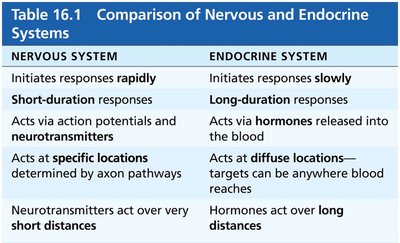
Comparison of Nervous and Endocrine Systems
The nervous and endocrine systems both regulate body functions, but differ in speed, duration, and mechanism of action.
Key Point 1: Nervous system responses are rapid and short-lived, while endocrine responses are slow and long-lasting.
Key Point 2: Nervous system uses neurotransmitters and acts at specific locations; endocrine system uses hormones and acts at diffuse locations.
Nervous System | Endocrine System |
|---|---|
Initiates responses rapidly | Initiates responses slowly |
Short-duration responses | Long-duration responses |
Acts via action potentials and neurotransmitters | Acts via hormones released into the blood |
Acts at specific locations | Acts at diffuse locations |
Neurotransmitters act over very short distances | Hormones act over long distances |
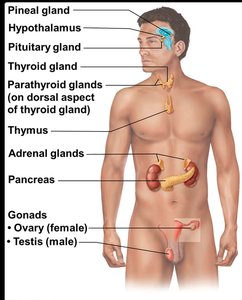
Endocrine and Exocrine Glands
Types of Glands
Exocrine glands: Produce non-hormonal substances (e.g., sweat, saliva) and have ducts to carry secretions to membrane surfaces.
Endocrine glands: Produce hormones, lack ducts, and release hormones directly into the blood. Major glands include pituitary, thyroid, parathyroid, adrenal, and pineal glands.
Mixed function organs: Pancreas, gonads, and placenta have both endocrine and exocrine functions.
Chemical Messengers of the Endocrine System
Hormones and Local Messengers
Hormones: Long-distance chemical signals that travel in blood or lymph.
Autocrines: Chemicals that exert effects on the same cells that secrete them.
Paracrines: Locally acting chemicals that affect neighboring cells.
Hormone Chemical Structure
Classes of Hormones
Hormones are classified based on their chemical structure, which determines their mechanism of action.
Amino acid–based hormones: Include amino acid derivatives, peptides, and proteins.
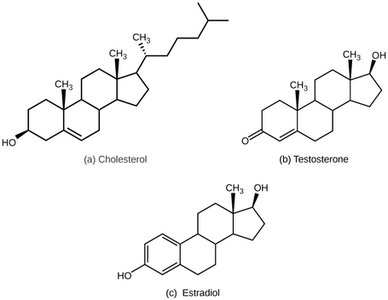
Steroid hormones: Synthesized from cholesterol; include gonadal and adrenocortical hormones.
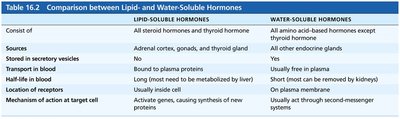
Hormone Action on Target Cells
Mechanisms of Action
Hormones alter target cell activity by changing membrane permeability, stimulating protein synthesis, activating or deactivating enzymes, inducing secretory activity, or stimulating mitosis.
Water-soluble hormones: Act on plasma membrane receptors via second messenger systems; cannot enter the cell.
Lipid-soluble hormones: Act on intracellular receptors that directly activate genes; can enter the cell.
Lipid-Soluble Hormones | Water-Soluble Hormones |
|---|---|
All steroid hormones and thyroid hormone | All amino acid-based hormones except thyroid hormone |
Adrenal cortex, gonads, thyroid gland | Other endocrine glands |
Bound to plasma proteins | Usually free in plasma |
Long half-life | Short half-life |
Inside cell | On plasma membrane |
Activate genes, cause synthesis of new proteins | Second-messenger systems |
Second Messenger Systems
Cyclic AMP (cAMP) Mechanism
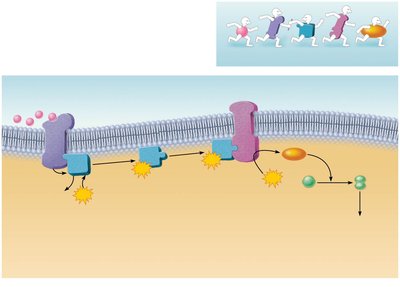
Water-soluble hormones use second messenger systems to exert their effects. The cAMP pathway is a common mechanism.
Step 1: Hormone (first messenger) binds to receptor.
Step 2: Receptor activates a G protein.
Step 3: G protein activates adenylate cyclase.
Step 4: Adenylate cyclase converts ATP to cAMP (second messenger).
Step 5: cAMP activates protein kinases, which phosphorylate other proteins.
PIP2-Calcium Signaling Mechanism
Key Point 1: Hormone-activated G protein activates phospholipase C.
Key Point 2: Phospholipase C splits PIP2 into DAG and IP3.
Key Point 3: DAG activates protein kinases; IP3 causes Ca2+ release from intracellular stores.
Key Point 4: Calcium ions act as second messengers, binding to calmodulin and activating enzymes.
Intracellular Receptors and Direct Gene Activation
Lipid-Soluble Hormone Action
Lipid-soluble hormones (steroids and thyroid hormone) diffuse into target cells and bind to intracellular receptors. The receptor-hormone complex enters the nucleus, binds to DNA, and initiates transcription to produce mRNA, which is then translated into specific proteins.
Key Point 1: Proteins synthesized may have metabolic, structural, or secretory functions.
Example: Steroid hormones like testosterone and estradiol regulate gene expression in target tissues.
Hormone Release and Regulation
Feedback Mechanisms
Blood levels of hormones are controlled by negative feedback systems. Hormone release is triggered by endocrine gland stimuli and nervous system modulation.
Key Point 1: Endocrine glands are stimulated to synthesize and release hormones in response to humoral, neural, or hormonal stimuli.
Target Cell Specificity
Receptor Presence and Activation
Target cells must have specific receptors for hormones to bind and exert effects.
Key Point 1: Activation depends on hormone concentration, number of receptors, and binding affinity.
Key Point 2: Up-regulation increases receptor number in response to low hormone levels; down-regulation decreases receptor number in response to high hormone levels.
Hormone Half-Life, Onset, and Duration
Hormone Circulation and Removal
Hormones circulate in blood either free or bound to plasma proteins. Steroid and thyroid hormones are bound; others circulate freely.
Key Point 1: Concentration reflects rate of release and speed of inactivation/removal.
Key Point 2: Hormones are removed by degrading enzymes, kidneys, or liver.
Key Point 3: Half-life is the time required for hormone level to decrease by half.
Interaction of Hormones at Target Cells
Types of Hormonal Interactions
Multiple hormones may act on the same target cell simultaneously.
Permissiveness: One hormone requires another to exert its effect (e.g., reproductive hormones need thyroid hormone).
Synergism: More than one hormone produces the same effect, causing amplification (e.g., glucagon and epinephrine both cause liver to release glucose).
Antagonism: One or more hormones oppose the action of another (e.g., insulin and glucagon).
The Hypothalamus and Pituitary Gland
Structure and Function
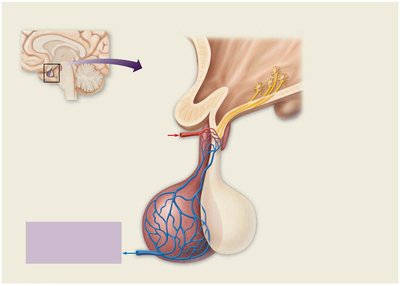
The hypothalamus is connected to the pituitary gland via the infundibulum. The pituitary has two lobes:
Posterior pituitary: Composed of neural tissue; secretes neurohormones (oxytocin and ADH).
Anterior pituitary: Consists of glandular tissue; secretes hormones regulated by hypothalamic releasing and inhibiting hormones.
Posterior Pituitary and Hypothalamic Hormones
Oxytocin and Antidiuretic Hormone (ADH)
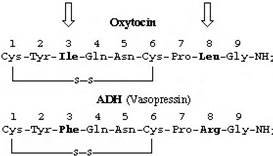
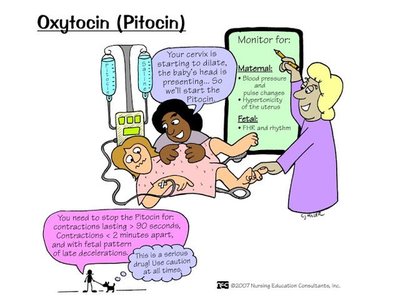
Oxytocin: Stimulates uterine contractions during childbirth and triggers milk ejection; acts via positive feedback and uses PIP2-calcium second messenger system.
ADH: Regulates water balance by targeting kidney tubules to reabsorb water; inhibited by alcohol and diuretics; high concentrations cause vasoconstriction (vasopressin).
Anterior Pituitary Hormones
Overview and Regulation
The anterior pituitary secretes six peptide hormones, most of which are tropic hormones that regulate other endocrine glands.
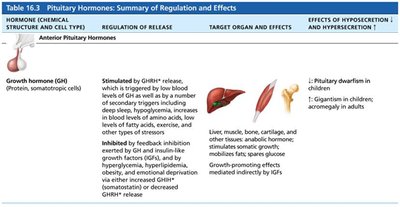
Growth hormone (GH): Directly affects metabolism and indirectly promotes growth via insulin-like growth factors (IGFs).
Thyroid-stimulating hormone (TSH): Stimulates thyroid gland activity.
Adrenocorticotropic hormone (ACTH): Stimulates adrenal cortex to release corticosteroids.
Follicle-stimulating hormone (FSH): Stimulates gamete production.
Luteinizing hormone (LH): Promotes production of gonadal hormones.
Prolactin (PRL): Stimulates milk production in females.

Regulation of Growth Hormone (GH)
GH release is regulated by hypothalamic hormones:
GHRH: Stimulates GH release; triggered by low blood GH or glucose, or high amino acid levels.
GHIH (somatostatin): Inhibits GH release; triggered by high GH and IGF levels.
Ghrelin: Hunger hormone that also stimulates GH release.
Clinical Imbalances of GH
Hypersecretion: Causes gigantism in children and acromegaly in adults.
Hyposecretion: Causes pituitary dwarfism in children.
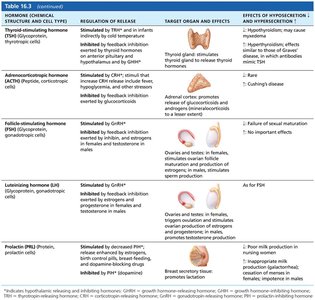
Summary Table of Anterior Pituitary Hormones
Hormone | Regulation of Release | Target Organ and Effects | Hyposecretion/Hypersecretion Effects |
|---|---|---|---|
Growth hormone (GH) | Stimulated by GHRH; inhibited by GHIH | Liver, muscle, bone, cartilage; growth-promoting effects | Dwarfism/gigantism, acromegaly |
Thyroid-stimulating hormone (TSH) | Stimulated by TRH; inhibited by feedback | Thyroid gland; stimulates thyroid hormone release | Hypothyroidism/hyperthyroidism |
Adrenocorticotropic hormone (ACTH) | Stimulated by CRH; inhibited by feedback | Adrenal cortex; stimulates corticosteroid release | Cushing's disease |
Follicle-stimulating hormone (FSH) | Stimulated by GnRH; inhibited by feedback | Ovaries/testes; gamete production | Infertility |
Luteinizing hormone (LH) | Stimulated by GnRH; inhibited by feedback | Ovaries/testes; hormone production | Infertility |
Prolactin (PRL) | Stimulated by decreased PIH; inhibited by PIH | Breast; milk production | Poor milk production/galactorrhea |
Additional info:
Some details were inferred for completeness, such as the specific feedback mechanisms and clinical effects of hormone imbalances, based on standard academic knowledge of endocrine physiology.
