 Back
BackThe Endocrine System: Structure, Function, and Clinical Aspects
Study Guide - Smart Notes
 Tailored notes based on your materials, expanded with key definitions, examples, and context.
The Endocrine System
Overview of the Endocrine System
The endocrine system is the body’s second major controlling system, influencing metabolic activities of cells through the release of hormones. Unlike the nervous system, which acts rapidly, the endocrine system works more slowly but its effects are longer-lasting. Endocrinology is the study of hormones and endocrine organs.
Functions: Controls reproduction, growth and development, maintenance of electrolyte, water, and nutrient balance, regulation of cellular metabolism and energy balance, and mobilization of body defenses.
Endocrine vs. Exocrine Glands: Endocrine glands are ductless and secrete hormones directly into the bloodstream. Exocrine glands have ducts and secrete nonhormonal substances (e.g., sweat, saliva).
Major Endocrine Glands: Pituitary, thyroid, parathyroid, adrenal, and pineal glands. Other organs (e.g., pancreas, gonads, placenta) have both endocrine and exocrine functions.
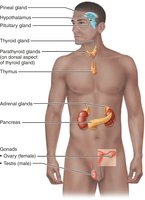
Chemical Messengers
Hormones: Long-distance chemical signals that travel in blood or lymph and regulate the metabolic function of other cells.
Autocrines: Chemicals that exert effects on the same cells that secrete them (e.g., interleukins).
Paracrines: Locally acting chemicals that affect neighboring cells (e.g., somatostatin in the pancreas).
Most experts do not consider autocrines and paracrines as part of the endocrine system since they are local messengers.
Hormone Chemical Structure
Classes of Hormones
Amino Acid-Based Hormones: Most hormones; water-soluble (except thyroid hormone), include amines, peptides, and proteins.
Steroid Hormones: Lipid-soluble; synthesized from cholesterol; include gonadal and adrenocortical hormones.
Eicosanoids: Biologically active lipids with local hormone-like activity (e.g., prostaglandins, leukotrienes); act as paracrines and autocrines, not true hormones.
Mechanisms of Hormone Action
Target Cell Specificity
Only cells with specific receptors for a hormone (target cells) are affected. Hormones may:
Alter plasma membrane permeability or membrane potential
Stimulate synthesis of proteins or enzymes
Activate or deactivate enzymes
Induce secretory activity
Stimulate mitosis
Mechanisms of Hormone Action
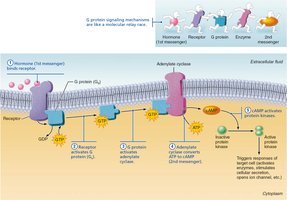
Water-Soluble Hormones: Act on plasma membrane receptors via G protein second messengers; cannot enter the cell.
Lipid-Soluble Hormones: Act on intracellular receptors that directly activate genes; can enter the cell.
Second Messenger Systems
Cyclic AMP (cAMP) Pathway: Hormone binds receptor → activates G protein → activates adenylate cyclase → converts ATP to cAMP → activates protein kinases.
Direct Gene Activation
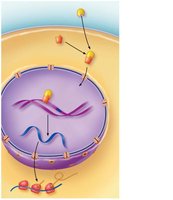
Lipid-soluble hormones diffuse into target cells, bind intracellular receptors, and the complex enters the nucleus to initiate transcription of specific genes, leading to protein synthesis.
Hormone Release and Regulation
Control of Hormone Release
Most hormones are regulated by negative feedback mechanisms, maintaining blood levels within a narrow range.
Hormones are released in response to:
Humoral Stimuli: Changes in blood levels of ions/nutrients (e.g., Ca2+, glucose).
Neural Stimuli: Nerve fibers stimulate hormone release (e.g., adrenal medulla, oxytocin).
Hormonal Stimuli: Hormones stimulate other endocrine glands (e.g., hypothalamic-pituitary-target organ axis).
Target Cell Activation
Depends on blood hormone levels, number of receptors, and receptor affinity.
Up-regulation: Target cells form more receptors in response to low hormone levels.
Down-regulation: Target cells lose receptors in response to high hormone levels.
Hormone Activity
Hormones circulate in blood either bound (steroids, thyroid hormone) or free (all others).
Removed by kidneys (water-soluble), liver (lipid-soluble), or degrading enzymes.
Half-life: Time required for hormone’s blood level to decrease by half.
Hormone Interactions
Permissiveness: One hormone cannot exert its effects without another hormone present.
Synergism: More than one hormone produces the same effects, amplifying the response.
Antagonism: One or more hormones oppose the action of another hormone.
The Hypothalamus and Pituitary Gland
Structure and Function
Pituitary Gland: Pea-sized, connected to hypothalamus by the infundibulum; divided into posterior (neurohypophysis) and anterior (adenohypophysis) lobes.
Posterior Pituitary: Neural tissue; stores and releases oxytocin and antidiuretic hormone (ADH) produced by the hypothalamus.
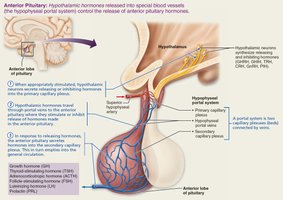
Anterior Pituitary: Glandular tissue; synthesizes and secretes several hormones under hypothalamic control via the hypophyseal portal system.
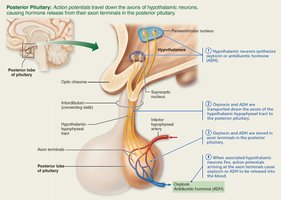
Posterior Pituitary Hormones
Oxytocin: Stimulates uterine contractions during childbirth and milk ejection during lactation; also acts as a neurotransmitter in the brain.
Antidiuretic Hormone (ADH): Promotes water reabsorption in kidneys, reducing urine output; released in response to high blood solute concentration, pain, low blood pressure, and certain drugs. Alcohol inhibits ADH release.
Anterior Pituitary Hormones
Growth Hormone (GH): Stimulates growth (especially bones and muscles), protein synthesis, and mobilizes fats; regulated by GHRH and GHIH (somatostatin).
Thyroid-Stimulating Hormone (TSH): Stimulates thyroid gland; regulated by TRH and negative feedback from thyroid hormones.
Adrenocorticotropic Hormone (ACTH): Stimulates adrenal cortex to release corticosteroids; regulated by CRH and stress.
Gonadotropins (FSH and LH): Regulate function of ovaries and testes; controlled by GnRH and feedback from gonadal hormones.
Prolactin (PRL): Stimulates milk production; regulated by PIH (dopamine) and PRH.
The Thyroid Gland
Structure and Function
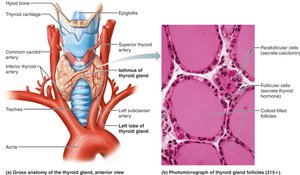
Largest endocrine gland, located in the anterior neck, consists of two lobes connected by an isthmus.
Composed of follicles producing thyroglobulin (precursor to thyroid hormone) and parafollicular cells producing calcitonin.
Thyroid Hormone (TH)
Consists of T4 (thyroxine) and T3 (triiodothyronine); both contain iodine.
Major metabolic hormone; increases metabolic rate, heat production, and regulates tissue growth and development.
Controlled by TSH via negative feedback.
Calcitonin
Produced by parafollicular cells in response to high blood Ca2+ levels.
Lowers blood calcium by inhibiting osteoclast activity and stimulating calcium uptake in bone.
Antagonist to parathyroid hormone (PTH).
The Parathyroid Glands
Structure and Function
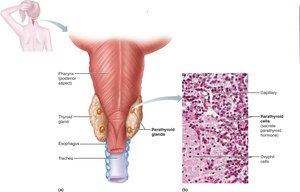
Usually four small glands on the posterior thyroid; secrete parathyroid hormone (PTH).
PTH is the most important hormone for calcium homeostasis; increases blood Ca2+ by stimulating osteoclasts, enhancing kidney reabsorption, and activating vitamin D for intestinal absorption.
The Adrenal Glands
Structure and Function
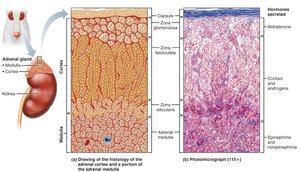
Paired glands atop the kidneys; consist of adrenal cortex (outer, glandular) and adrenal medulla (inner, neural).
Adrenal Cortex: Produces corticosteroids in three layers:
Zona glomerulosa: Mineralocorticoids (e.g., aldosterone)
Zona fasciculata: Glucocorticoids (e.g., cortisol)
Zona reticularis: Gonadocorticoids (sex hormones)
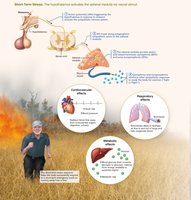
Adrenal Medulla: Produces catecholamines (epinephrine and norepinephrine) under sympathetic nervous system control.
The Pineal Gland
Structure and Function
Small gland in the brain; secretes melatonin, which regulates sleep-wake cycles and other rhythmic processes.
Melatonin production peaks at night and is lowest at noon.
Other Endocrine Organs
Pancreas
Both exocrine (digestive enzymes) and endocrine (hormones) functions.
Islets of Langerhans contain alpha cells (glucagon) and beta cells (insulin).
Insulin: Lowers blood glucose by enhancing cellular uptake and glycogen formation.
Glucagon: Raises blood glucose by promoting glycogen breakdown and gluconeogenesis in the liver.
Gonads
Ovaries: Produce ova, estrogens, and progesterone; regulate female reproductive development and menstrual cycle.
Testes: Produce sperm and testosterone; regulate male reproductive development and function.
Other Hormone-Secreting Organs
Adipose Tissue: Leptin (satiety), resistin, adiponectin.
Heart: Atrial natriuretic peptide (ANP) lowers blood pressure.
Kidneys: Erythropoietin (RBC production), renin (blood pressure regulation).
Skeleton: Osteocalcin (regulates insulin secretion and sensitivity).
Skin: Cholecalciferol (vitamin D precursor).
Liver: Erythropoietin, IGF-1.
Placenta: Estrogen, progesterone, hCG (pregnancy maintenance).
Thymus: Thymopoietins, thymulin, thymosins (T cell development).
Developmental Aspects and Clinical Correlations
Development and Aging
Endocrine glands arise from all three germ layers during development.
Pollutants can disrupt hormone function, especially sex hormones, thyroid hormone, and glucocorticoids.
GH and TH decline with age; PTH remains constant but can have greater effects due to estrogen deficiency in older women.
Glucose tolerance deteriorates with age; ovarian and testicular function declines.
Selected Clinical Disorders
Disorder | Hormone/Gland | Symptoms | Notes |
|---|---|---|---|
Diabetes Insipidus | ADH (posterior pituitary) | Excessive urine output, thirst | ADH deficiency |
Gigantism/Acromegaly | GH (anterior pituitary) | Excessive growth (children/adults) | GH hypersecretion |
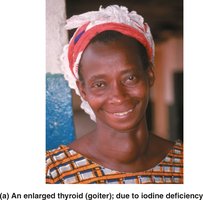
Myxedema/Goiter | Thyroid hormone | Low metabolism, goiter | Hypothyroidism, often due to iodine deficiency |
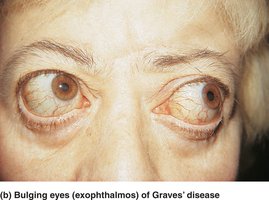
Grave's Disease | Thyroid hormone | High metabolism, exophthalmos | Hyperthyroidism, autoimmune |
Addison's Disease | Adrenal cortex | Weight loss, fatigue, hypotension | Hyposecretion of corticosteroids |
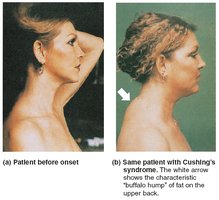
Cushing's Syndrome | Adrenal cortex | "Moon face", "buffalo hump", hyperglycemia | Hypersecretion of glucocorticoids |
Diabetes Mellitus | Insulin (pancreas) | Polyuria, polydipsia, polyphagia | Insulin deficiency or resistance |
Stress and the Adrenal Gland
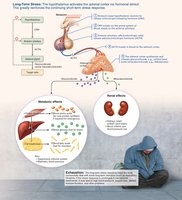
Short-term stress activates the adrenal medulla (catecholamines); long-term stress activates the adrenal cortex (corticosteroids).
Additional info: This guide covers the core content of Chapter 16 (The Endocrine System) from Marieb Human Anatomy & Physiology, including structure, function, regulation, and clinical aspects of the endocrine system, with relevant images to reinforce key concepts.
