 Back
BackThe Respiratory System: Structure, Function, and Physiology
Study Guide - Smart Notes
 Tailored notes based on your materials, expanded with key definitions, examples, and context.
The Respiratory System
Introduction to the Respiratory System
The respiratory system is essential for gas exchange, supplying oxygen to the body and removing carbon dioxide. It is organized into upper and lower components, each with specialized structures and functions that facilitate breathing and protect the body from environmental hazards.
Primary Functions: Gas exchange, sound production, olfaction, and protection of respiratory surfaces.
Organization: Upper respiratory system (nose, nasal cavity, sinuses, pharynx); Lower respiratory system (larynx, trachea, bronchi, bronchioles, alveoli).
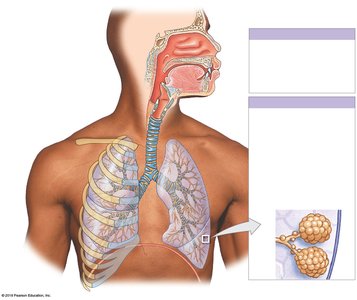
Components and Organization of the Respiratory System
Upper Respiratory System
The upper respiratory system filters, warms, and humidifies incoming air, protecting the more delicate surfaces of the lower respiratory tract.
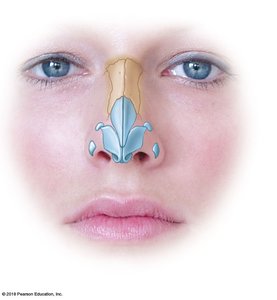
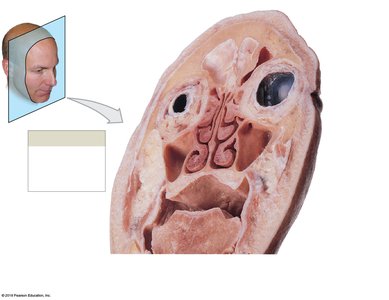
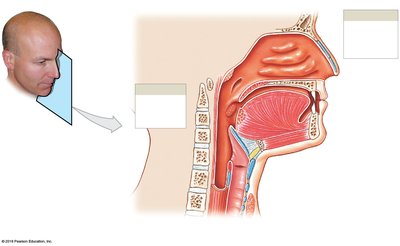
Nose and Nasal Cavity: Primary entryway for air; contains nasal hairs to trap large particles.
Paranasal Sinuses: Produce mucus to moisten and clean the nasal cavity.
Pharynx: Shared by respiratory and digestive systems; divided into nasopharynx, oropharynx, and laryngopharynx.
Lower Respiratory System
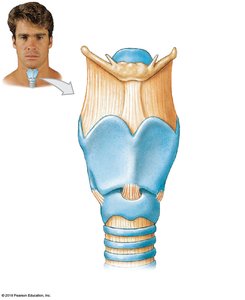
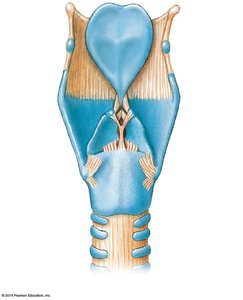
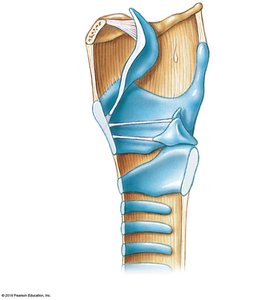
The lower respiratory system conducts air to the lungs and is the site of gas exchange. It includes the larynx, trachea, bronchi, bronchioles, and alveoli.
Larynx: Contains cartilages (thyroid, cricoid, epiglottis) that protect the glottis and produce sound.
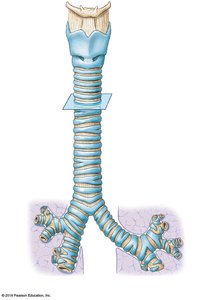
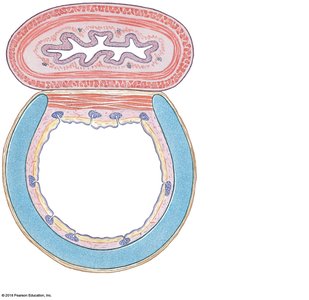
Trachea: A flexible tube supported by C-shaped cartilages, branching into right and left main bronchi.
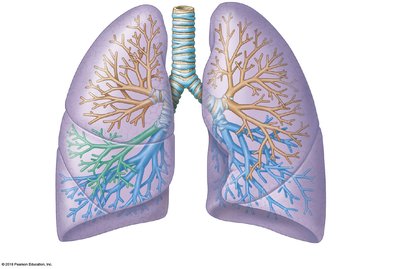
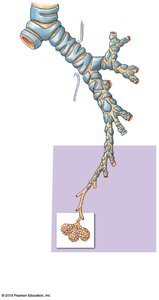
Bronchial Tree: Bronchi branch into smaller bronchioles, ending in alveoli where gas exchange occurs.
Histology of the Respiratory Tract
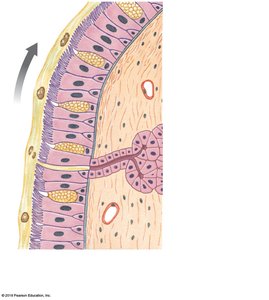
The respiratory tract is lined with specialized epithelia that protect and facilitate the movement of air and removal of debris.
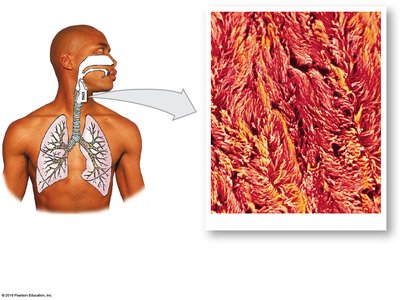
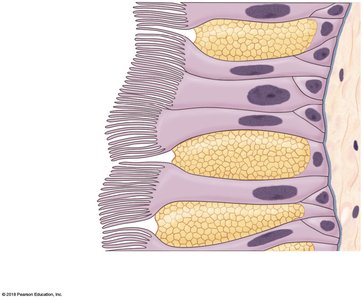
Respiratory Mucosa: Pseudostratified ciliated columnar epithelium with goblet cells produces mucus to trap particles.
Lamina Propria: Areolar tissue supporting the epithelium, containing mucous glands and smooth muscle.
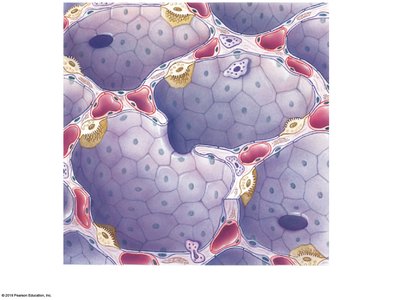
Alveolar Epithelium: Simple squamous epithelium (type I pneumocytes) for gas exchange; type II pneumocytes produce surfactant.
Functional Anatomy of the Lungs and Alveoli
Lung Structure and Pleura
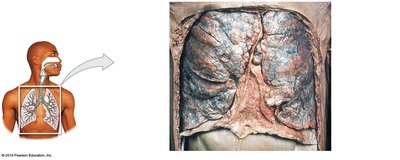
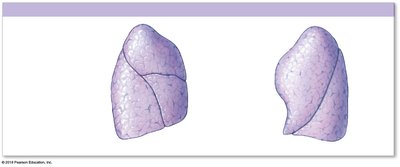
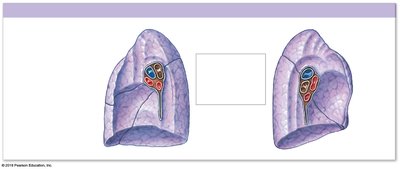
The lungs are divided into lobes and are surrounded by pleural membranes that reduce friction during breathing.
Right Lung: Three lobes (superior, middle, inferior); wider and displaced upward by the liver.
Left Lung: Two lobes (superior, inferior); longer and has a cardiac notch for the heart.
Pleura: Double-layered serous membrane (parietal and visceral) with pleural fluid for lubrication.
Alveolar Organization and Gas Exchange
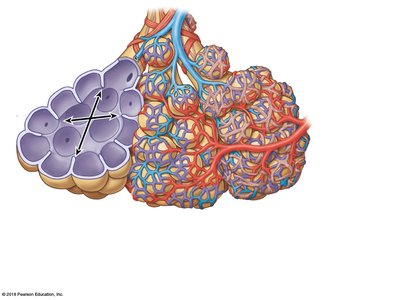
Alveoli are the primary sites of gas exchange, surrounded by capillaries and elastic fibers. The blood-air barrier facilitates efficient diffusion of oxygen and carbon dioxide.
Alveolar Structure: Alveolar sacs are clusters of alveoli at the end of alveolar ducts.
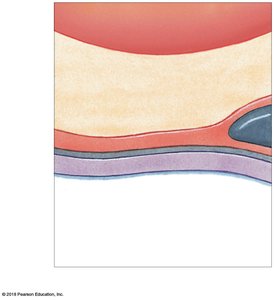
Blood-Air Barrier: Consists of alveolar epithelium, fused basement membrane, and capillary endothelium.
Surfactant: Produced by type II pneumocytes, reduces surface tension and prevents alveolar collapse.
Mechanics of Breathing (Pulmonary Ventilation)
Principles of Pulmonary Ventilation
Breathing involves the movement of air into and out of the lungs, driven by pressure changes according to Boyle's law: .
Inhalation: Diaphragm contracts, thoracic cavity volume increases, pressure decreases, air flows in.
Exhalation: Diaphragm relaxes, thoracic cavity volume decreases, pressure increases, air flows out.
Accessory Muscles: Used during forced breathing (e.g., exercise).
Pulmonary Volumes and Capacities
Lung volumes and capacities are measured to assess respiratory function. Key terms include:
Tidal Volume (VT): Air moved per breath (about 500 mL in adults).
Inspiratory Reserve Volume (IRV): Additional air inhaled after a normal breath.
Expiratory Reserve Volume (ERV): Additional air exhaled after a normal breath.
Residual Volume: Air remaining after maximal exhalation.
Vital Capacity:
Total Lung Capacity:
Gas Exchange and Transport
Gas Exchange Principles
Gas exchange occurs by diffusion, driven by partial pressure gradients (Dalton's law) and solubility (Henry's law). Oxygen and carbon dioxide move between alveolar air and blood across the blood-air barrier.
Partial Pressure: The pressure contributed by a single gas in a mixture.
Oxygen Transport: Most O2 is carried by hemoglobin as oxyhemoglobin (HbO2).
Carbon Dioxide Transport: CO2 is transported as bicarbonate ions (70%), bound to hemoglobin (23%), or dissolved in plasma (7%).
Control of Respiration
Neural Regulation
Respiratory centers in the brainstem (medulla oblongata and pons) regulate the rate and depth of breathing. Chemoreceptors, baroreceptors, and stretch receptors provide feedback to adjust ventilation according to the body's needs.
Dorsal Respiratory Group (DRG): Controls inspiration during quiet and forced breathing.
Ventral Respiratory Group (VRG): Controls forced exhalation and inspiration.
Pneumotaxic and Apneustic Centers: Adjust the output of the respiratory rhythmicity centers.
Integration with Other Body Systems
Systemic Interactions
The respiratory system works closely with the cardiovascular, nervous, muscular, and other systems to maintain homeostasis and meet metabolic demands.
Cardiovascular System: Transports gases between lungs and tissues.
Nervous System: Monitors and regulates respiratory activity.
Muscular System: Provides the mechanics for ventilation.
Integumentary, Endocrine, Lymphatic Systems: Provide protection, regulation, and immune defense.
Summary Table: Key Structures and Functions of the Respiratory System
Structure | Location | Function |
|---|---|---|
Nose/Nasal Cavity | Upper respiratory tract | Filters, warms, humidifies air; olfaction |
Pharynx | Upper respiratory tract | Passageway for air and food |
Larynx | Lower respiratory tract | Sound production, protects trachea |
Trachea | Lower respiratory tract | Conducts air to bronchi |
Bronchi/Bronchioles | Lower respiratory tract | Air distribution, control of airflow resistance |
Alveoli | Lower respiratory tract | Site of gas exchange |
Additional info: This guide integrates foundational concepts from the respiratory system chapter, including structure, function, histology, mechanics of breathing, gas exchange, and systemic integration, suitable for college-level Anatomy & Physiology students.
