 Back
BackTissues: Structure, Classification, and Function
Study Guide - Smart Notes
 Tailored notes based on your materials, expanded with key definitions, examples, and context.
Tissues
Introduction to Tissues
Tissues are groups of cells with similar structure and function, forming the basic building blocks of the body. There are four main types of tissues: epithelial, connective, muscle, and nervous tissue. Each type plays a distinct role in maintaining the body's structure and function.
Epithelial tissue: Covers body surfaces and lines cavities.
Connective tissue: Supports, binds, and protects other tissues.
Muscle tissue: Responsible for movement.
Nervous tissue: Facilitates communication and control.
Epithelial Tissue
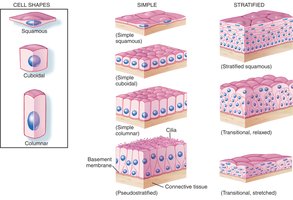
Epithelial tissue forms protective barriers and is involved in absorption, secretion, and sensation. It is classified by cell shape and arrangement.
Cell shapes: Squamous (flat), cuboidal (cube-shaped), columnar (tall).
Arrangements: Simple (single layer), stratified (multiple layers), pseudostratified (appears layered but all cells touch the basement membrane), transitional (layers change shape when stretched).
Simple Squamous Epithelium
Composed of a single layer of flat, scalelike cells. Its main function is transport, such as absorption and diffusion.
Location: Lining of blood vessels, alveoli of lungs.
Function: Facilitates rapid exchange of substances.
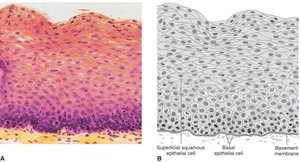
Stratified Squamous Epithelium
Consists of several layers of closely packed cells, providing protection against abrasion and infection.
Location: Skin, lining of mouth and esophagus.
Function: Protection.
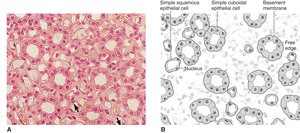
Simple Cuboidal Epithelium
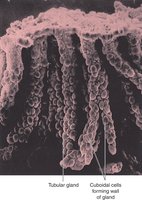
Single layer of cube-shaped cells, often specialized for secretion. Cuboidal cells may form glands and secrete substances into ducts, blood, or onto surfaces.
Location: Kidney tubules, glands.
Function: Secretion and absorption.
Examples: Saliva, digestive juices, hormones.
Simple Columnar Epithelium
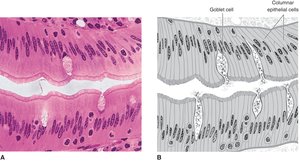
Single layer of tall, column-shaped cells, often containing mucus-producing goblet cells. Specialized for absorption and secretion.
Location: Lining of stomach and intestines.
Function: Absorption and secretion.
Pseudostratified Epithelium
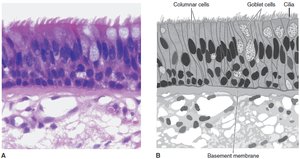
Appears layered due to varying cell heights, but all cells touch the basement membrane. Often ciliated and contains goblet cells.
Location: Lining of trachea.
Function: Secretion and movement of mucus.
Stratified Transitional Epithelium
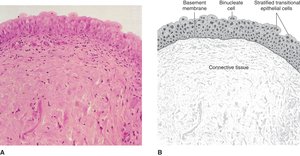
Multiple layers of cells that can stretch and change shape from cuboidal to squamous. Found in areas subject to stretching.
Location: Urinary bladder.
Function: Allows stretching and recoil.
Connective Tissue
Connective tissue is the most abundant and widely distributed tissue in the body. It supports, binds, and protects other tissues and organs. It consists of relatively few cells embedded in an extracellular matrix.
Areolar: Loose connective tissue that holds organs together.
Adipose: Stores fat; provides insulation and energy.
Fibrous: Dense bundles of collagen fibers; forms tendons and ligaments.
Bone: Calcified matrix; supports and protects.
Cartilage: Gel-like matrix; provides flexible support.
Blood: Fluid matrix; transports substances and provides protection.
Adipose Tissue
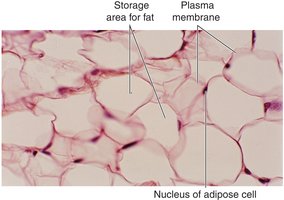
Adipose tissue is specialized for fat storage, insulation, and energy reserve.
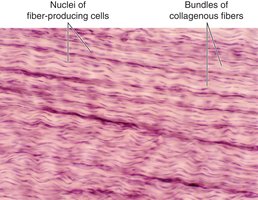
Dense Fibrous Connective Tissue
Composed of bundles of strong collagen fibers, providing tensile strength.
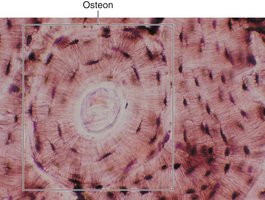
Bone Tissue
Bone tissue has a calcified matrix and is organized into osteons, providing structural support and protection.
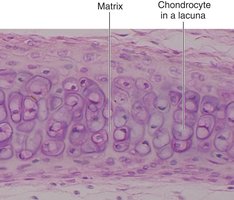
Cartilage Tissue
Cartilage has a gel-like matrix and contains chondrocytes in lacunae, offering flexible support.
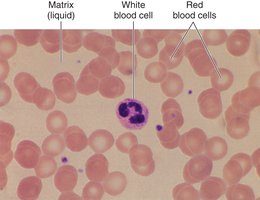
Blood Tissue
Blood is a fluid connective tissue with a liquid matrix, containing red and white blood cells. It functions in transport and defense.
Muscle Tissue
Muscle tissue is specialized for contraction and movement. There are three main types: skeletal, cardiac, and smooth muscle.
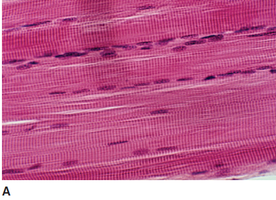
Skeletal muscle: Striated, voluntary, attached to bones.
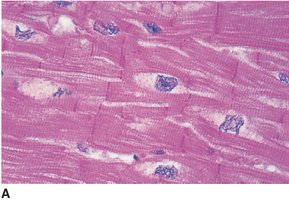
Cardiac muscle: Striated, involuntary, forms heart wall.
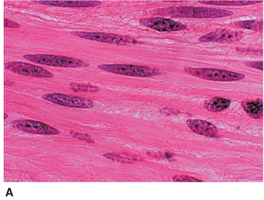
Smooth muscle: Non-striated, involuntary, found in walls of blood vessels and organs.
Skeletal Muscle Tissue
Skeletal muscle fibers are long, cylindrical, and striated, allowing voluntary movement.
Cardiac Muscle Tissue
Cardiac muscle fibers are striated and branched, with intercalated discs, enabling rhythmic contractions of the heart.
Smooth Muscle Tissue
Smooth muscle fibers are spindle-shaped and non-striated, controlling involuntary movements in organs and vessels.
Nervous Tissue
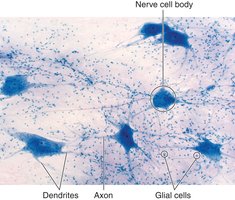
Nervous tissue is responsible for rapid communication and control of body functions. It consists of neurons and glial cells.
Neurons: Conduct electrical impulses.
Glia (neuroglia): Support and protect neurons.
Structure of a Neuron
All neurons have a cell body and two types of processes: axon (carries impulses away) and dendrites (carry impulses toward the cell body).
Tissue Repair
Tissue repair is usually accomplished by regeneration. Epithelial and connective tissues regenerate easily, while muscle and nervous tissues have limited regenerative capacity.
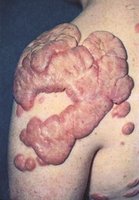
Keloid: An abnormal proliferation of scar tissue during healing.
Summary Table: Major Tissue Types
Tissue Type | Main Function | Key Features |
|---|---|---|
Epithelial | Protection, absorption, secretion | Cell shape and arrangement; covers surfaces |
Connective | Support, binding, protection | Extracellular matrix; diverse types |
Muscle | Movement | Contractile fibers; voluntary/involuntary |
Nervous | Communication, control | Neurons and glial cells; rapid signaling |
Additional info: Regeneration capacity varies among tissue types. Epithelial and connective tissues typically heal well, while muscle and nervous tissues may form scar tissue or have limited repair.
