
Ch. 18 The Cardiovascular System II: The Blood Vessels
Amerman - Human Anatomy & Physiology 2nd Edition
Amerman2nd EditionHuman Anatomy & PhysiologyISBN: 9780136873822Not the one you use?Change textbook
Chapter 18, Problem L3.5

Ms. Rodgers has been diagnosed with secretion of inappropriate ADH syndrome (SIADH). What effect will SIADH have on the amount of water in her body? What symptoms would you expect from this condition? How would it affect her blood pressure and net filtration pressure?

Verified step by step guidance
1
Understand the role of antidiuretic hormone (ADH): ADH is responsible for promoting water reabsorption in the kidneys, reducing urine output, and increasing water retention in the body. In SIADH, excessive ADH secretion leads to abnormally high water retention.
Analyze the effect of SIADH on water balance: Excessive ADH causes the kidneys to reabsorb more water than necessary, leading to an increase in total body water. This can result in dilutional hyponatremia (low sodium concentration in the blood due to dilution).
Identify expected symptoms: Symptoms of SIADH may include nausea, vomiting, headache, confusion, muscle cramps, and in severe cases, seizures or coma due to the effects of hyponatremia on the nervous system.
Evaluate the impact on blood pressure: Increased water retention can lead to an increase in blood volume, which may elevate blood pressure. However, the degree of blood pressure change depends on the body's compensatory mechanisms and the severity of SIADH.
Assess the effect on net filtration pressure: Net filtration pressure in the kidneys is influenced by blood pressure and osmotic pressure. Increased blood volume and pressure may alter glomerular filtration rates, potentially reducing net filtration pressure due to changes in hydrostatic and osmotic forces within the glomeruli.

Verified video answer for a similar problem:

This video solution was recommended by our tutors as helpful for the problem above.
Was this helpful?

Key Concepts

Here are the essential concepts you must grasp in order to answer the question correctly.

Syndrome of Inappropriate Antidiuretic Hormone Secretion (SIADH)

SIADH is a condition characterized by excessive release of antidiuretic hormone (ADH), leading to water retention in the body. This results in dilutional hyponatremia, where sodium levels drop due to excess water, causing various physiological effects. Understanding SIADH is crucial for predicting its impact on fluid balance and related symptoms.
Recommended video:
Guided course
13:06
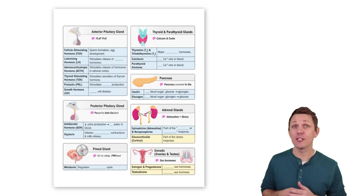
Review of Major Hormones

Fluid Balance and Homeostasis

Fluid balance refers to the equilibrium between the intake and output of body fluids, which is essential for maintaining homeostasis. In SIADH, the body's ability to excrete water is impaired, leading to increased total body water. This imbalance can result in symptoms such as headache, confusion, and muscle cramps due to altered electrolyte levels.
Recommended video:
Guided course
01:59
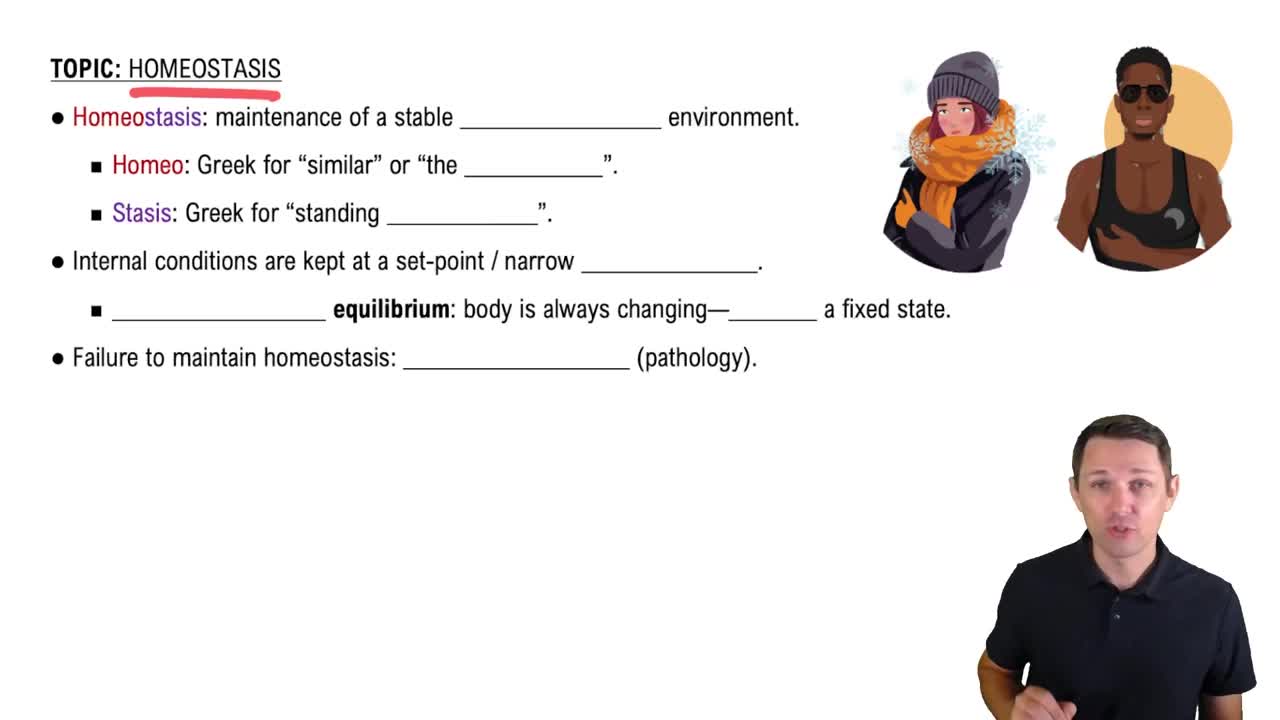
Introduction to Homeostasis

Blood Pressure and Net Filtration Pressure

Blood pressure is the force exerted by circulating blood on the walls of blood vessels, while net filtration pressure is the difference between hydrostatic and osmotic pressures that drives fluid movement across capillary membranes. In SIADH, increased blood volume from water retention can elevate blood pressure, while changes in osmotic pressure may affect net filtration pressure, influencing kidney function and fluid dynamics.
Recommended video:
2:58
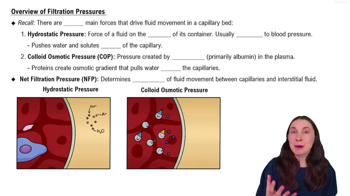
Overview of Filtration Pressures
Related Practice
Textbook Question

You are babysitting two children who are having a contest to see who can hang upside-down for the longest time. At the end of the contest, both children feel dizzy and are worried they are sick. Explain to them why they feel this way and why the effect is only temporary. (Hint: Consider how the baroreceptor reflex responds when a person hangs upside-down.)

767
views
Textbook Question

Explain why the skin and lips of fair-skinned individuals may 'turn blue' in very cold weather.

800
views
Textbook Question

Which of the following factors would increase peripheral resistance?

a. Increased blood viscosity

b. Shorter vessel

c. Vasodilation

d. An increase in vessel radius

1097
views
Textbook Question

Predict the effects of each of the following on systemic arterial blood pressure:

Caffeine consumption, which increases heart rate and causes vasoconstriction

667
views
Textbook Question

Fill in the blanks: The coronary arteries are the first branches off the ________. The right coronary artery becomes the ________ on the posterior side of the heart. The left coronary artery branches into the ________ and the ________.

1222
views
1
rank
Textbook Question

Match the following terms with the correct definition.

____ Auricle      

____ Aorta      

____ Coronary sinus       

____ Papillary muscle      

____ Fossa ovalis     

____ Pectinate muscle      

____ Venae cavae      

____ Pulmonary trunk      

____ Chordae tendineae      

____ Pulmonary veins 

a. Drainage point for the coronary veins

b. Extensions that attach papillary muscles to valves

c. Remnant of a hole present in the fetal interatrial septum

d. Two largest veins of the systemic circuit

e. Flaplike extension from the right or left atrium

f. Finger-like projections of ventricular muscle

g. Main artery of the pulmonary circuit

h. Veins that drain the pulmonary circuit

i. Largest artery of the systemic circuit

j. Ridges of muscle in the atria

677
views