
Textbook Question
Mark the following statements as true or false. If a statement is false, correct it to make a true statement.
d. Hypocalcemia causes neurons to become hyperexcitable, leading to potential tetanic contractions.
443
views
 Verified step by step guidance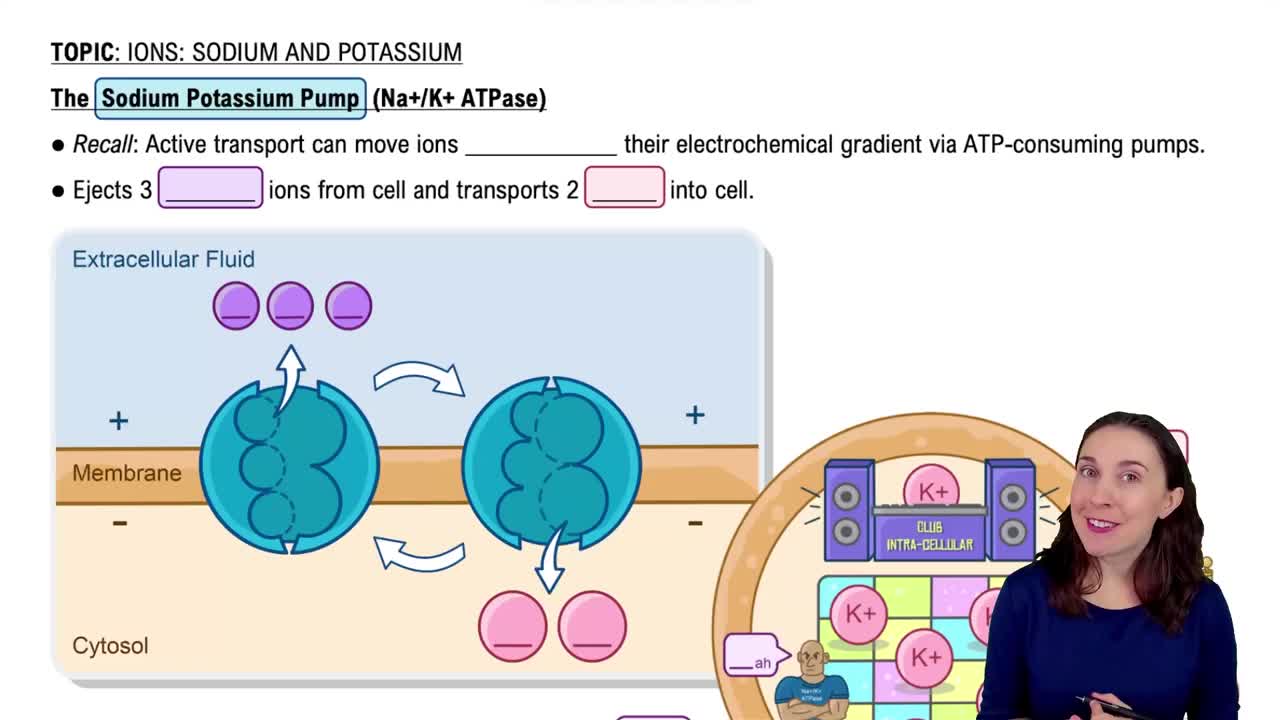
 03:40
03:40
 11:30
11:30 02:17
02:17Mark the following statements as true or false. If a statement is false, correct it to make a true statement.
d. Hypocalcemia causes neurons to become hyperexcitable, leading to potential tetanic contractions.
Mark the following statements as true or false. If a statement is false, correct it to make a true statement.
a. Potassium ions are responsible for the repolarization phase of the action potential.
Which of the following effects tend to be caused by hypernatremia?
a. Inhibition of ADH secretion
b. Cellular crenation
c. Cellular swelling
d. Increased urine production
Mark the following statements as true or false. If a statement is false, correct it to make a true statement.
c. Hyperkalemia tends to decrease the resting membrane potential and hyperpolarize excitable cells.
Mark the following statements as true or false. If a statement is false, correct it to make a true statement.
e. Chloride ions are generally reabsorbed from the kidneys, along with bicarbonate ions.
List the effects of each of the following hormones on electrolyte balance. Note that some hormones affect more than one electrolyte.
a. Angiotensin-II
b. Aldosterone
c. Parathyroid hormone
d. Vitamin D
e. Atrial natriuretic peptide