Ch. 25 Fluid, Electrolyte, and Acid-Base Homeostasis
Amerman - Human Anatomy & Physiology 2nd Edition
Amerman2nd EditionHuman Anatomy & PhysiologyISBN: 9780136873822Not the one you use?Change textbook
Chapter 25, Problem 9

Which of the following effects tend to be caused by hypernatremia?
a. Inhibition of ADH secretion
b. Cellular crenation
c. Cellular swelling
d. Increased urine production

Verified step by step guidance
1
Understand the term 'hypernatremia': Hypernatremia refers to an elevated concentration of sodium (Na⁺) in the blood, typically above 145 mEq/L. This condition often results from dehydration, excessive sodium intake, or loss of water relative to sodium.
Review the physiological effects of hypernatremia: High sodium levels in the extracellular fluid (ECF) create a hypertonic environment, which can cause water to move out of cells by osmosis, leading to cellular shrinkage (crenation).
Analyze the role of ADH (antidiuretic hormone): ADH is secreted to conserve water in the body. Hypernatremia typically stimulates ADH secretion to promote water reabsorption in the kidneys, counteracting the high sodium concentration. Therefore, inhibition of ADH secretion is unlikely.
Evaluate the options: Cellular swelling (option c) occurs in hypotonic conditions, not hypertonic conditions like hypernatremia. Increased urine production (option d) is also unlikely, as the body would aim to conserve water in response to hypernatremia.
Conclude the most likely effect: Cellular crenation (option b) is the most plausible effect of hypernatremia, as water moves out of cells into the hypertonic extracellular environment, causing the cells to shrink.

Verified video answer for a similar problem:

This video solution was recommended by our tutors as helpful for the problem above.
Was this helpful?

Key Concepts

Here are the essential concepts you must grasp in order to answer the question correctly.

Hypernatremia

Hypernatremia is a condition characterized by an elevated concentration of sodium in the blood, typically above 145 mEq/L. It often results from dehydration, excessive sodium intake, or impaired kidney function. Understanding hypernatremia is crucial as it can lead to various physiological effects, particularly on fluid balance and cellular function.

Osmosis and Cellular Effects

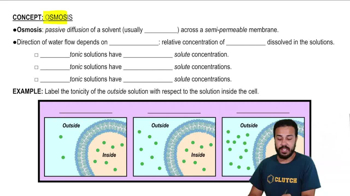
Osmosis is the movement of water across a semipermeable membrane from an area of lower solute concentration to an area of higher solute concentration. In the context of hypernatremia, the high sodium levels in the extracellular fluid can cause water to move out of cells, leading to cellular crenation (shrinking). This concept is essential for understanding the physiological consequences of hypernatremia on cell health.
Recommended video:
05:59
Osmosis

Antidiuretic Hormone (ADH)

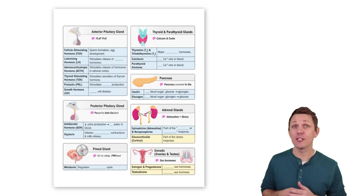
Antidiuretic hormone (ADH), also known as vasopressin, regulates water balance in the body by promoting water reabsorption in the kidneys. In cases of hypernatremia, the body may initially respond by inhibiting ADH secretion to reduce water retention, which can lead to increased urine production. Understanding the role of ADH is vital for grasping how the body attempts to correct imbalances in sodium and water.
Recommended video:
Guided course
13:06
Review of Major Hormones
Related Practice
Textbook Question

Mark the following statements as true or false. If a statement is false, correct it to make a true statement.

a. Potassium ions are responsible for the repolarization phase of the action potential.

382
views

Textbook Question

Mark the following statements as true or false. If a statement is false, correct it to make a true statement.

c. Hyperkalemia tends to decrease the resting membrane potential and hyperpolarize excitable cells.

437
views
Textbook Question

Mark the following statements as true or false. If a statement is false, correct it to make a true statement.

e. Dehydration is characterized by a decreased volume and increased osmolarity of the ECF.

423
views
Textbook Question

Which of the following is false with respect to sodium ions in human physiology?

a. Sodium ions are the most abundant extracellular cation.

b. Sodium ions are an important osmotic particle in the ECF.

c. The entry of sodium ions into a cell causes depolarization.

d. Sodium ions are more concentrated in the cytosol than in the ECF.

343
views
Textbook Question

List the effects of each of the following hormones on electrolyte balance. Note that some hormones affect more than one electrolyte.

a. Angiotensin-II

b. Aldosterone

c. Parathyroid hormone

d. Vitamin D

e. Atrial natriuretic peptide

402
views
Textbook Question

Mark the following statements as true or false. If a statement is false, correct it to make a true statement.

b. Insulin, aldosterone, and epinephrine stimulate the uptake of potassium ions into cells.

411
views