Ch. 27 The Reproductive System
Hoehn - Marieb Human Anatomy & Physiology, 12th edition
Hoehn, Haynes, Abbott12th EditionMarieb Human Anatomy & PhysiologyISBN: 9780138242732Not the one you use?Change textbook
Chapter 27, Problem 21

Oogenesis in the female results in one functional gamete—the egg, or ovum. What other cells are produced? What is the significance of this rather wasteful type of gamete production—that is, production of a single functional gamete instead of four, as seen in males?

Verified step by step guidance
1
Understand the process of oogenesis: Oogenesis is the process of egg cell formation in females. It occurs in the ovaries and involves the division of a primary oocyte through meiosis to produce one functional ovum and additional non-functional cells called polar bodies.
Identify the other cells produced during oogenesis: During meiosis I and II, the primary oocyte divides asymmetrically, producing one large cell (the ovum) and smaller cells called polar bodies. Polar bodies are non-functional and eventually degenerate.
Explain the significance of producing one functional gamete: The asymmetrical division ensures that the ovum retains most of the cytoplasm, organelles, and nutrients, which are essential for supporting early embryonic development after fertilization.
Compare gamete production in males and females: In males, spermatogenesis results in four functional sperm cells from one primary spermatocyte. In females, oogenesis produces one functional ovum and polar bodies. This difference reflects the distinct reproductive strategies and roles of each sex.
Discuss the evolutionary advantage: Producing a single functional ovum ensures that the egg is well-equipped to support the zygote's development. This 'investment' in quality over quantity is crucial for successful reproduction in species where the female provides significant resources to the offspring.

Verified video answer for a similar problem:

This video solution was recommended by our tutors as helpful for the problem above.
Video duration:
2m
Was this helpful?

Key Concepts

Here are the essential concepts you must grasp in order to answer the question correctly.

Oogenesis

Oogenesis is the process of female gamete formation in which a primary oocyte undergoes meiosis to produce one mature ovum and polar bodies. The polar bodies are non-functional cells that typically degenerate, ensuring that the ovum receives the majority of the cytoplasmic resources. This process contrasts with spermatogenesis, where four functional sperm are produced.
Recommended video:
2:24
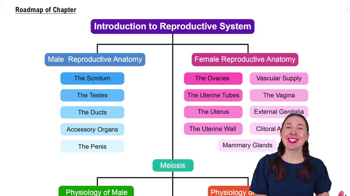
Roadmap of Chapter

Polar Bodies

Polar bodies are small cells produced during oogenesis that result from the unequal division of cytoplasm during meiosis. They serve to discard the extra genetic material without contributing to the egg's functionality. Their formation is significant as it allows the ovum to maximize its resources for potential fertilization and development.
Recommended video:
Guided course
1:21
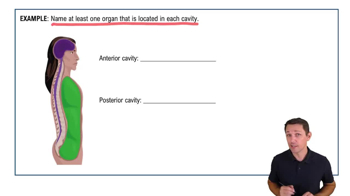
Organization of the Body: Body Cavities Example 1

Significance of Unequal Gamete Production

The production of a single functional gamete in females, as opposed to four in males, is evolutionarily significant. This strategy allows for the allocation of more resources to one high-quality egg, increasing the chances of successful fertilization and subsequent development. It reflects a biological investment in offspring quality over quantity, which can enhance reproductive success.
Recommended video:
07:25
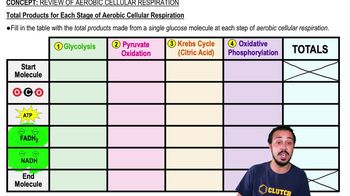
Total Products for Each Stage of Aerobic Cellular Respiration
Related Practice
Textbook Question

Grant, a sexually active adolescent, visited his doctor complaining of a red, painless swelling on his penis. He has no penile discharge or pain on urination. An account of his recent sexual behavior was requested and recorded.

a. What do you think Grant's problem is?

b. What is the causative agent of this disorder?

c. How is the condition treated, and what may happen if it isn't treated?

88
views
Textbook Question

Gina Marciano, a 44-year-old mother of eight children, visited her physician complaining of a 'bearing down' sensation in her pelvis, low backache, and urinary incontinence. A vaginal examination showed that the external os of her cervix was just inside the vaginal orifice and her perineum exhibited large keloids (masses of scar tissue). What do you think Gina's problem is and what caused it? (Be anatomically specific.)

702
views
Textbook Question

A 36-year-old mother of four is considering tubal ligation to ensure that her family gets no larger. She asks the physician if she will become 'menopausal' after the surgery.

a. How would you answer her question and explain away her concerns?

b. Explain what a tubal ligation is.

141
views
Textbook Question

Both the epithelium of the vagina and the cervical glands of the uterus help prevent the invasion and spread of vaginal pathogens. Explain how each of these mechanisms works.

130
views
Textbook Question

In menstruation, the functional layer is shed from the endometrium. Explain the hormonal and physical factors responsible for this shedding. (Hint: See Figure.)

123
views
Textbook Question

Trace the pathway of a sperm from the male testes to the uterine tube of a female.

1259
views