Ch. 28 Pregnancy and Human Development
Hoehn, Haynes, Abbott12th EditionMarieb Human Anatomy & PhysiologyISBN: 9780138242732
Not the one you use?Change textbookSelect a different textbook
Table of contents
- Ch. 1 The Human Body: An Orientation25
- Ch. 2 Chemistry Comes Alive24
- Ch. 3 Cells: The Living Units24
- Ch. 4 Tissue: The Living Fabric19
- Ch. 5 The Integumentary System12
- Ch. 6 Bones and Skeletal Tissues19
- Ch. 7 The Skeleton14
- Ch. 8 Joints7
- Ch. 9 Muscles and Muscle Tissue26
- Ch. 10 The Muscular System25
- Ch. 11 Fundamentals of the Nervous System and Nervous Tissue23
- Ch. 12 The Central Nervous System25
- Ch. 13 The Peripheral Nervous System and Reflex Activity30
- Ch. 14 The Autonomic Nervous System16
- Ch. 15 The Special Senses26
- Ch. 16 The Endocrine System26
- Ch. 17 Blood27
- Ch. 18 The Cardiovascular System: The Heart25
- Ch. 19 The Cardiovascular System: Blood Vessels27
- Ch. 20 The Lymphatic System and Lymphoid Organs and Tissues16
- Ch. 21 The Immune System: Innate and Adaptive Body Defenses27
- Ch. 22 The Respiratory System21
- Ch. 23 The Digestive System31
- Ch. 24 Nutrition, Metabolism, and Energy Balance26
- Ch. 25 The Urinary System26
- Ch. 26 Fluid, Electrolyte, and Acid-Base Balance24
- Ch. 27 The Reproductive System24
- Ch. 28 Pregnancy and Human Development25
- Ch. 29 Heredity11
Hoehn, Haynes, Abbott12th EditionMarieb Human Anatomy & PhysiologyISBN: 9780138242732Not the one you use?Change textbook

Chapter 28, Problem 20
Jenna, a freshman in your dormitory, tells you she just discovered that she is three months pregnant. She recently bragged that since she came to college she has been drinking alcohol heavily and experimenting with every kind of recreational drug she could find. From the following, select the advice you would give her, and explain why it is the best choice.
(a) She must stop taking drugs, but they could not have affected her fetus during these first few months of her pregnancy.
(b) Harmful substances usually cannot pass from mother to embryo, so she can keep using drugs.
(c) There could be defects in the fetus, so she should stop using drugs and visit a doctor as soon as possible.
(d) If she has not taken any drugs in the last week, she is okay.
 Verified step by step guidance
1
Step 1: Understand the critical period of fetal development, especially during the first trimester (the first three months), when the embryo is highly sensitive to harmful substances because major organs and systems are forming.
Step 2: Recognize that many harmful substances, including alcohol and recreational drugs, can cross the placental barrier and affect the developing fetus, potentially causing birth defects or developmental issues.
Step 3: Evaluate each advice option based on scientific knowledge: (a) incorrectly assumes no harm in the first months; (b) incorrectly states harmful substances usually cannot pass to the embryo; (d) incorrectly assumes short-term abstinence eliminates risk.
Step 4: Identify that the best advice is (c), which acknowledges the risk of fetal defects and emphasizes the importance of stopping drug use immediately and seeking medical care to assess and manage potential risks.
Step 5: Emphasize the importance of prenatal care and avoiding harmful substances throughout pregnancy to promote the healthiest possible outcome for both mother and fetus.
Key Concepts
Here are the essential concepts you must grasp in order to answer the question correctly.
Teratogenic Effects of Drugs During Pregnancy
Teratogens are substances that can cause birth defects or developmental problems in a fetus. Many drugs and alcohol can cross the placenta and affect the embryo, especially during the first trimester when organs are forming. Exposure during this critical period can lead to serious congenital abnormalities or miscarriage.
Recommended video:
 4:09
4:09
Opsonization
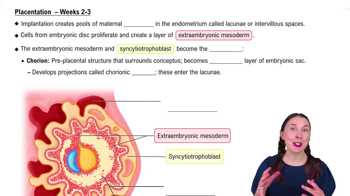
Placental Transfer of Harmful Substances
The placenta acts as a selective barrier but does not fully protect the fetus from harmful substances. Many drugs, alcohol, and toxins can pass from the mother’s bloodstream into the fetal circulation, potentially causing damage. Understanding this transfer is key to recognizing why drug use during pregnancy is risky.
Recommended video:
 3:22
3:22Placentation – Weeks 2-3
Importance of Early Medical Intervention in Pregnancy
Early prenatal care is crucial for monitoring fetal development and managing risks. If a pregnant woman has been exposed to harmful substances, consulting a healthcare provider promptly can help assess potential damage and provide guidance to minimize further harm. Timely intervention improves outcomes for both mother and fetus.
Recommended video:
 2:18
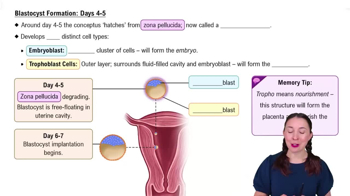
2:18Blastocyst Formation: Days 4-5
Related Practice