Ch. 4 Tissue: The Living Fabric
Hoehn - Marieb Human Anatomy & Physiology, 12th edition
Hoehn, Haynes, Abbott12th EditionMarieb Human Anatomy & PhysiologyISBN: 9780138242732Not the one you use?Change textbook
Chapter 4, Problem 5

Scar tissue is a variety of
a. Epithelium
b. Connective tissue
c. Muscle tissue
d. Nervous tissue
e. All of these

Verified step by step guidance
1
Step 1: Understand the types of tissues listed in the options: epithelium, connective tissue, muscle tissue, and nervous tissue. Each has distinct functions and characteristics in the body.
Step 2: Recall that scar tissue forms as part of the body's healing process after injury, where damaged tissue is replaced by a fibrous tissue to restore integrity.
Step 3: Recognize that scar tissue is primarily composed of dense collagen fibers produced by fibroblasts, which are cells found in connective tissue.
Step 4: Since scar tissue is made up of collagen and fibroblasts, it falls under the category of connective tissue rather than epithelium, muscle, or nervous tissue.
Step 5: Conclude that the correct classification of scar tissue is connective tissue, corresponding to option b.

Verified video answer for a similar problem:

This video solution was recommended by our tutors as helpful for the problem above.
Video duration:
1m
Was this helpful?

Key Concepts

Here are the essential concepts you must grasp in order to answer the question correctly.

Scar Tissue

Scar tissue forms as part of the body's healing process after injury, replacing normal tissue with fibrous connective tissue to repair damage. It is less flexible and has a different structure compared to the original tissue.
Recommended video:
4:55
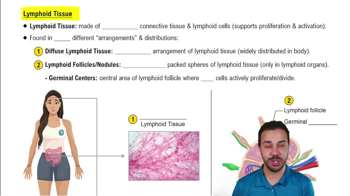
Lymphoid Tissue

Connective Tissue

Connective tissue supports, binds, and protects other tissues and organs in the body. It includes various types such as bone, cartilage, and fibrous tissue, which is the main component of scar tissue.
Recommended video:
Guided course
01:27
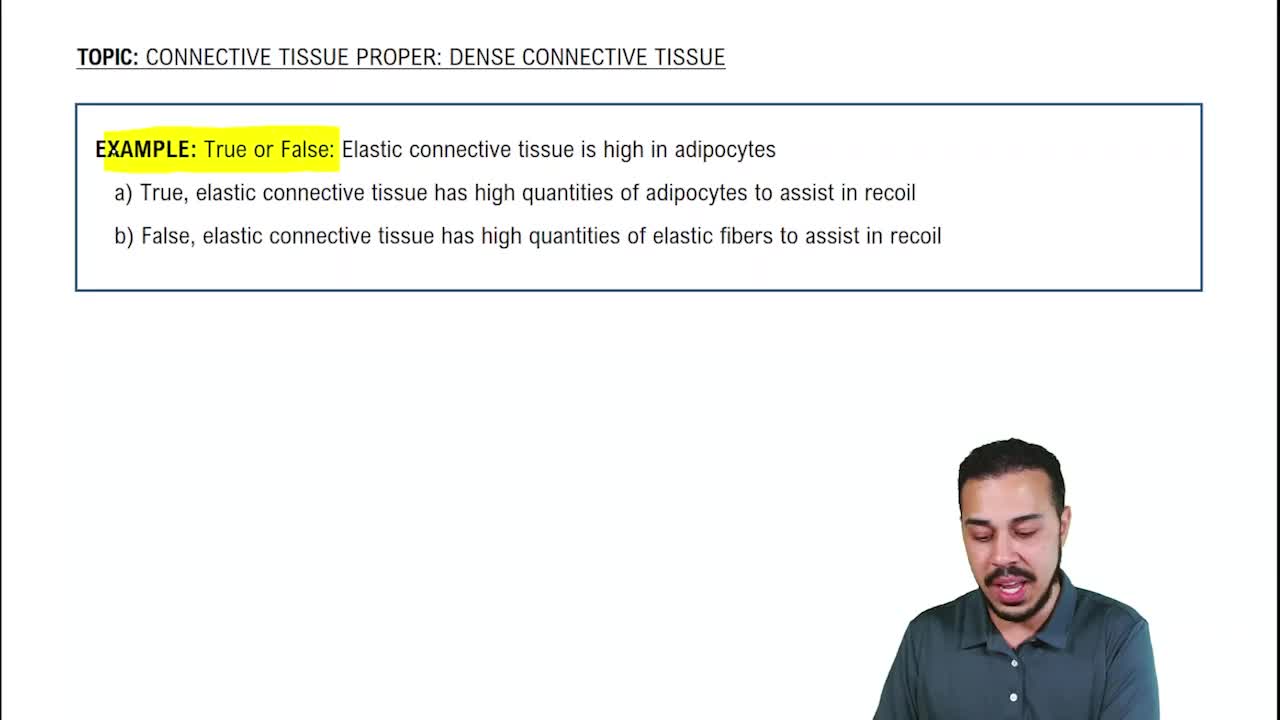
Connective Tissue Proper: Dense Connective Tissue Example 3

Tissue Types in the Body

The body has four primary tissue types: epithelium (covering surfaces), connective (support and structure), muscle (movement), and nervous (signal transmission). Understanding these helps identify the nature of scar tissue.
Recommended video:
Guided course
00:36
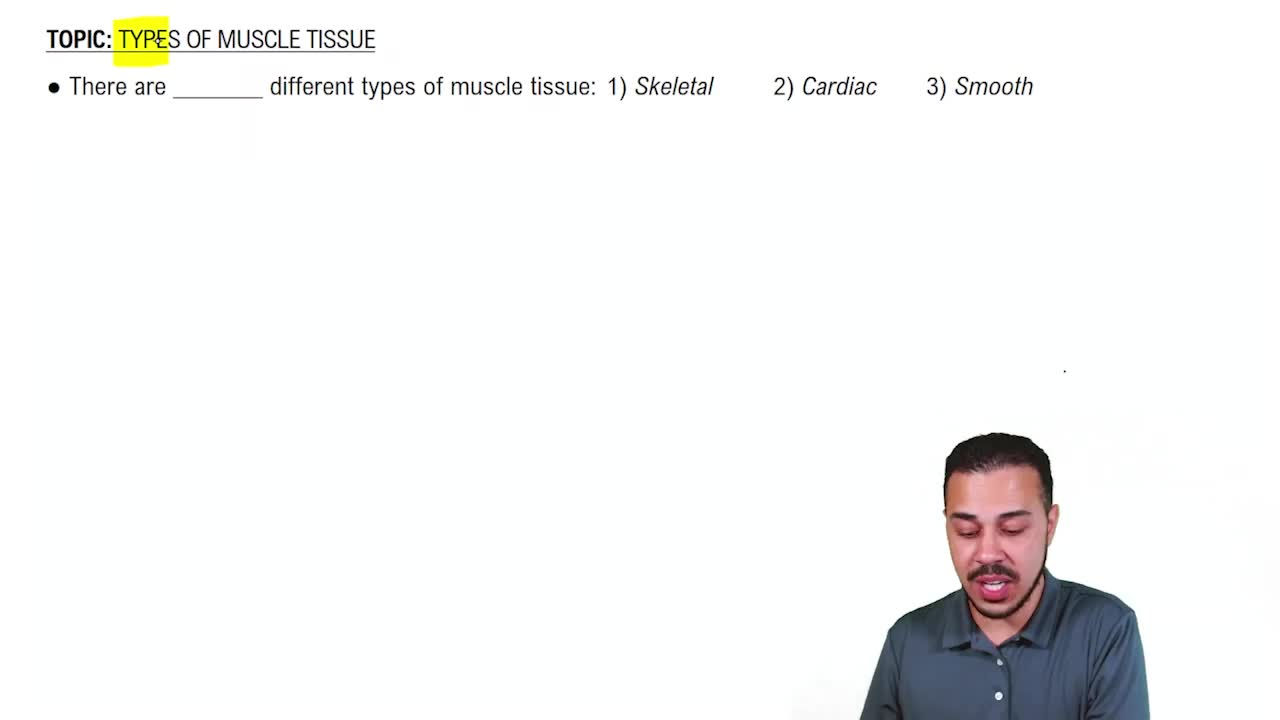
3 Types of Muscle Tissue