
Textbook Question
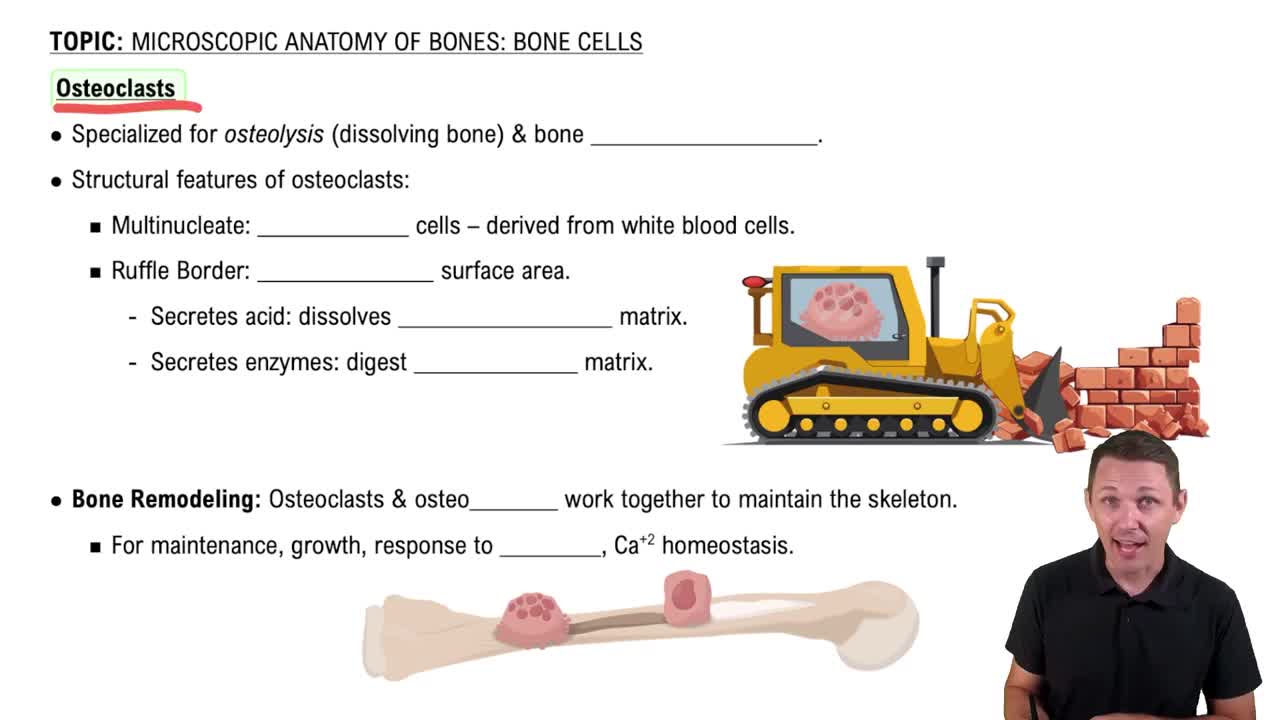
Compare bone to cartilage tissue relative to its resilience, speed of regeneration, and access to nutrients.
838
views
 Verified step by step guidance
 13:06
13:06
 4:34
4:34 3:35
3:35Compare bone to cartilage tissue relative to its resilience, speed of regeneration, and access to nutrients.
Noah Beckenstein went to weight-lifting camp in the summer between seventh and eighth grade. He noticed that the camp trainer put tremendous pressure on him and his friends to improve their strength. After an especially vigorous workout, Noah's arm felt extremely sore and weak around the elbow. He went to the camp doctor, who took X rays and then told him that the injury was serious, for the 'end of his upper arm bone was starting to twist off.' What had happened? Could the same thing happen to Noah's 23-year-old sister, Karen, who was also starting a program of weight lifting? Why or why not?
Mrs. Abbruzzo brought her 4-year-old daughter to the doctor, complaining that she didn't 'look right.' The child's forehead was enlarged, her rib cage was knobby, and her lower limbs were bent and deformed. X rays revealed very thick epiphyseal plates. Mrs. Abbruzzo was advised to increase dietary amounts of vitamin D and milk and to get the girl outside to play in the sun. Considering the child's signs and symptoms, what disease do you think she has? Explain the doctor's instructions.
What would a long bone look like at the end of adolescence if bone remodeling did not occur?
Why do you think wheelchair-bound people with paralyzed lower limbs have thin, weak bones of the leg and thigh?
Yolanda is asked to review a bone slide that her professor has set up under the microscope. She sees concentric layers surrounding a central cavity. Is this bone section taken from the diaphysis or the epiphyseal plate of the specimen?