Ch. 23 The Digestive System
Marieb - Human Anatomy & Physiology 11th Edition
Marieb, Hoehn11th EditionHuman Anatomy & PhysiologyISBN: 9780136874034Not the one you use?Change textbook
Chapter 23, Problem 17

Trace the path of a single protein molecule that has been ingested.
Before the blood carrying the products of protein digestion reaches the heart, it first passes through capillary networks in:
a. The spleen
b. The lungs
c. The liver
d. The brain

Verified step by step guidance
1
Understand that proteins are broken down into amino acids during digestion in the gastrointestinal tract, specifically in the stomach and small intestine.
Recognize that after digestion, the amino acids are absorbed into the bloodstream through the walls of the small intestine.
Learn that the absorbed amino acids enter the hepatic portal vein, which transports them directly to the liver for processing and metabolism.
Note that the liver acts as a central hub for nutrient processing, detoxification, and storage before the blood is sent to the rest of the body.
Understand that after processing in the liver, the blood carrying the products of protein digestion enters the systemic circulation and eventually reaches the heart to be pumped to the rest of the body.

Verified video answer for a similar problem:

This video solution was recommended by our tutors as helpful for the problem above.
Video duration:
3m
Was this helpful?

Key Concepts

Here are the essential concepts you must grasp in order to answer the question correctly.

Protein Digestion

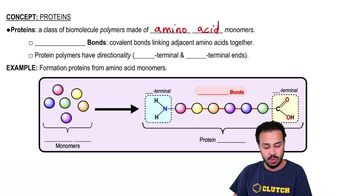
Protein digestion begins in the stomach, where enzymes like pepsin break down proteins into smaller peptides. This process continues in the small intestine, where pancreatic enzymes further digest peptides into amino acids. These amino acids are then absorbed through the intestinal walls into the bloodstream, marking the transition from digestion to absorption.
Recommended video:
02:50
Proteins

Hepatic Portal Circulation

After absorption, the blood carrying amino acids travels through the hepatic portal vein to the liver. This specialized circulation allows the liver to process nutrients before they enter the general circulation. The liver plays a crucial role in metabolizing amino acids, detoxifying substances, and regulating blood sugar levels.
Recommended video:
Guided course
02:52
What is Anatomy & Physiology? Example 1

Capillary Networks

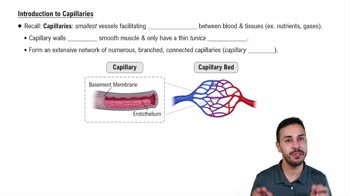
Capillary networks are tiny blood vessels that facilitate the exchange of nutrients, gases, and waste products between blood and tissues. In the context of protein digestion, capillaries in the intestinal villi absorb amino acids and transport them to the hepatic portal vein. This network is essential for ensuring that nutrients are efficiently delivered to the liver for processing.
Recommended video:
4:36
Introduction to Capillaries
Related Practice
Textbook Question

Trace the path of a single protein molecule that has been ingested.

The protein molecule will be digested by enzymes made by

a. The mouth, stomach, and colon

b. The stomach, liver, and small intestine

c. The small intestine, mouth, and liver

d. The pancreas, stomach, and small intestine

816
views
Textbook Question

Lara was on a diet but she could not eat less and kept claiming her stomach had a mind of its own. She was joking, but indeed, there is a 'gut brain' called the enteric nervous system. Is it part of the parasympathetic and sympathetic nervous system? Explain.

772
views
Textbook Question

Trace the path of a single protein molecule that has been ingested.

The protein molecule must be digested before it can be transported to and utilized by the cells because

a. Protein is only useful directly

b. Protein has a low pH

c. Proteins in the circulating blood produce an adverse osmotic pressure

d. The protein is too large to be readily absorbed

774
views
Textbook Question

a. Describe the boundaries of the oral cavity.

b. Why do you suppose its mucosa is stratified squamous epithelium rather than the more typical simple columnar epithelium?

108
views
Textbook Question

Make a simple line drawing of the organs of the alimentary canal and label each organ. Then add three labels to your drawing—salivary glands, liver, and pancreas—and use arrows to show where each of these organs empties its secretions into the alimentary canal.

1051
views
1
rank
Textbook Question

Someone has eaten a meal of buttered toast, cream, and eggs. Which of the following would you expect to happen?

a. Compared to the period shortly after the meal, gastric motility and secretion of HCl decrease when the food reaches the duodenum

b. Gastric motility increases even as the person is chewing the food (before swallowing)

c. Fat will be emulsified in the duodenum by the action of bile

d. All of these

765
views