Ch. 27 The Reproductive System
Marieb - Human Anatomy & Physiology 11th Edition
Marieb, Hoehn11th EditionHuman Anatomy & PhysiologyISBN: 9780136874034Not the one you use?Change textbook
Chapter 27, Problem 20

Both the epithelium of the vagina and the cervical glands of the uterus help prevent the invasion and spread of vaginal pathogens. Explain how each of these mechanisms works.

Verified step by step guidance
1
Understand the role of the vaginal epithelium: The epithelium of the vagina is composed of stratified squamous epithelial cells. These cells provide a physical barrier that resists abrasion and prevents pathogens from penetrating deeper tissues. Additionally, the epithelium produces glycogen, which is metabolized by lactobacilli into lactic acid, creating an acidic environment (low pH) that inhibits the growth of many pathogens.
Examine the role of cervical glands: The cervical glands of the uterus secrete mucus, which acts as a protective barrier. This mucus traps pathogens and prevents them from ascending into the uterus. The consistency of the mucus changes throughout the menstrual cycle, becoming thicker during certain phases to enhance its protective function.
Consider the immune defense mechanisms: Both the vaginal epithelium and cervical mucus contain immune cells and antimicrobial substances, such as defensins and lysozymes, which actively combat pathogens. These substances help neutralize or destroy invading microorganisms.
Analyze the cooperative function: The acidic environment created by the vaginal epithelium and the mucus barrier from the cervical glands work together to form a multi-layered defense system. This synergy ensures that pathogens are both physically blocked and chemically neutralized.
Relate the mechanisms to overall reproductive health: These protective features are essential for maintaining the health of the female reproductive system. They prevent infections that could compromise fertility or lead to systemic health issues, highlighting the importance of these anatomical and physiological defenses.

Verified video answer for a similar problem:

This video solution was recommended by our tutors as helpful for the problem above.
Video duration:
2m
Was this helpful?

Key Concepts

Here are the essential concepts you must grasp in order to answer the question correctly.

Vaginal Epithelium

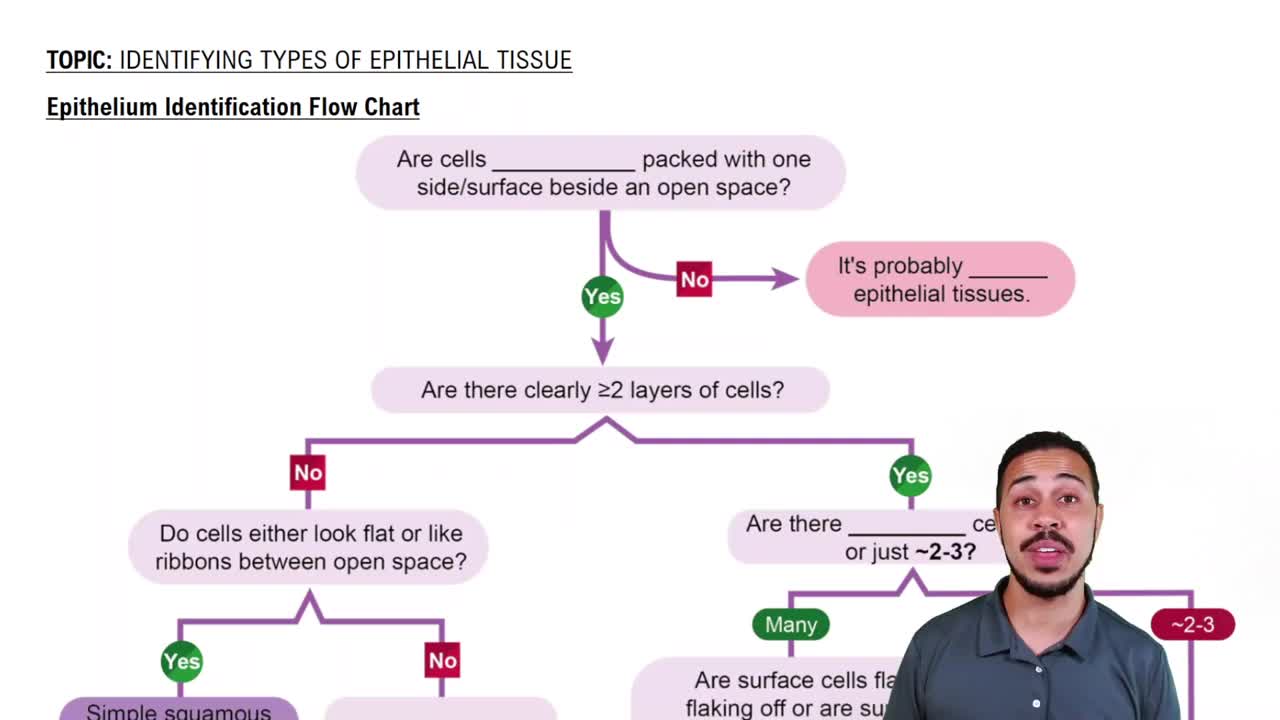
The vaginal epithelium is a stratified squamous epithelium that provides a physical barrier against pathogens. It is rich in glycogen, which is metabolized by lactobacilli to produce lactic acid, maintaining an acidic pH that inhibits the growth of harmful microorganisms. Additionally, the epithelial cells can produce antimicrobial peptides that further protect against infections.
Recommended video:
Guided course
16:19
Epithelium Identification Flow Chart

Cervical Glands

The cervical glands secrete mucus that plays a crucial role in protecting the uterus from pathogens. This mucus varies in consistency throughout the menstrual cycle, becoming thinner during ovulation to facilitate sperm passage while remaining thick and viscous at other times to trap and block pathogens. The mucus also contains immunoglobulins and other antimicrobial substances that help neutralize potential threats.
Recommended video:
Guided course
7:10
Hypothalamus & Pituitary Gland

Immune Response in the Female Reproductive System

The female reproductive system has an innate immune response that includes various immune cells, such as macrophages and dendritic cells, which are present in the vaginal and cervical tissues. These cells can recognize and respond to pathogens, initiating an immune response that includes the release of cytokines and chemokines to recruit additional immune cells. This response is essential for preventing infections and maintaining reproductive health.
Recommended video:
0:51
Anatomy of the Female Reproductive System Example 8
Related Practice
Textbook Question

Grant, a sexually active adolescent, visited his doctor complaining of a red, painless swelling on his penis. He has no penile discharge or pain on urination. An account of his recent sexual behavior was requested and recorded.

a. What do you think Grant's problem is?

b. What is the causative agent of this disorder?

c. How is the condition treated, and what may happen if it isn't treated?

88
views
Textbook Question

Oogenesis in the female results in one functional gamete—the egg, or ovum. What other cells are produced? What is the significance of this rather wasteful type of gamete production—that is, production of a single functional gamete instead of four, as seen in males?

107
views
Textbook Question

Gina Marciano, a 44-year-old mother of eight children, visited her physician complaining of a 'bearing down' sensation in her pelvis, low backache, and urinary incontinence. A vaginal examination showed that the external os of her cervix was just inside the vaginal orifice and her perineum exhibited large keloids (masses of scar tissue). What do you think Gina's problem is and what caused it? (Be anatomically specific.)

702
views
Textbook Question

Define menarche. What does it indicate?

96
views
Textbook Question

In menstruation, the functional layer is shed from the endometrium. Explain the hormonal and physical factors responsible for this shedding. (Hint: See Figure.)

123
views
Textbook Question

Trace the pathway of a sperm from the male testes to the uterine tube of a female.

1259
views