Ch. 9 Muscles and Muscle Tissue
Marieb - Human Anatomy & Physiology 11th Edition
Marieb, Hoehn11th EditionHuman Anatomy & PhysiologyISBN: 9780136874034Not the one you use?Change textbook
Chapter 9, Problem 25

Smooth muscle has some unique properties, such as low energy usage, and the ability to maintain contraction over long periods. Tie these properties to the function of smooth muscle in the body.

Verified step by step guidance
1
Step 1: Understand the unique properties of smooth muscle, specifically its low energy usage and ability to maintain contraction over long periods without fatigue.
Step 2: Identify the typical locations of smooth muscle in the body, such as the walls of blood vessels, the gastrointestinal tract, the respiratory tract, and the urinary bladder.
Step 3: Connect the low energy usage property to the function of smooth muscle by explaining how it allows these muscles to sustain prolonged contractions efficiently, which is essential for functions like regulating blood vessel diameter or moving food through the digestive system.
Step 4: Explain how the ability to maintain contraction over long periods supports the role of smooth muscle in maintaining steady pressure or tone, such as in blood vessels (vascular tone) or sphincters controlling passageways.
Step 5: Summarize by linking these properties to the overall physiological roles of smooth muscle, emphasizing how energy efficiency and sustained contraction enable smooth muscle to perform involuntary, continuous, and controlled movements critical for homeostasis.

Verified video answer for a similar problem:

This video solution was recommended by our tutors as helpful for the problem above.
Video duration:
2m
Was this helpful?

Key Concepts

Here are the essential concepts you must grasp in order to answer the question correctly.

Energy Efficiency in Smooth Muscle

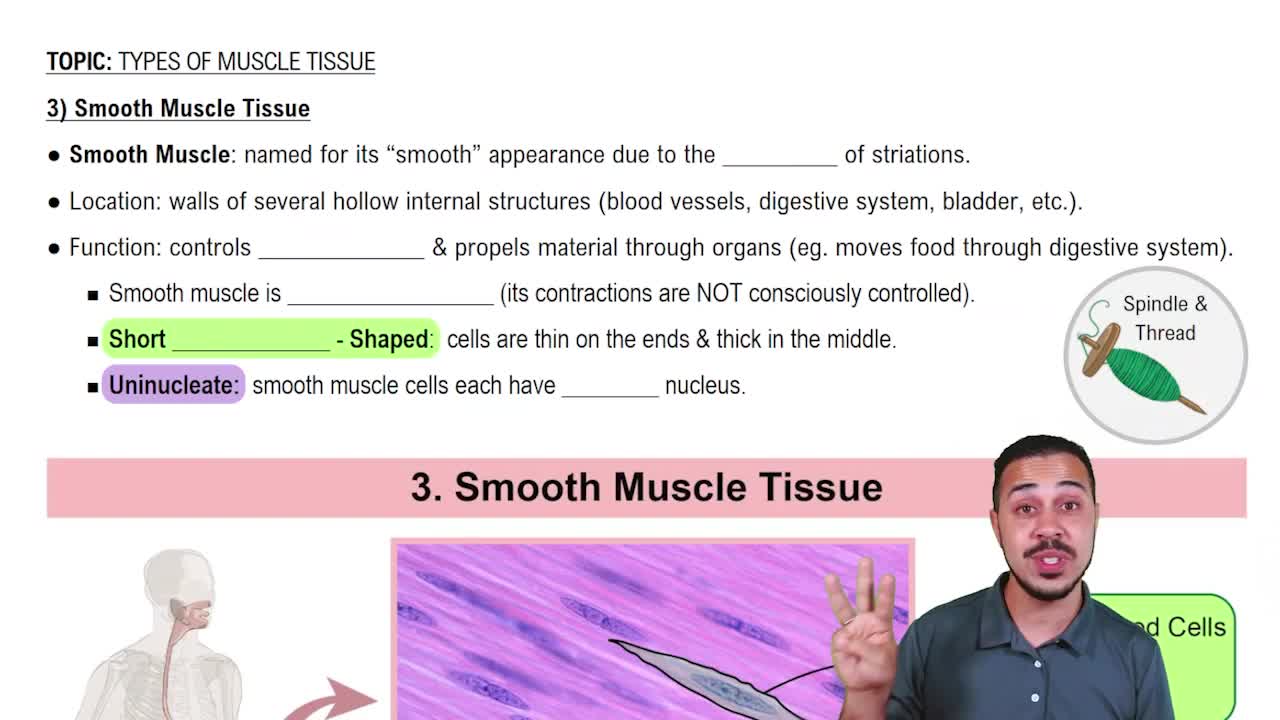
Smooth muscle uses energy more efficiently than skeletal muscle by employing slower cross-bridge cycling and a latch state, which allows it to maintain tension with minimal ATP consumption. This low energy usage is crucial for functions requiring prolonged contraction without fatigue.
Recommended video:
Guided course
06:27
Smooth Muscle Tissue

Sustained Contraction and the Latch State

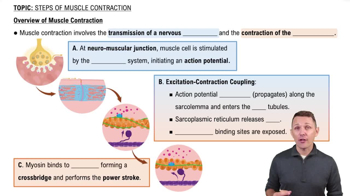
Smooth muscle can maintain contraction for extended periods through the latch state, where myosin remains attached to actin without continuous ATP use. This property supports functions like maintaining vascular tone and organ shape without constant energy expenditure.
Recommended video:
Guided course
4:53
Overview of Muscle Contraction

Physiological Roles of Smooth Muscle

Smooth muscle is found in walls of hollow organs (e.g., blood vessels, intestines) where it regulates flow and pressure by sustained contraction. Its unique properties enable it to control processes like blood pressure and digestion efficiently over long durations.
Recommended video:
Guided course
06:27
Smooth Muscle Tissue