Ch. 16 The Reproductive System
Marieb - Essentials of Human Anatomy & Physiology 13th Edition
Marieb13th EditionEssentials of Human Anatomy & PhysiologyISBN: 9780135624340Not the one you use?Change textbook
Chapter 16, Problem 21

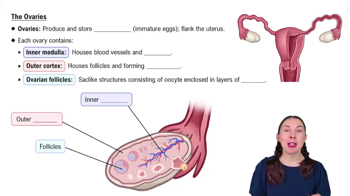
Name the female gonad, and describe its two major functions.

Verified step by step guidance
1
The female gonad is called the ovary. Begin by identifying its anatomical location: ovaries are paired organs located on either side of the uterus in the pelvic cavity.
Understand the first major function of the ovary: oogenesis. This is the process of producing female gametes (ova or eggs). Oogenesis occurs within the ovarian follicles, which mature during the menstrual cycle.
Learn about the second major function of the ovary: hormone secretion. The ovaries produce and release key hormones such as estrogen and progesterone, which regulate the menstrual cycle, support pregnancy, and influence secondary sexual characteristics.
Explore how these functions are interconnected: Hormonal regulation by the ovaries controls the maturation of follicles and the release of an egg during ovulation, ensuring reproductive capability.
Consider the broader physiological significance: The ovaries play a central role in the endocrine system and reproductive health, influencing processes such as the menstrual cycle, fertility, and overall hormonal balance.

Verified video answer for a similar problem:

This video solution was recommended by our tutors as helpful for the problem above.
Video duration:
2m
Was this helpful?

Key Concepts

Here are the essential concepts you must grasp in order to answer the question correctly.

Ovary

The ovary is the female gonad responsible for producing ova (egg cells) and hormones such as estrogen and progesterone. Each woman typically has two ovaries, which are located on either side of the uterus. The ovaries play a crucial role in the female reproductive system, influencing menstrual cycles and fertility.
Recommended video:
3:30
The Ovaries

Oogenesis

Oogenesis is the process of egg cell development that occurs in the ovaries. It involves the maturation of primordial follicles into mature ova, which can be fertilized by sperm. This process is regulated by hormonal signals and is essential for reproduction, as it determines the quantity and quality of eggs available for fertilization.
Recommended video:
2:24
Roadmap of Chapter

Hormonal Regulation

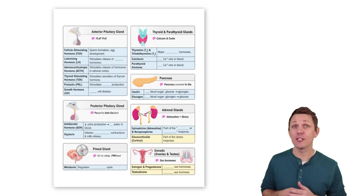
Hormonal regulation in the ovaries involves the secretion of hormones like estrogen and progesterone, which are critical for regulating the menstrual cycle and preparing the body for potential pregnancy. These hormones influence various physiological processes, including ovulation, uterine lining development, and secondary sexual characteristics in females.
Recommended video:
Guided course
13:06
Review of Major Hormones