Ch. 16 The Reproductive System
Marieb - Essentials of Human Anatomy & Physiology 13th Edition
Marieb13th EditionEssentials of Human Anatomy & PhysiologyISBN: 9780135624340Not the one you use?Change textbook
Chapter 16, Problem 16

What is the function of seminal fluid? Name the three types of glands that help produce it.

Verified step by step guidance
1
Understand the function of seminal fluid: Seminal fluid is a component of semen that serves multiple purposes, including providing a medium for sperm to swim, nourishing sperm with nutrients like fructose, and protecting sperm by neutralizing the acidic environment of the female reproductive tract.
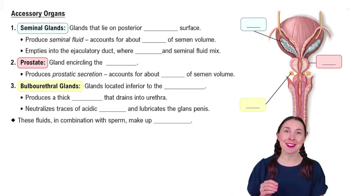
Identify the three types of glands involved in seminal fluid production: The seminal vesicles, prostate gland, and bulbourethral (Cowper's) glands are responsible for producing different components of seminal fluid.
Learn about the seminal vesicles: These paired glands produce a viscous fluid rich in fructose, which provides energy for sperm, and prostaglandins, which help stimulate contractions in the female reproductive tract to aid sperm movement.
Understand the role of the prostate gland: The prostate gland secretes a milky, alkaline fluid that helps neutralize the acidic environment of the vagina, ensuring sperm survival and motility.
Explore the function of the bulbourethral glands: These glands produce a clear, mucus-like fluid that lubricates the urethra and neutralizes any residual acidity from urine, creating a favorable pathway for sperm during ejaculation.

Verified video answer for a similar problem:

This video solution was recommended by our tutors as helpful for the problem above.
Video duration:
2m
Was this helpful?

Key Concepts

Here are the essential concepts you must grasp in order to answer the question correctly.

Seminal Fluid Function

Seminal fluid, or semen, serves multiple functions in reproduction. It provides a medium for sperm transport, nourishes sperm with nutrients, and contains substances that help neutralize the acidity of the female reproductive tract, enhancing sperm viability. Additionally, it plays a role in facilitating sperm motility and protecting sperm from immune responses.
Recommended video:
06:04
Functional Groups

Accessory Glands

The three main types of glands involved in the production of seminal fluid are the seminal vesicles, prostate gland, and bulbourethral glands. The seminal vesicles contribute a significant portion of the fluid, rich in fructose for energy. The prostate gland adds additional fluid that contains enzymes and other substances, while the bulbourethral glands produce a pre-ejaculatory fluid that lubricates the urethra.
Recommended video:
3:21
Accessory Organs

Semen Composition

Semen is composed of sperm cells and seminal fluid, which together create a complex mixture. The composition of seminal fluid includes water, sugars, proteins, and various enzymes, all of which are crucial for the survival and mobility of sperm. Understanding the composition helps in comprehending how seminal fluid supports reproductive success.
Recommended video:
7:49
Composition of Blood