Ch. 9 The Endocrine System
Marieb - Essentials of Human Anatomy & Physiology 13th Edition
Marieb13th EditionEssentials of Human Anatomy & PhysiologyISBN: 9780135624340Not the one you use?Change textbook
Chapter 9, Problem 14

Describe the body location of each of the following endocrine organs: anterior pituitary, pineal gland, thymus, pancreas, ovaries, testes. Then, for each organ, name its hormones and their effect(s) on body processes. Finally, for each hormone, list the important results of its hypersecretion or hyposecretion.

Verified step by step guidance
1
Step 1: Identify the anatomical location of each endocrine organ. For example: The anterior pituitary is located at the base of the brain within the sella turcica of the sphenoid bone; the pineal gland is located in the epithalamus near the center of the brain; the thymus is located in the upper chest behind the sternum; the pancreas is located in the abdominal cavity behind the stomach; the ovaries are located in the pelvic cavity on either side of the uterus; and the testes are located in the scrotum outside the pelvic cavity.
Step 2: List the hormones secreted by each organ and their effects on body processes. For example: The anterior pituitary secretes growth hormone (GH), which stimulates growth and metabolism; the pineal gland secretes melatonin, which regulates sleep-wake cycles; the thymus secretes thymosin, which is involved in T-cell development; the pancreas secretes insulin and glucagon, which regulate blood glucose levels; the ovaries secrete estrogen and progesterone, which regulate female reproductive processes; and the testes secrete testosterone, which regulates male reproductive processes.
Step 3: Explain the effects of hypersecretion for each hormone. For example: Hypersecretion of growth hormone can lead to gigantism or acromegaly; hypersecretion of melatonin may cause excessive sleepiness; hypersecretion of insulin can lead to hypoglycemia; hypersecretion of estrogen can cause hormonal imbalances; and hypersecretion of testosterone can lead to aggressive behavior or excessive muscle growth.
Step 4: Explain the effects of hyposecretion for each hormone. For example: Hyposecretion of growth hormone can lead to dwarfism; hyposecretion of melatonin may cause insomnia; hyposecretion of insulin can lead to diabetes mellitus; hyposecretion of estrogen can cause infertility or osteoporosis; and hyposecretion of testosterone can lead to reduced muscle mass and libido.
Step 5: Summarize the importance of understanding endocrine organ functions and hormone regulation in maintaining homeostasis and preventing disorders. Highlight how imbalances in hormone secretion can significantly impact physical and mental health.

Verified video answer for a similar problem:

This video solution was recommended by our tutors as helpful for the problem above.
Video duration:
2m
Was this helpful?

Key Concepts

Here are the essential concepts you must grasp in order to answer the question correctly.

Endocrine System

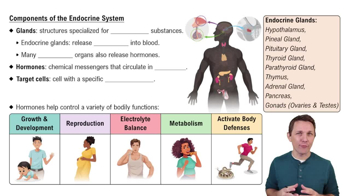
The endocrine system is a network of glands that produce and release hormones directly into the bloodstream. These hormones regulate various bodily functions, including metabolism, growth, and mood. Understanding the location and function of each endocrine organ is crucial for analyzing their roles in maintaining homeostasis and responding to internal and external stimuli.
Recommended video:
Guided course
7:06
Components of the Endocrine System

Hormones and Their Functions

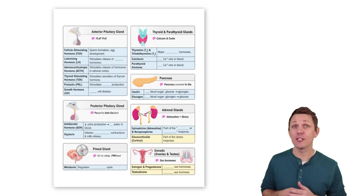
Hormones are chemical messengers that travel through the bloodstream to target organs, where they elicit specific physiological responses. Each endocrine organ secretes particular hormones that influence various processes, such as the anterior pituitary's release of growth hormone, which affects growth and metabolism. Recognizing the hormones produced by each organ and their effects is essential for understanding the overall impact of the endocrine system on health.
Recommended video:
Guided course
13:06
Review of Major Hormones

Hypersecretion and Hyposecretion

Hypersecretion refers to the excessive production of hormones, while hyposecretion indicates insufficient hormone production. Both conditions can lead to significant health issues; for example, hypersecretion of insulin can cause hypoglycemia, while hyposecretion can lead to diabetes. Understanding these concepts is vital for assessing the consequences of hormonal imbalances and their effects on bodily functions.