Ch. 24 Nutrition, Metabolism, and Energy Balance
Marieb - Human Anatomy & Physiology 7th Edition
Marieb, Hoehn7th EditionHuman Anatomy & PhysiologyISBN: 9780805359091Not the one you use?Change textbook
Chapter 23, Problem 16

Define glycogenesis, glycogenolysis, gluconeogenesis, and lipogenesis. What is (are) likely to be occurring:
a. Shortly after a carbohydrate-rich meal
b. Just before waking up in the morning?

Verified step by step guidance
1
Step 1: Define glycogenesis. Glycogenesis is the process of synthesizing glycogen from glucose molecules. It occurs primarily in the liver and skeletal muscles when there is an excess of glucose in the bloodstream.
Step 2: Define glycogenolysis. Glycogenolysis is the breakdown of glycogen into glucose molecules. This process occurs in the liver and muscles to release glucose into the bloodstream when energy is needed.
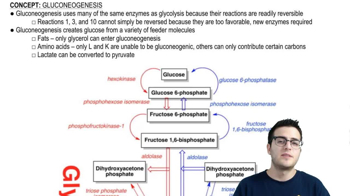
Step 3: Define gluconeogenesis. Gluconeogenesis is the metabolic pathway that generates glucose from non-carbohydrate sources, such as amino acids and glycerol. This process occurs primarily in the liver during periods of fasting or low carbohydrate intake.
Step 4: Define lipogenesis. Lipogenesis is the process of synthesizing fatty acids and triglycerides from acetyl-CoA and other substrates. This occurs when there is an excess of energy, particularly from carbohydrates, and is stored in adipose tissue.
Step 5: Analyze the scenarios: a) Shortly after a carbohydrate-rich meal, glycogenesis and lipogenesis are likely to occur as the body stores excess glucose and energy. b) Just before waking up in the morning, glycogenolysis and gluconeogenesis are likely to occur to maintain blood glucose levels during fasting.

Verified video answer for a similar problem:

This video solution was recommended by our tutors as helpful for the problem above.
Video duration:
1m
Was this helpful?

Key Concepts

Here are the essential concepts you must grasp in order to answer the question correctly.

Glycogenesis

Glycogenesis is the metabolic process of converting glucose into glycogen for storage, primarily in the liver and muscle tissues. This process is stimulated by insulin, especially after carbohydrate-rich meals, allowing the body to store excess glucose for future energy needs.

Glycogenolysis

Glycogenolysis is the breakdown of glycogen back into glucose, which occurs when the body needs energy, such as between meals or during physical activity. This process is regulated by hormones like glucagon and epinephrine, ensuring that glucose is available for energy when needed.

Gluconeogenesis and Lipogenesis

Gluconeogenesis is the synthesis of glucose from non-carbohydrate sources, such as amino acids and glycerol, primarily occurring in the liver. Lipogenesis is the process of converting excess carbohydrates and proteins into fatty acids for fat storage. Both processes are crucial for maintaining blood glucose levels and energy balance, especially during fasting states.
Recommended video:
08:55
Gluconeogenesis 1