
Ch. 1 An Introduction to Anatomy and Physiology
Martini - Fundamentals of Anatomy & Physiology 11th Edition
Martini, Nath, Bartholomew11th EditionFundamentals of Anatomy & PhysiologyISBN: 9780136874089Not the one you use?Change textbook
Chapter 1, Problem 5a

Match each numbered item with the most closely related lettered item. Use letters for answers in the spaces provided.
_____ Anatomy
a. Study of tissues 
b. Constant internal environment 
c. Face-up position 
d. Study of functions 
e. Positive feedback 
f. Organ system 
g. Study of cells 
h. Negative feedback 
i. Serous membrane 
j. Study of internal and external body structures 
k. Diaphragm 
l. Tissue 
m. Peritoneal cavity 
n. Organ 
o. Face-down position

Verified step by step guidance
1
Identify the type of anatomy being asked about by matching the description to the correct letter. For example, if the term is related to the study of tissues, match it with letter 'a'.
Recall that 'Anatomy' generally refers to the study of body structures, so match it with the letter that best describes this, such as 'j' for the study of internal and external body structures.
Use the process of elimination by comparing each numbered item with the lettered options, focusing on key terms like 'study of tissues', 'study of cells', or 'organ system' to find the closest match.
Remember that terms like 'face-up position' and 'face-down position' correspond to specific anatomical positions, so match them with 'c' and 'o' respectively.
Confirm your matches by reviewing the definitions of each lettered item and ensuring they align logically with the numbered anatomy terms.

Verified video answer for a similar problem:

This video solution was recommended by our tutors as helpful for the problem above.
Video duration:
3m
Was this helpful?

Key Concepts

Here are the essential concepts you must grasp in order to answer the question correctly.

Anatomy and Its Subfields

Anatomy is the branch of biology that studies the structure of organisms and their parts. It includes subfields like histology (study of tissues) and cytology (study of cells), focusing on different levels of biological organization. Understanding these distinctions helps in matching terms related to body structures.
Recommended video:
4:14
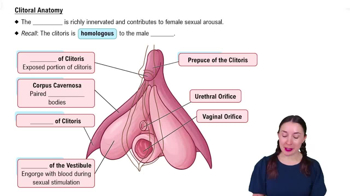
Clitoral Anatomy

Body Positions and Orientation Terms

Body positions such as 'face-up' (supine) and 'face-down' (prone) describe how the body is oriented in space. These terms are essential in anatomy to describe locations and directions accurately, aiding in communication about body posture and medical procedures.
Recommended video:
Guided course
02:24
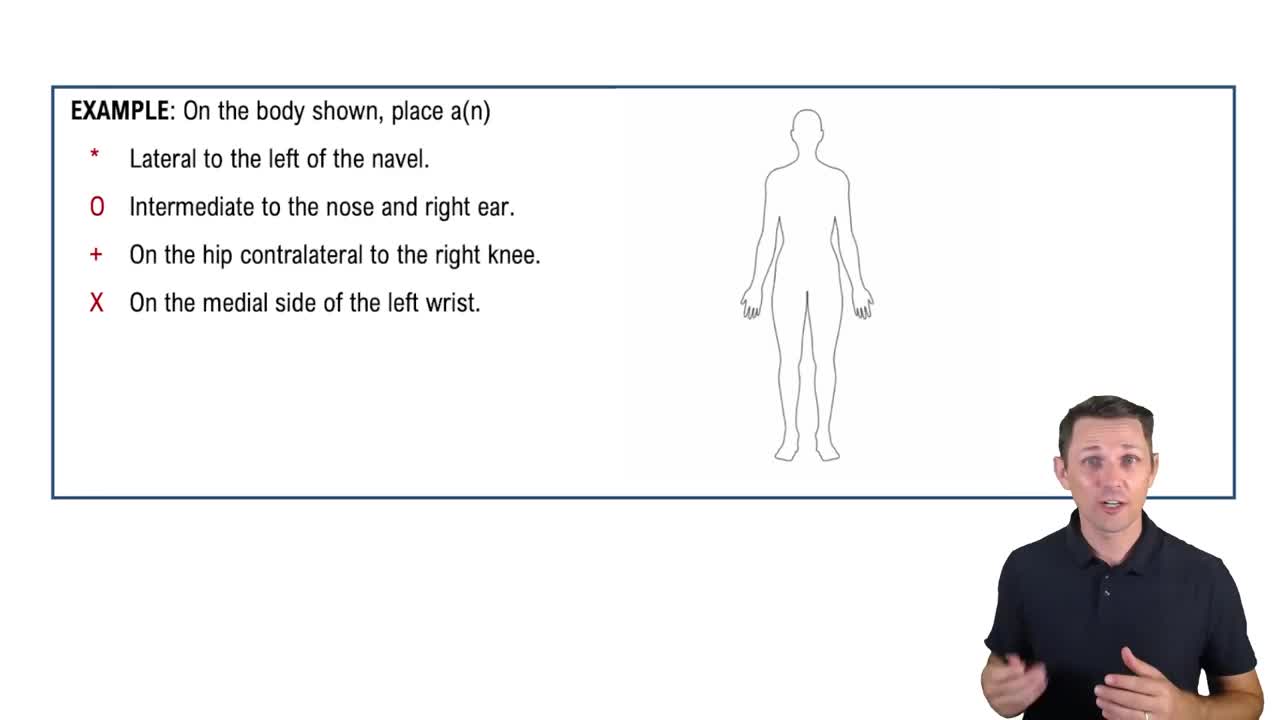
Directional Terms: Body Sides Example 1

Homeostasis and Feedback Mechanisms

Homeostasis refers to the body's ability to maintain a stable internal environment. Feedback mechanisms, including negative feedback (which counteracts changes) and positive feedback (which amplifies changes), regulate physiological processes to keep conditions within optimal ranges.
Recommended video:
Guided course
03:46
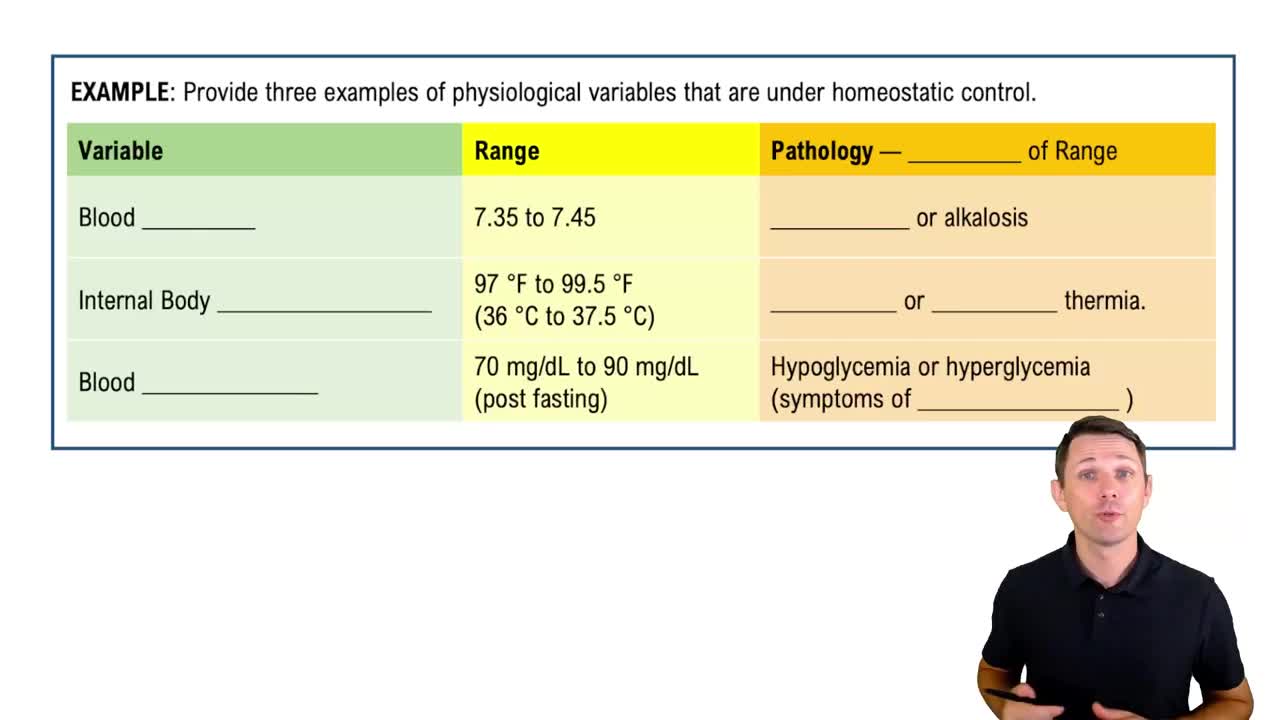
Homeostasis Example 1
Related Practice
Textbook Question

Match each numbered item with the most closely related lettered item. Use letters for answers in the spaces provided.

____ Cytology

a. Study of tissues

b. Constant internal environment

c. Face-up position

d. Study of functions

e. Positive feedback

f. Organ system

g. Study of cells

h. Negative feedback

i. Serous membrane

j. Study of internal and external body structures

k. Diaphragm

l. Tissue

m. Peritoneal cavity

n. Organ

o. Face-down position

80
views
Textbook Question

Match each numbered item with the most closely related lettered item. Use letters for answers in the spaces provided.

____Physiology

a. Study of tissues 

b. Constant internal environment 

c. Face-up position 

d. Study of functions 

e. Positive feedback 

f. Organ system 

g. Study of cells 

h. Negative feedback 

i. Serous membrane 

j. Study of internal and external body structures 

k. Diaphragm 

l. Tissue 

m. Peritoneal cavity 

n. Organ 

o. Face-down position

67
views
Textbook Question

Match each numbered item with the most closely related lettered item. Use letters for answers in the spaces provided.

___Heart

a. Study of tissues 

b. Constant internal environment 

c. Face-up position 

d. Study of functions 

e. Positive feedback 

f. Organ system 

g. Study of cells 

h. Negative feedback 

i. Serous membrane 

j. Study of internal and external body structures 

k. Diaphragm 

l. Tissue 

m. Peritoneal cavity 

n. Organ 

o. Face-down position

45
views
Textbook Question

Match each numbered item with the most closely related lettered item. Use letters for answers in the spaces provided.

____Muscle

a. Study of tissues 

b. Constant internal environment 

c. Face-up position 

d. Study of functions 

e. Positive feedback 

f. Organ system 

g. Study of cells 

h. Negative feedback 

i. Serous membrane 

j. Study of internal and external body structures 

k. Diaphragm 

l. Tissue 

m. Peritoneal cavity 

n. Organ 

o. Face-down position

45
views
Textbook Question

Match each numbered item with the most closely related lettered item. Use letters for answers in the spaces provided.

___ Homeostasis

a. Study of tissues 

b. Constant internal environment 

c. Face-up position 

d. Study of functions 

e. Positive feedback 

f. Organ system 

g. Study of cells 

h. Negative feedback 

i. Serous membrane 

j. Study of internal and external body structures 

k. Diaphragm 

l. Tissue 

m. Peritoneal cavity 

n. Organ 

o. Face-down position

57
views
Textbook Question

Match each numbered item with the most closely related lettered item. Use letters for answers in the spaces provided.

____Histology

a. Study of tissues 

b. Constant internal environment 

c. Face-up position 

d. Study of functions 

e. Positive feedback 

f. Organ system 

g. Study of cells 

h. Negative feedback 

i. Serous membrane 

j. Study of internal and external body structures 

k. Diaphragm 

l. Tissue 

m. Peritoneal cavity 

n. Organ 

o. Face-down position

68
views