Ch. 1 An Introduction to Anatomy and Physiology
Martini - Fundamentals of Anatomy & Physiology 11th Edition
Martini, Nath, Bartholomew11th EditionFundamentals of Anatomy & PhysiologyISBN: 9780136874089Not the one you use?Change textbook
Chapter 1, Problem 8

Match each numbered item with the most closely related lettered item. Use letters for answers in the spaces provided.
___Heart
a. Study of tissues 
b. Constant internal environment 
c. Face-up position 
d. Study of functions 
e. Positive feedback 
f. Organ system 
g. Study of cells 
h. Negative feedback 
i. Serous membrane 
j. Study of internal and external body structures 
k. Diaphragm 
l. Tissue 
m. Peritoneal cavity 
n. Organ 
o. Face-down position

Verified step by step guidance
1
Step 1: Identify the term 'heart' and classify it based on its anatomical and physiological characteristics. The heart is a muscular organ responsible for pumping blood throughout the body.
Step 2: Review the list of lettered items provided. Look for the option that best matches the classification of the heart as an organ.
Step 3: Eliminate options that are unrelated to the heart's classification. For example, options like 'study of tissues' (a), 'constant internal environment' (b), or 'face-up position' (c) do not directly describe the heart.
Step 4: Focus on the option that directly identifies the heart as an 'organ' (n), which is the most accurate match based on its anatomical definition.
Step 5: Confirm your answer by ensuring that the heart fits the definition of an organ—a structure composed of multiple tissues working together to perform specific functions.

Verified video answer for a similar problem:

This video solution was recommended by our tutors as helpful for the problem above.
Video duration:
2m
Was this helpful?

Key Concepts

Here are the essential concepts you must grasp in order to answer the question correctly.

Organ

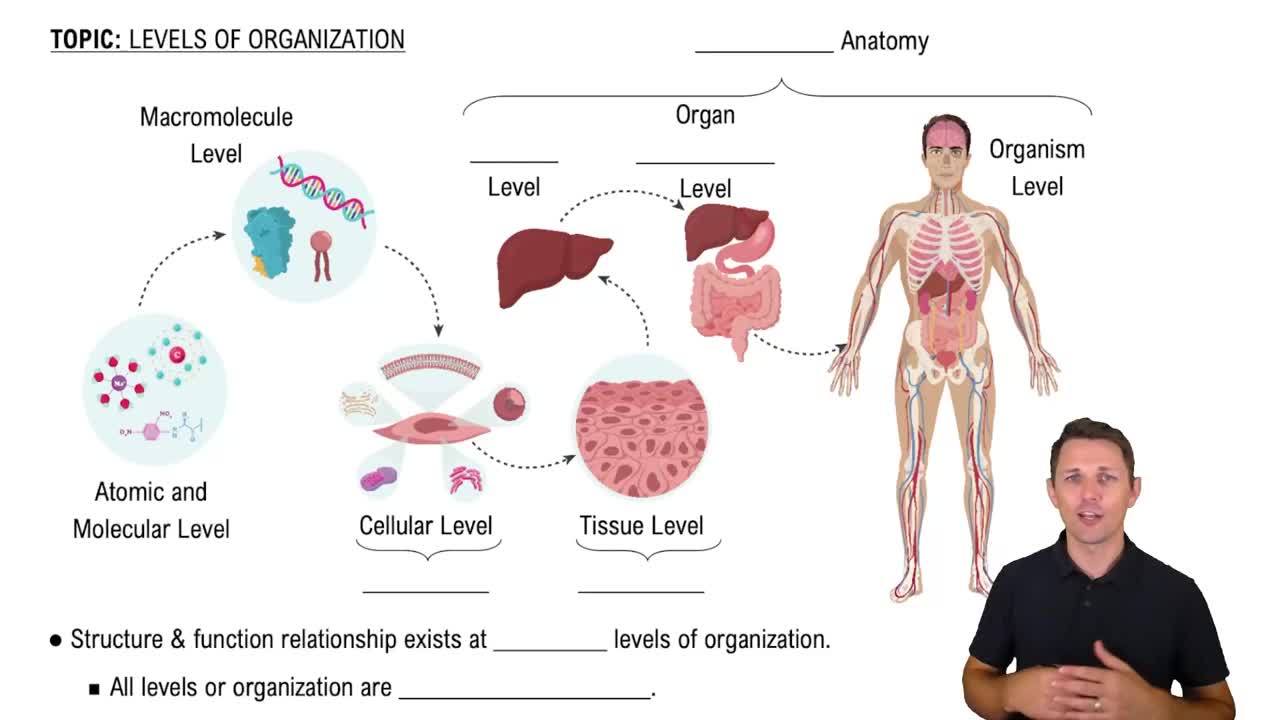
An organ is a collection of tissues that work together to perform a specific function within an organism. The heart, for example, is an organ composed of muscle tissue, connective tissue, and epithelial tissue, all working in concert to pump blood throughout the body.
Recommended video:
Guided course
05:04
The Levels of Organization

Tissue

Tissue is a group of similar cells that carry out a specific function. In the context of the heart, cardiac muscle tissue is responsible for the contraction and relaxation that enables the heart to pump blood, highlighting the importance of tissue organization in organ function.
Recommended video:
4:55
Lymphoid Tissue

Organ System

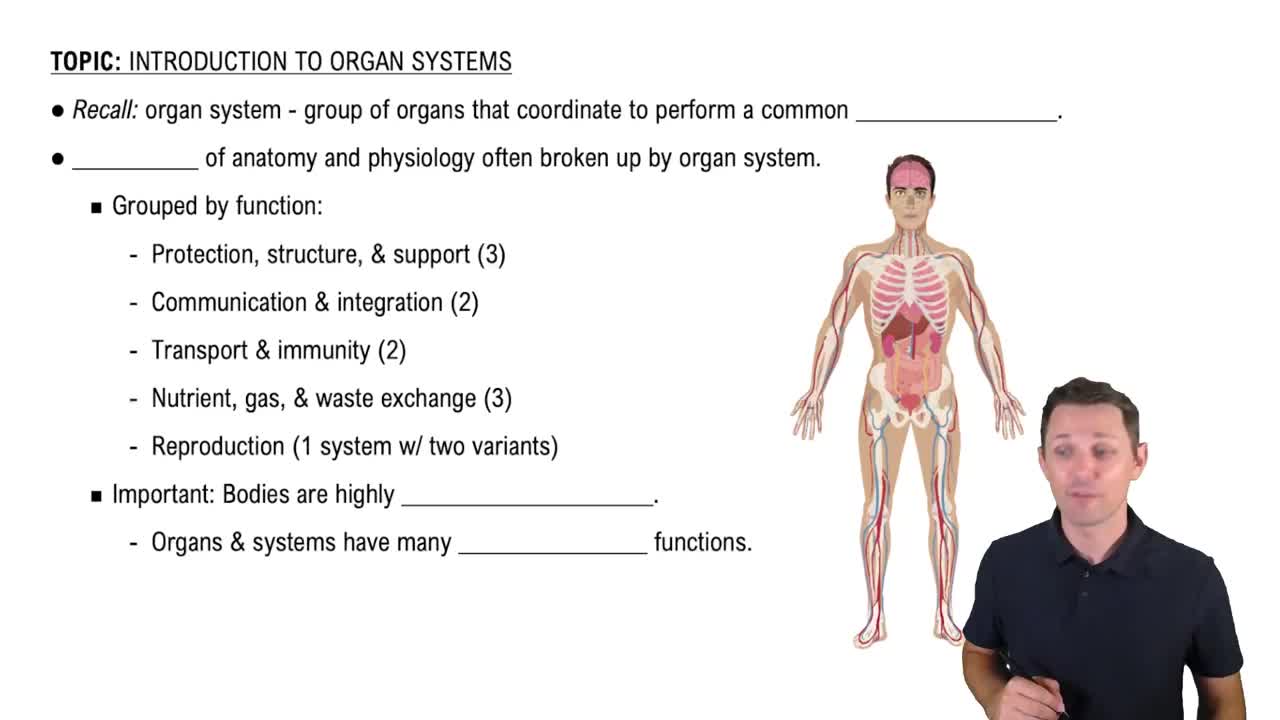
An organ system is a group of organs that work together to perform complex functions necessary for the survival of an organism. The cardiovascular system, which includes the heart, blood vessels, and blood, is responsible for transporting nutrients and oxygen, demonstrating the interdependence of organs within a system.
Recommended video:
Guided course
02:29
Introduction to Organ Systems
Related Practice
Textbook Question

Match each numbered item with the most closely related lettered item. Use letters for answers in the spaces provided.

_____Temperature regulation

a. Study of tissues 

b. Constant internal environment 

c. Face-up position 

d. Study of functions 

e. Positive feedback 

f. Organ system 

g. Study of cells 

h. Negative feedback 

i. Serous membrane 

j. Study of internal and external body structures 

k. Diaphragm 

l. Tissue 

m. Peritoneal cavity 

n. Organ 

o. Face-down position

39
views
Textbook Question

Match each numbered item with the most closely related lettered item. Use letters for answers in the spaces provided.

_____Endocrine

a. Study of tissues 

b. Constant internal environment 

c. Face-up position 

d. Study of functions 

e. Positive feedback 

f. Organ system 

g. Study of cells 

h. Negative feedback 

i. Serous membrane 

j. Study of internal and external body structures 

k. Diaphragm 

l. Tissue 

m. Peritoneal cavity 

n. Organ 

o. Face-down position

63
views
Textbook Question

Match each numbered item with the most closely related lettered item. Use letters for answers in the spaces provided.

____Muscle

a. Study of tissues 

b. Constant internal environment 

c. Face-up position 

d. Study of functions 

e. Positive feedback 

f. Organ system 

g. Study of cells 

h. Negative feedback 

i. Serous membrane 

j. Study of internal and external body structures 

k. Diaphragm 

l. Tissue 

m. Peritoneal cavity 

n. Organ 

o. Face-down position

45
views
Textbook Question

Match each numbered item with the most closely related lettered item. Use letters for answers in the spaces provided.

___ Homeostasis

a. Study of tissues 

b. Constant internal environment 

c. Face-up position 

d. Study of functions 

e. Positive feedback 

f. Organ system 

g. Study of cells 

h. Negative feedback 

i. Serous membrane 

j. Study of internal and external body structures 

k. Diaphragm 

l. Tissue 

m. Peritoneal cavity 

n. Organ 

o. Face-down position

57
views
Textbook Question

Match each numbered item with the most closely related lettered item. Use letters for answers in the spaces provided.

_____ Anatomy

a. Study of tissues 

b. Constant internal environment 

c. Face-up position 

d. Study of functions 

e. Positive feedback 

f. Organ system 

g. Study of cells 

h. Negative feedback 

i. Serous membrane 

j. Study of internal and external body structures 

k. Diaphragm 

l. Tissue 

m. Peritoneal cavity 

n. Organ 

o. Face-down position

47
views
Textbook Question

Match each numbered item with the most closely related lettered item. Use letters for answers in the spaces provided.

_____Labor and delivery

a. Study of tissues 

b. Constant internal environment 

c. Face-up position 

d. Study of functions 

e. Positive feedback 

f. Organ system 

g. Study of cells 

h. Negative feedback 

i. Serous membrane 

j. Study of internal and external body structures 

k. Diaphragm 

l. Tissue 

m. Peritoneal cavity 

n. Organ 

o. Face-down position

45
views