Ch. 10 Muscle Tissue
Martini - Fundamentals of Anatomy & Physiology 11th Edition
Martini, Nath, Bartholomew11th EditionFundamentals of Anatomy & PhysiologyISBN: 9780136874089Not the one you use?Change textbook
Chapter 10, Problem 15

What forms of energy reserves do resting skeletal muscle fibers contain?

Verified step by step guidance
1
Understand that resting skeletal muscle fibers store energy in specific chemical forms that can be quickly mobilized when needed.
Identify the primary energy reserve in resting skeletal muscle fibers as glycogen, which is a stored form of glucose used for ATP production during muscle activity.
Recognize that resting muscle fibers also contain creatine phosphate (phosphocreatine), which serves as a rapid source to regenerate ATP from ADP during the initial stages of muscle contraction.
Note that resting muscle fibers have a small amount of ATP already present, but this is quickly used up, so the reserves like glycogen and creatine phosphate are crucial for sustained energy supply.
Summarize that the main energy reserves in resting skeletal muscle fibers are glycogen and creatine phosphate, both of which support ATP production during muscle activity.

Verified video answer for a similar problem:

This video solution was recommended by our tutors as helpful for the problem above.
Video duration:
3m
Was this helpful?

Key Concepts

Here are the essential concepts you must grasp in order to answer the question correctly.

Types of Energy Reserves in Muscle Fibers

Resting skeletal muscle fibers store energy in specific forms to support future contraction. These reserves include glycogen, a stored carbohydrate; creatine phosphate, a high-energy compound; and triglycerides, stored fats. Understanding these forms helps explain how muscles meet energy demands during activity.
Recommended video:
Guided course
7:47
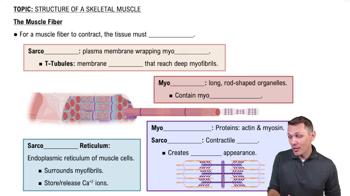
The Muscle Fiber

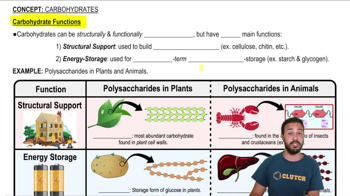
Glycogen as a Carbohydrate Reserve

Glycogen is a polysaccharide stored in muscle fibers that serves as a readily available source of glucose. During muscle activity, glycogen is broken down to glucose for ATP production through glycolysis and oxidative phosphorylation, providing sustained energy for prolonged contractions.
Recommended video:
05:08
Carbohydrate Functions

Creatine Phosphate and Immediate Energy Supply

Creatine phosphate is a high-energy phosphate compound stored in muscle cells that rapidly donates a phosphate group to ADP to regenerate ATP. This system provides immediate energy during the initial seconds of muscle contraction before other metabolic pathways activate.
Recommended video:
4:58
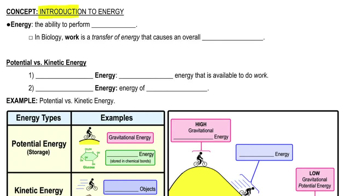
Introduction to Energy