Ch. 12 Nervous Tissue
Martini - Fundamentals of Anatomy & Physiology 11th Edition
Martini, Nath, Bartholomew11th EditionFundamentals of Anatomy & PhysiologyISBN: 9780136874089Not the one you use?Change textbook
Chapter 12, Problem 13

Why can't most neurons in the CNS be replaced when they are lost to injury or disease?

Verified step by step guidance
1
Understand that neurons in the central nervous system (CNS) have limited regenerative capacity compared to other cell types, which is a key reason why they cannot be easily replaced after injury or disease.
Recognize that mature CNS neurons are generally considered post-mitotic, meaning they have exited the cell cycle and do not undergo mitosis to produce new neurons.
Consider the inhibitory environment of the CNS after injury, including the presence of molecules such as Nogo, myelin-associated glycoprotein, and chondroitin sulfate proteoglycans, which prevent axonal regrowth and neuron replacement.
Acknowledge the role of glial scar formation by astrocytes, which physically and chemically inhibits regeneration and the integration of new neurons into existing neural circuits.
Note that while some neurogenesis occurs in specific brain regions (like the hippocampus), this is limited and insufficient to replace the widespread loss of neurons caused by injury or disease in most CNS areas.

Verified video answer for a similar problem:

This video solution was recommended by our tutors as helpful for the problem above.
Video duration:
3m
Was this helpful?

Key Concepts

Here are the essential concepts you must grasp in order to answer the question correctly.

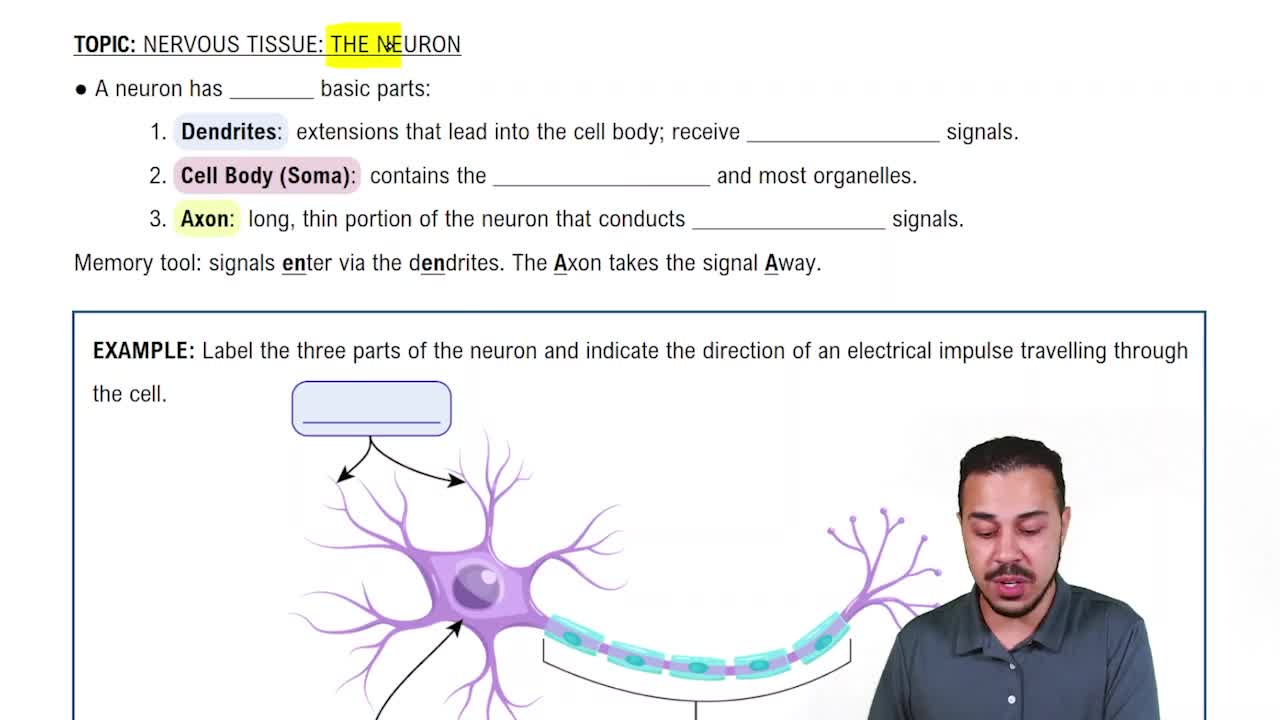
Neuronal Regeneration in the CNS

Neurons in the central nervous system (CNS) have limited ability to regenerate after injury due to intrinsic cellular properties and the inhibitory environment. Unlike peripheral neurons, CNS neurons often fail to regrow axons, which restricts functional recovery.
Recommended video:

Inhibitory Environment of the CNS

The CNS contains molecules such as myelin-associated inhibitors and glial scar components that actively prevent axonal growth. These factors create a hostile environment that blocks neuron regeneration and repair after damage.
Recommended video:
3:34
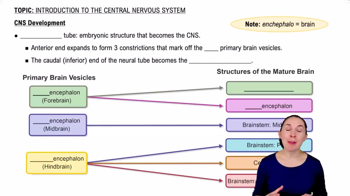
CNS Development

Neural Stem Cells and Neurogenesis

While some neurogenesis occurs in specific brain regions, most CNS neurons are post-mitotic and cannot divide or be replaced. Neural stem cells have limited capacity to generate new neurons in the adult CNS, restricting recovery from injury.
Recommended video:
1:52
External Regulation – Neural Mechanisms