Ch. 4 The Tissue Level of Organization
Martini - Fundamentals of Anatomy & Physiology 11th Edition
Martini, Nath, Bartholomew11th EditionFundamentals of Anatomy & PhysiologyISBN: 9780136874089Not the one you use?Change textbook
Chapter 4, Problem 8

Matrix is a characteristic of which type of tissue?
(a) Epithelial
(b) Nervous
(c) Muscle
(d) Connective

Verified step by step guidance
1
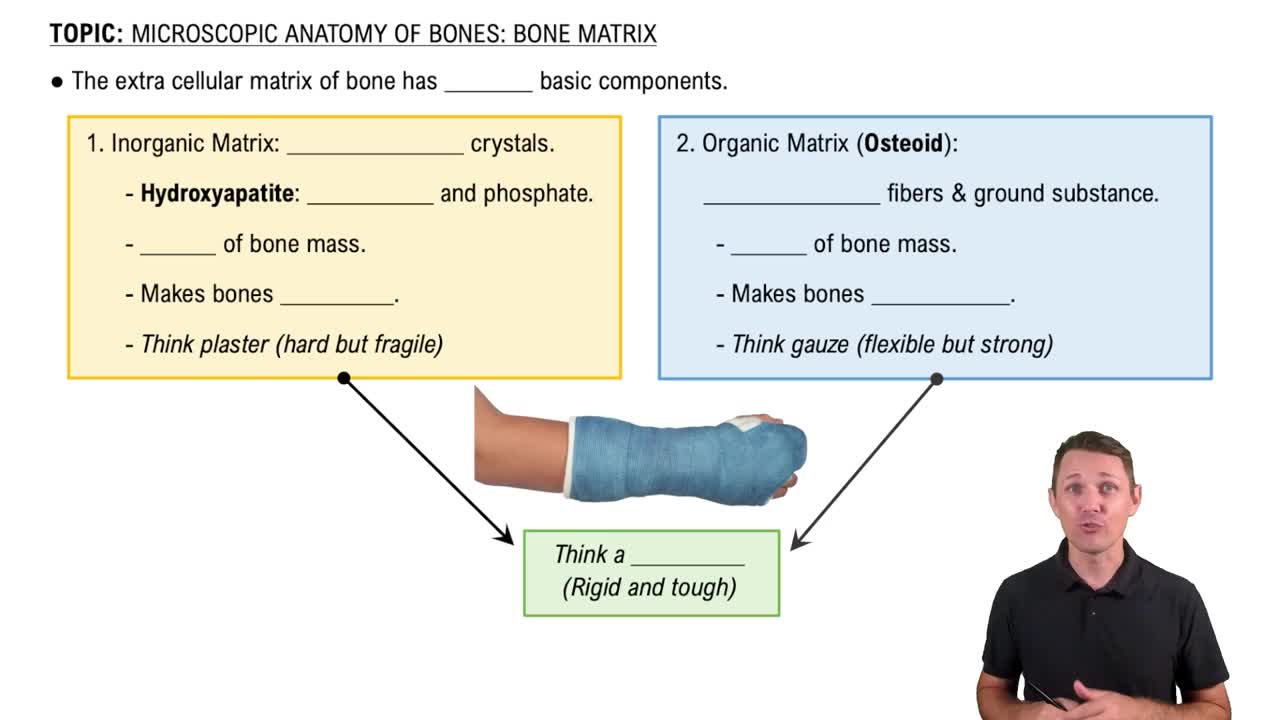
Understand the term 'matrix' in the context of tissues. The matrix refers to the extracellular material that surrounds the cells in a tissue, providing structural and biochemical support.
Recall the four primary tissue types in the body: epithelial, nervous, muscle, and connective tissues.
Consider the characteristics of each tissue type: epithelial tissue has tightly packed cells with minimal extracellular matrix; nervous tissue consists mainly of neurons and supporting cells with little matrix; muscle tissue is composed of muscle fibers with some matrix but primarily contractile elements.
Connective tissue is known for having abundant extracellular matrix, which can be fluid, gel-like, or solid, depending on the specific type of connective tissue (e.g., bone, cartilage, blood).
Based on this understanding, identify that the matrix is a defining characteristic of connective tissue.

Verified video answer for a similar problem:

This video solution was recommended by our tutors as helpful for the problem above.
Video duration:
2m
Was this helpful?

Key Concepts

Here are the essential concepts you must grasp in order to answer the question correctly.

Extracellular Matrix

The extracellular matrix (ECM) is a network of proteins and molecules outside cells that provides structural and biochemical support. It is a defining feature of connective tissue, helping to bind cells together and maintain tissue integrity.
Recommended video:

Connective Tissue Characteristics

Connective tissue is characterized by abundant extracellular matrix and relatively few cells. It supports, connects, and protects other tissues and organs, distinguishing it from epithelial, muscle, and nervous tissues.
Recommended video:
Guided course
02:19
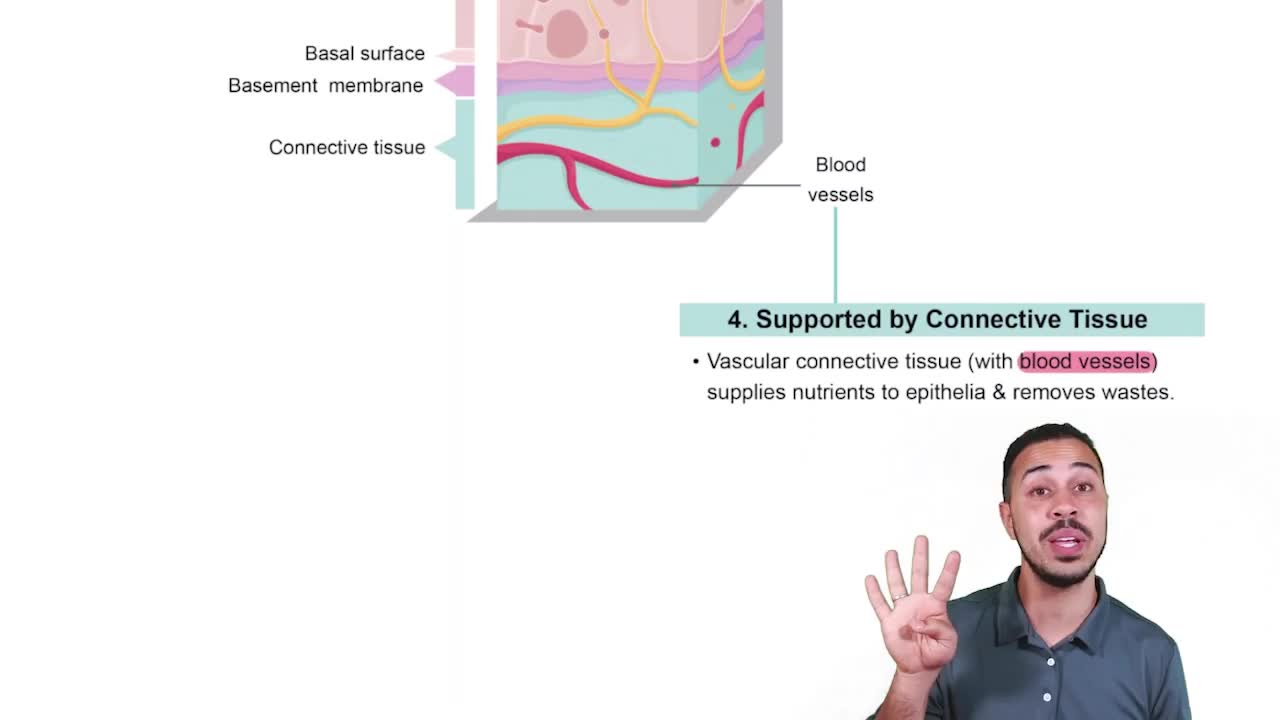
Characteristic 4: Supported by Connective Tissue

Comparison of Tissue Types

Epithelial tissue covers surfaces and lacks a matrix, muscle tissue is specialized for contraction, and nervous tissue transmits signals. Only connective tissue has a prominent matrix, which is essential for its function.
Recommended video:
Guided course
00:36
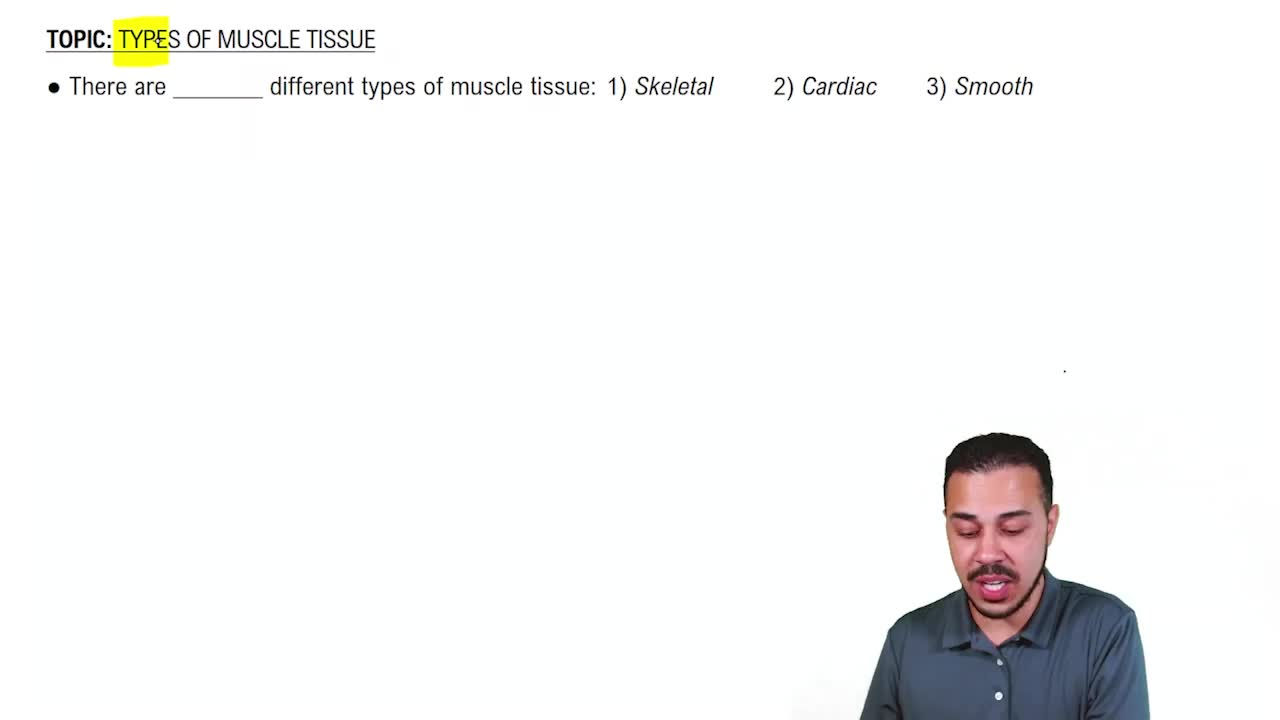
3 Types of Muscle Tissue