Quadratic equations can be expressed in the form y = ax² + bx + c, where a ≠ 0. The term ax² is essential because it defines the equation as quadratic. The coefficients b and c can be zero, as seen in the simple example y = x², where a = 1 and both b and c are zero.
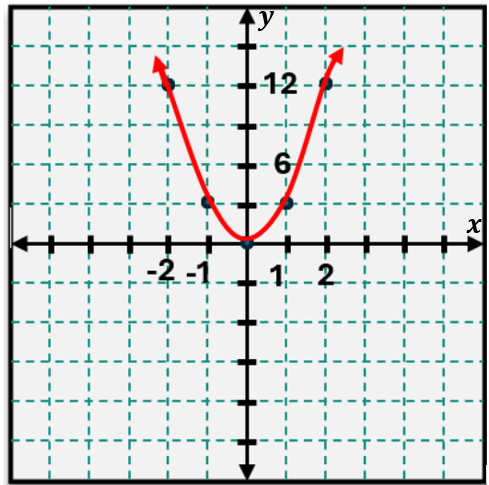
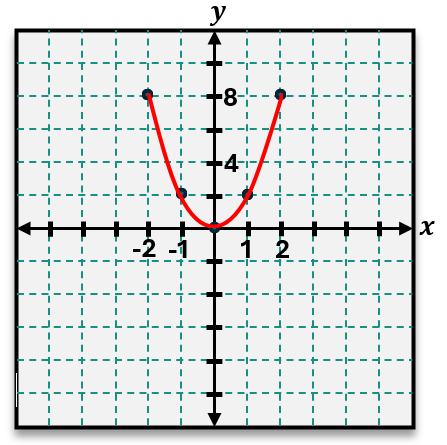
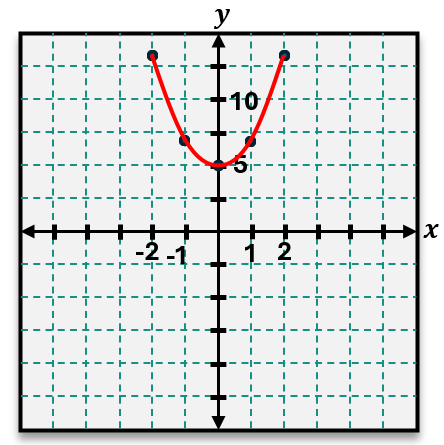
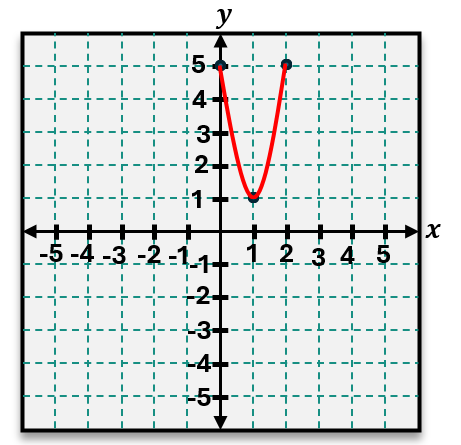
To graph a quadratic function, one effective method is to calculate and plot points by substituting various x values into the equation. For instance, plugging in values from -3 to 3 into y = x² yields points such as (-3, 9), (-2, 4), (-1, 1), (0, 0), (1, 1), (2, 4), and (3, 9). Plotting these points reveals a symmetric, smooth curve known as a parabola. This U-shaped curve is characteristic of all quadratic functions.
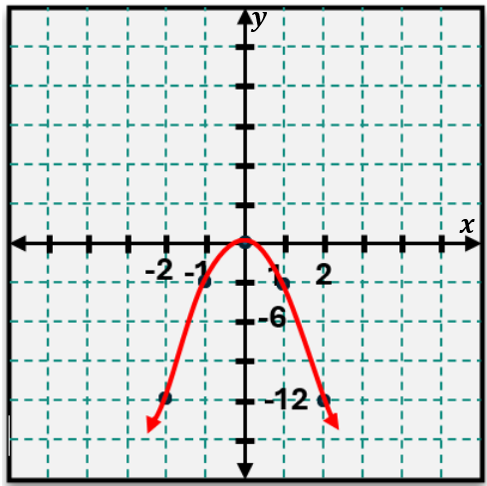
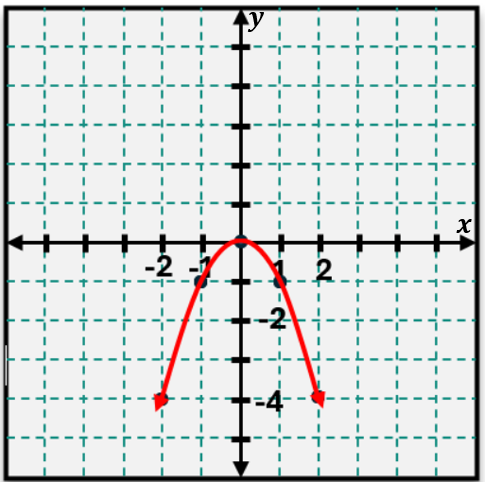
The direction in which the parabola opens depends on the sign of the coefficient a. If a is positive, the parabola opens upward, creating a minimum point. Conversely, if a is negative, the parabola opens downward, forming a maximum point. For example, the graph of y = -x² opens downward, reflecting all output values as negative.
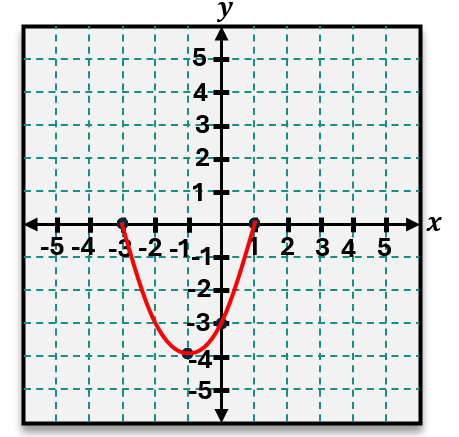
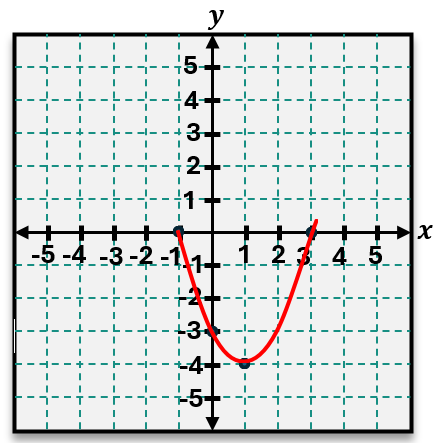
Every parabola has a special point called the vertex, which represents either the highest or lowest point on the graph. In the case of y = x² and y = -x², the vertex is located at the origin (0, 0). The vertex is crucial because it indicates the parabola's extremum—minimum if the parabola opens upward, maximum if it opens downward.
Another important feature of parabolas is the axis of symmetry, a vertical line that divides the parabola into two mirror-image halves. This line always passes through the vertex, and its equation corresponds to the x-coordinate of the vertex. For the examples above, the axis of symmetry is x = 0. Understanding the axis of symmetry is vital for graphing quadratics efficiently, as it helps locate the vertex and ensures the graph is balanced.
While plotting points is a straightforward way to graph quadratic functions, it can be inefficient, especially when trying to identify the vertex directly. Advanced methods, such as rewriting the quadratic in vertex form or using the formula for the vertex, allow for more precise and quicker graphing without extensive point plotting. These techniques build upon factoring and solving skills, enhancing the ability to analyze and graph quadratic equations effectively.