Back

Glycolysis 1 definitions

Control buttons has been changed to "navigation" mode.
1/14
  • Glycolysis

    A metabolic pathway that converts a 6-carbon sugar into two 3-carbon molecules, serving as a precursor to cellular respiration.
  • Glucose

    A 6-carbon monosaccharide used for energy, storage, and structural purposes in cells, and the starting molecule for glycolysis.
  • Pyruvate

    A 3-carbon compound produced at the end of glycolysis, serving as a substrate for aerobic cellular respiration.
  • ATP

    A nucleotide that acts as the cell's energy currency, consumed and generated during glycolysis phases.
  • NADH

    An electron carrier generated in glycolysis, later used in cellular respiration to produce additional energy.
  • Energy Investment Phase

    The initial stage of glycolysis where ATP is consumed to add phosphate groups to the glucose molecule.
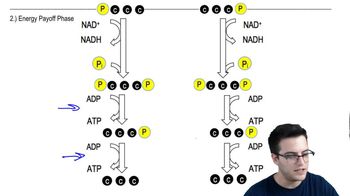
  • Energy Payoff Phase

    The latter stage of glycolysis where ATP and NADH are produced from phosphorylated 3-carbon molecules.
  • Glucose 6-phosphate

    A phosphorylated form of glucose that can enter glycolysis or other metabolic pathways within the cell.
  • Glycogen

    A polysaccharide formed from glucose in animals, serving as a storage form of energy.
  • Starch

    A polysaccharide synthesized from glucose in plants, functioning as an energy reserve.
  • Sucrose

    A disaccharide derived from glucose, used for energy storage in plants.
  • Polysaccharides

    Complex carbohydrates formed from glucose, contributing to energy storage and structural features in cells.
  • Substrate-level Phosphorylation

    A process in glycolysis where ATP is generated directly from phosphorylated intermediates.
  • Pentose Phosphate Pathway

    An alternative metabolic route for glucose, producing ribose 5-phosphate and other compounds.