Back

Lipids definitions

Control buttons has been changed to "navigation" mode.
1/15
  • Sterol

    Hydrophobic molecule with a fused ring structure, crucial for membrane integrity and hormone function.
  • Cholesterol

    Primary sterol in humans, essential for membrane structure and precursor to steroid hormones.
  • Ergosterol

    Main sterol in fungi, structurally similar to cholesterol but unique to fungal membranes.
  • Membrane Fluidity

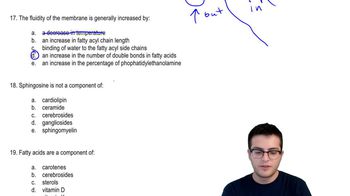
    Property influenced by fatty acid composition, affecting membrane adaptability to temperature changes.
  • Unsaturated Fatty Acid

    Lipid component with one or more double bonds, lowering melting point and increasing membrane fluidity.
  • Sphingolipid

    Class of lipids containing sphingosine, differing from glycerol-based lipids and found in cell membranes.
  • Sphingosine

    Amino alcohol backbone in sphingolipids, replacing glycerol and contributing to membrane structure.
  • Glycerophospholipid

    Phospholipid with glycerol backbone, two fatty acids, and a phosphate group, key in membrane formation.
  • Cardiolipin

    Unique glycerophospholipid found in mitochondrial and bacterial membranes, vital for energy metabolism.
  • Fatty Acid

    Hydrophobic hydrocarbon chain, can be saturated or unsaturated, fundamental to lipid structure.
  • Arachidonic Acid

    Polyunsaturated fatty acid serving as precursor to prostaglandins, important in cellular signaling.
  • Prostaglandin

    Eicosanoid derived from arachidonic acid, involved in signaling pathways and physiological responses.
  • Phosphatidylethanolamine

    Phospholipid that slightly decreases membrane fluidity, present in biological membranes.
  • Phosphatidylcholine

    Phospholipid that increases membrane fluidity, commonly found in cell membranes.
  • Dodecanoic Acid

    Saturated fatty acid with 12 carbon atoms, used in naming conventions for lipid structures.