Skip to main content
Biochemistry
My Course
Learn
Exam Prep
AI Tutor
Study Guides
Flashcards
Explore
Try the app
My Course
Learn
Exam Prep
AI Tutor
Study Guides
Flashcards
Explore
Try the app
Back
Biochemistry Exam #4 Study Guide Flashcards
You can tap to flip the card.
Typical suffix for sugars/carbohydrates
You can tap to flip the card.
👆
Typical suffix for sugars/carbohydrates
Sugars/carbohydrates typically end with the letters
ose
.
Track progress
Control buttons has been changed to "navigation" mode.
1/31
Recommended videos
Guided course
02:11
Monosaccharides
1170
views
27
rank
1
comments
Guided course
02:43
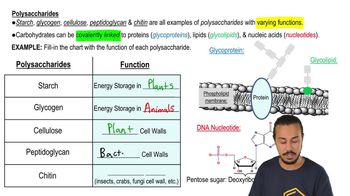
Polysaccharides
1108
views
19
rank
Guided course
02:37
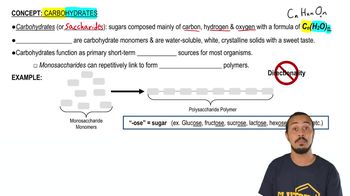
Carbohydrates
1402
views
31
rank
1
comments
Terms in this set (31)
Hide definitions
Typical suffix for sugars/carbohydrates
Sugars/carbohydrates typically end with the letters
ose
.
Difference between monosaccharide, disaccharide, and polysaccharide
Monosaccharides
are single sugar units,
disaccharides
are two monosaccharides linked, and
polysaccharides
are long chains of monosaccharides.
Examples of monosaccharides, disaccharides, and polysaccharides
Examples: Monosaccharides - glucose, fructose; Disaccharides - sucrose, lactose; Polysaccharides - starch, glycogen, cellulose.
Examples of lipids (fats)
Examples include
fatty acids
,
triglycerides
,
phospholipids
,
waxes
, and
steroids
.
Parts of linolenic acid
Linolenic acid is a polyunsaturated fatty acid with a long hydrocarbon chain and three double bonds.
Differences between fatty acid, wax, steroid, triglyceride
Fatty acid:
carboxylic acid with hydrocarbon chain.
Wax:
ester of fatty acid and alcohol.
Steroid:
four fused rings.
Triglyceride:
glycerol + 3 fatty acids.
What is a phospholipid and its parts
A phospholipid has a glycerol backbone, two fatty acid tails (hydrophobic), and a phosphate group head (hydrophilic).
Where are phospholipids found in cells?
Phospholipids are the main components of
cell membranes
, forming the lipid bilayer.
Functions of carbohydrates
Carbohydrates provide
energy
, serve as
structural components
, and act in
cell recognition
.
Functions of lipids
Lipids store
energy
, form
membranes
, provide
insulation
, and act as
signaling molecules
.
Difference between saturated and unsaturated fats
Saturated fats
have no double bonds and are solid at room temperature;
unsaturated fats
have one or more double bonds and are liquid.
Number of rings in a typical steroid molecule
A typical steroid molecule has
four fused rings
.
What does denaturation mean in biochemistry?
Denaturation is the loss of a protein's native structure due to external stress, disrupting its function.
Four levels of protein structure
Primary:
amino acid sequence.
Secondary:
alpha helices and beta sheets.
Tertiary:
3D folding.
Quaternary:
multiple polypeptide chains.
Difference between myoglobin and hemoglobin
Myoglobin stores oxygen in muscles; hemoglobin transports oxygen in blood and has four subunits.
Functions of enzymes
Enzymes are
proteins
that act as biological catalysts to speed up reactions without being consumed.
What is an enzyme's active site?
The active site is the specific region where substrate molecules bind and undergo a chemical reaction.
What is an amino acid and how many are there?
Amino acids are building blocks of proteins; there are
20 standard amino acids
.
How are amino acids joined?
Amino acids are joined by
peptide bonds
between the amino group of one and the carboxyl group of another.
Three parts of a nucleotide
A nucleotide consists of a
phosphate group
, a
pentose sugar
, and a
nitrogenous base
.
Differences between DNA and RNA
DNA has deoxyribose sugar and thymine; RNA has ribose sugar and uracil. DNA stores genetic info; RNA helps in protein synthesis.
Base pairing rules for DNA and RNA
DNA pairs: A-T, G-C. RNA pairs: A-U, G-C.
What is ATP?
ATP (adenosine triphosphate) is the main energy currency of the cell, composed of adenine, ribose, and three phosphate groups.
Brief summary of DNA replication
DNA replication involves unwinding the double helix, complementary base pairing, and synthesis of new strands by DNA polymerase.
Two steps of protein synthesis
Transcription:
DNA to mRNA.
Translation:
mRNA to protein at ribosomes.
Three types of RNA in protein synthesis
mRNA:
carries code.
tRNA:
brings amino acids.
rRNA:
forms ribosome structure.
Function of mitochondrion
The mitochondrion produces ATP through aerobic respiration, acting as the cell's powerhouse.
ATP yield from complete oxidation of one glucose molecule
Complete aerobic oxidation of one glucose molecule produces about \(30-32\) ATP molecules.
Definition of metabolism
Metabolism is the sum of all chemical reactions in a living organism to maintain life.
Difference between anabolism and catabolism
Anabolism
builds complex molecules and consumes energy;
catabolism
breaks down molecules and releases energy.
Three steps of cellular respiration
Glycolysis:
glucose to pyruvate.
Krebs cycle:
oxidation of acetyl-CoA.
Electron transport chain:
ATP production via oxidative phosphorylation.
 BackBack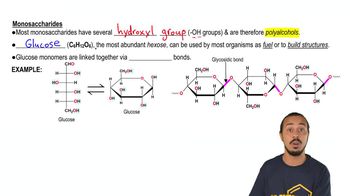
 02:11
02:11