 Back
BackAir Quality and Pollution Control: Biological and Environmental Impacts
Study Guide - Smart Notes
 Tailored notes based on your materials, expanded with key definitions, examples, and context.
Air Pollution and Its Biological Relevance
Definition and Sources
Air pollution refers to the release of gases and particulate matter into the atmosphere that can affect climate or harm people and other living organisms. The atmosphere is a layer of gases approximately 300 miles thick that envelops the Earth, playing a crucial role in sustaining life and regulating climate.
Natural sources: Wildfires, volcanoes, and dust storms contribute to air pollution.
Anthropogenic sources: Human activities, such as industrial processes and vehicle emissions, are major contributors.
Point-source pollution: Pollution from a single, identifiable source (e.g., smokestacks).
Non-point source pollution: Pollution from diffuse sources (e.g., urban runoff).
Primary pollutants: Pollutants released directly from a source.
Secondary pollutants: Pollutants formed when primary pollutants react in the atmosphere.
Residence time: The duration a pollutant remains in the atmosphere.
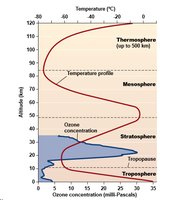
Atmospheric Structure and Ozone Concentration
The atmosphere is divided into several layers, each with distinct characteristics. The stratosphere contains the ozone layer, which is vital for absorbing ultraviolet radiation.
Major Air Pollutants and Their Effects
Types of Pollutants
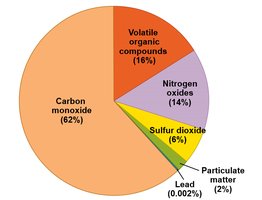
The Clean Air Act mandates monitoring of several key pollutants due to their impact on health and ecosystems:
Carbon monoxide (CO): Produced mainly by fuel combustion in vehicles and factories.
Sulfur dioxide (SO2): Generated from coal combustion; contributes to acid deposition.
Nitrogen oxides (NOx): Emitted by vehicle engines; involved in smog, ozone depletion, and acid deposition.
Volatile Organic Compounds (VOCs): Emitted by vehicles, household chemicals, and industry; plants also produce some naturally.
Particulate Matter: Solid or liquid particles suspended in the atmosphere, such as soot, dust, sulfates, and nitrates.
Lead: Previously used in gasoline; bioaccumulates in the food chain and is still released by industrial smelting.
Air Quality Trends
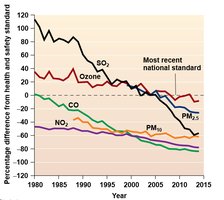
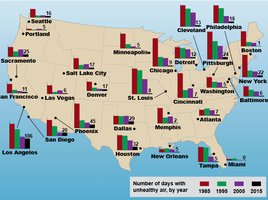
Air quality has improved in the United States due to regulatory measures, but challenges remain, especially in developing countries.
Pollution Control and Regulatory Successes
Clean Air Act and Emission Reduction
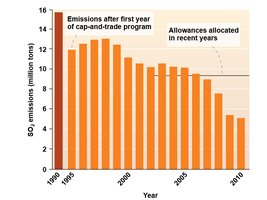
The Clean Air Act, first enacted in 1963 and amended in 1970 and 1990, set standards for air quality and emissions. The 1990 amendment introduced emissions trading for sulfur dioxide, leading to significant reductions.
Scrubbers: Remove pollutants from smokestack emissions.
Catalytic converters: Installed in vehicles to convert harmful gases to less toxic forms.
Phase-out of leaded gasoline: Reduced lead emissions.
Cleaner coal technologies: Lower emissions from coal combustion.
Acid Rain Program: Established a trading system for SO2 emissions, reducing them by 67%.
Smog and Its Types
Industrial and Photochemical Smog
Smog is a mixture of air pollutants that accumulates over industrial and urban areas.
Industrial smog: Results from coal or oil burning; contains CO2, CO, soot, mercury, and lead.
Photochemical smog: Sunlight causes reactions among primary pollutants, producing secondary pollutants including tropospheric ozone; major source is vehicle exhaust.
Greenhouse Gases and Climate Impact
Types and Sources
Greenhouse gases such as carbon dioxide, methane, and nitrous oxide trap heat in the atmosphere, contributing to global warming.
Sources: Industry, utilities, and vehicle emissions.
Environmental issues: Increased carbon footprint leads to climate change.
Ozone Depletion
Mechanism and Mitigation
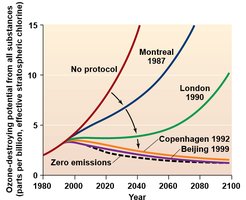
The ozone layer in the stratosphere absorbs harmful UV radiation. Certain pollutants, especially halocarbons like CFCs, have caused depletion of this layer.
Ozone hole: Discovered over Antarctica in 1985.
Montreal Protocol (1987): International agreement to reduce CFC production.
Recovery: Ozone layer is expected to recover by 2060.
Acid Deposition
Causes and Effects
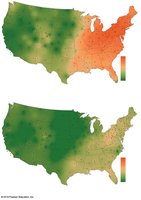
Acid deposition occurs through precipitation, fog, gases, and dry particles. It originates from emissions of SO2 and NOx from fossil fuel combustion, which react with water and oxygen to form sulfuric and nitric acids.
Effects: Leaches nutrients from soil, converts toxic metal ions to soluble forms, kills vegetation, lowers pH of lakes and streams, causes fish die-offs, and damages structures and crops.
Mitigation: Clean Air Act of 1990 established the Acid Rain Program, reducing SO2 emissions by 67% and NOx emissions.
Indoor Air Quality
Sources and Health Risks
Indoor air often contains higher concentrations of pollutants than outdoor air. Common sources include household products, building materials, and combustion processes.
Major risks: Cigarette smoke and radon are the most significant health hazards in industrialized countries.
Developing countries: Indoor air pollution is often much worse due to use of biomass fuels and poor ventilation.
Summary Table: Major Air Pollutants
Pollutant | Main Source | Health/Environmental Impact |
|---|---|---|
Carbon monoxide (CO) | Vehicle emissions, factories | Reduces oxygen delivery in blood |
Sulfur dioxide (SO2) | Coal combustion | Acid rain, respiratory issues |
Nitrogen oxides (NOx) | Vehicle engines | Smog, acid rain, ozone depletion |
Volatile Organic Compounds (VOCs) | Vehicles, industry, household products | Smog formation, health effects |
Particulate Matter | Combustion, road dust | Respiratory and cardiovascular issues |
Lead | Industrial smelting, past gasoline use | Neurotoxicity, bioaccumulation |
Key Equations
Acid Deposition Formation
Acid deposition is formed by the following reactions:
Ozone Formation and Depletion
Conclusion
Air quality and pollution control are critical topics in biology and environmental science, affecting ecosystems, human health, and global climate. Regulatory measures and technological advances have led to significant improvements, but ongoing challenges require continued attention and innovation.
